

Araghchi: Iran Fully Prepared for Another War

WANA (Oct 21) – Iran is fully prepared for the possibility of a new war and will not yield to economic sanctions or military threats, Foreign Minister Abbas Araghchi said, stressing that Tehran is ready to defend itself and its people until the last moment. He confirmed that indirect negotiations with the United States are continuing through Pakistan and Qatar, but said the full reopening of the Strait of Hormuz depends on Washington honoring its commitments under the Islamabad memorandum of understanding. Araghchi also described the nuclear issue as a pretext for Washington’s opposition to Iran’s political outlook, emphasizing that Tehran is prepared for both war and diplomacy.
Araghchi made the remarks in an interview with Iraq’s Al-Ikhbariya television network during a two-day visit to Baghdad this week. He discussed the negotiations between Iran and the United States, Tehran’s seven-day initiative, the situation in the Strait of Hormuz, the possibility of renewed military conflict, the nuclear issue and developments in Yemen.
Indirect Iran-US Negotiations Continue Through Pakistan and Qatar
Araghchi confirmed that negotiations with the United States are continuing on a regular basis through intermediary countries, including Pakistan and Qatar.
He said Tehran had previously presented Washington with an initiative known as the “seven-day plan,” which explicitly outlined Iran’s conditions. Under the proposal, the Strait of Hormuz was to be fully reopened on the sixth day of the period.
According to Araghchi, the Americans informed Iran that they agreed to the proposed conditions but wanted to add several additional clauses. He declined to disclose the details, saying negotiations would not be conducted through the media.
The Iranian foreign minister stressed that Tehran’s main demand is for Washington to honor all its commitments under the previously signed Islamabad memorandum of understanding.
Once the United States fulfills those commitments, he said, the two sides could enter negotiations on other issues. At the final stage, any matter raised by either side could be discussed with the aim of reaching a comprehensive agreement.

Pezeshkian: U.S. Must Lift Sanctions and Threats Before Any Negotiations
WANA (Oct 20) – Iranian President Masoud Pezeshkian said Tehran was ready for dialogue with the United States, but Washington must first lift sanctions, end threats and remove pressure on Iran before any negotiations can begin. Pezeshkian made the remarks during a meeting with Pakistan’s Army Chief, Field Marshal Asim Munir, in Tehran. […]
Araghchi: There Is No Trust in the US Approach
Referring to previous rounds of negotiations, Araghchi said Iran had engaged in three rounds of talks with the United States, all of which ultimately led to war against Iran.
He said these experiences had demonstrated that Washington could not be trusted. According to the Iranian foreign minister, an understanding had also been reached with President Donald Trump during the third round of negotiations, but Trump subsequently violated it and adhered to its terms for only two weeks.
Nevertheless, Araghchi described the seven-day initiative as an effort to keep diplomacy alive, emphasizing that Iran’s doors remain fully open to diplomatic engagement, provided the other side honors previous understandings.
He stressed that Washington, not Tehran, was closing the path to negotiations. If the United States is serious about reaching an understanding, he said, it must implement the conditions it had previously accepted.
Araghchi said the Strait of Hormuz would be fully reopened if Washington honored those conditions, after which further rounds of negotiations could be held until a final agreement is reached.

Rezaei: No Enriched Nuclear Material Will Leave Iran
WANA (Oct 20) – Mohsen Rezaei, secretary of Iran’s Supreme National Security Council, said that no enriched nuclear material would be removed from Iran, stressing that any negotiations with the United States would depend on meeting Iran’s conditions and rebuilding trust. Speaking during a meeting with Pakistani Army Chief Asim Munir, Rezaei described Iran’s […]
Araghchi: The Strait of Hormuz Is Closed
Responding to questions about rising tensions in the Strait of Hormuz and difficulties facing vessels attempting to transit the waterway, Araghchi described Iran’s position as clear.
“The Strait of Hormuz is closed,” he said.
He stated that any vessel seeking to pass through the waterway would encounter significant difficulties and argued that the United States should explain why it was allowing ships to transit a route where no agreement had been reached.
Araghchi said Washington claimed the strait was open, yet vessels entering its waters continued to face numerous problems.
He stressed that the Strait of Hormuz would not be open to everyone until an agreement or understanding had been reached, adding that the movement of ships and other vessels would remain restricted and difficult in the meantime.
The Iranian foreign minister attributed the current situation to what he described as US and Israeli military aggression against Iran, saying it would continue until Washington changed its approach.

Vessels in the Strait of Hormuz are visible near the beach of Bandar Abbas, Iran, August 25, 2026. Majid Asgaripour/WANA (West Asia News Agency)
Iran and Oman Agree on Shipping Routes Through the Strait
Araghchi rejected the characterization of the waters of the Strait of Hormuz as international waters, arguing that the strait lies within the territorial waters of Iran and Oman.
He said the two countries had reached an understanding on specific routes for vessels entering and leaving the strait, with a map of those routes prepared using precise geographical coordinates.
According to Araghchi, if the Strait of Hormuz is reopened, ships will have to use the routes agreed upon by Tehran and Muscat rather than alternative passages.
Referring to the waterway’s historical background, he said the Strait of Hormuz had existed for thousands of years and that its name was connected to the historical rule of Hormuz. He also pointed to international law and the geographical boundaries between Iran and Oman in explaining Tehran’s position.
Araghchi added that the agreed routes should be registered with the International Maritime Organization (IMO) so that the organization could review and approve them and make the details publicly available.
He reiterated that reopening the Strait of Hormuz depends on an understanding between Iran and the United States, adding that Tehran and Muscat had already laid the groundwork for such an arrangement.

What Lies Beneath the Strait of Hormuz? Iran’s Seven-Cable Reminder to Its Adversaries
WANA (Oct 20) – Seven undersea cables in the Strait of Hormuz form part of the world’s communications infrastructure, carrying internet, financial and commercial data between countries and playing a vital role in maintaining global digital connectivity. The spokesperson for Iran’s Islamic Revolution Guards Corps (IRGC), referring to seven major cables that pass beneath […]
Araghchi: The US Has Failed to Achieve Its Objectives After More Than Eight Months
Referring to continued US military and economic pressure, Araghchi said Washington had failed to achieve any of its objectives after more than eight months of war.
He described the failure to achieve those objectives as a strategic defeat for the United States and a strategic success and victory for Iran. He added that Washington was now struggling to extricate itself from a difficult situation.
Araghchi cited military threats, new economic sanctions and pressure on Iran’s neighboring countries to avoid cooperation with Tehran as part of Washington’s efforts, saying these measures had failed to produce the desired results.
He stressed that Iran would not yield to either economic sanctions or military threats, arguing that diplomacy and a negotiated solution were the only appropriate way to resolve the crisis.

Iranian missiles are displayed next to a banner with a picture of Iran’s Supreme Leader Mojtaba Khamenei, on a street in Tehran, Iran, September 27, 2026. Majid Asgaripour/WANA (West Asia News Agency)
Iran Prepared for Both War and Diplomacy
Asked about the possibility of renewed war after the US elections and statements concerning the potential use of heavy bombs, Araghchi said the possibility of another war launched by the United States and Israel could not be ruled out.
He stated that Iran was fully prepared for a new war and ready to defend itself and its people, emphasizing that the country would stand firm until the last moment.
The Iranian foreign minister stressed, however, that military preparedness did not mean Tehran wanted war. Rather, he said, it was a message to the opposing side to reconsider its calculations before deciding to launch another attack.
“I reiterate that we are as prepared for diplomacy as we are for war,” Araghchi said.
He also identified Iran’s full military preparedness as the main deterrent against another war, arguing that Washington knows it cannot achieve its objectives through military action.

If Trump Strikes Again, Is the U.S. Ready for Iran’s Response?
WANA (Oct 19) – Iran has put forward major proposals in its exchanges of messages through mediators, seeking both to test U.S. intentions once again and to remind governments and public opinion of the warmongering tendencies of the administration of U.S. President Donald Trump. In response, the United States has continued deploying military equipment […]
Araghchi: The US Fell Into Netanyahu’s Trap
The Iranian foreign minister attributed responsibility for previous confrontations to US and Israeli decisions, saying Washington had fallen into Israel’s trap — and, more specifically, the trap of Israeli Prime Minister Benjamin Netanyahu — in the two previous wars against Iran.
Araghchi argued that Netanyahu makes decisions based on his personal interests and that his actions do not necessarily serve the interests of the United States or the Israeli public.
He said Netanyahu was willing to take any action he considered beneficial to himself, regardless of whether it served the interests of Washington, Israelis or other parties.

A billboard depicting Israeli Prime Minister Benjamin Netanyahu in the empty hall of the United Nations, on a building in Tehran, Iran, October 13, 2026. Majid Asgaripour/WANA (West Asia News Agency)
Araghchi: The Nuclear Issue Is a Pretext for Opposition to Iran
Asked whether the nuclear issue was a cover for deeper disagreements between Tehran and Washington, Araghchi said he believed the United States’ fundamental opposition was directed at Iran’s political system and its approach to resisting American dominance.
He described Iran’s outlook as one that rejects US hegemony and refuses to submit to American power, adding that this approach had also contributed to the emergence and growth of resistance movements in the region.
“The nuclear issue is nothing more than a pretext,” Araghchi said.
He recalled that Iran had reached a nuclear agreement with international parties that was widely welcomed around the world. However, he said, the United States withdrew from the agreement and abandoned it without presenting any evidence to justify its decision.
The Iranian foreign minister added that the same pattern had been repeated in Islamabad, where the two sides had agreed on specific provisions before Washington once again violated its commitments.

Ghalibaf: US Must Meet Iran’s Seven Conditions to Earn Its Trust
WANA (Oct 20) – Iranian Parliament Speaker Mohammad Bagher Ghalibaf said the United States has no new message from Iran and can only earn Tehran’s trust by fulfilling Iran’s seven conditions. Ghalibaf made the remarks during a meeting with Pakistan Army Chief Field Marshal Asim Munir on Tuesday, October 20, emphasizing that Washington’s long […]
Sanctions and the Economic Blockade Have Imposed Heavy Costs on Iranians
Responding to a question about the economic costs of Iran’s foreign policy and whether the country should reconsider its political approach, Araghchi acknowledged that economic sanctions and the economic and maritime blockade had placed significant pressure on the Iranian people.
He stressed that Iranians had borne considerable costs as a result of these restrictions but had endured them to preserve the country’s dignity, independence, honor and greatness.
The Iranian foreign minister also addressed the wider economic and regional consequences of the war, saying that US and Israeli military actions had imposed heavy costs not only on Iran but also on other nations across the region.

A display shows currency exchange information, in Tehran, Iran, September 27, 2026. Majid Asgaripour/WANA (West Asia News Agency)
Special Routes Opened for Iraqi Vessels
Asked about the losses Iraq had suffered as a result of restrictions on maritime traffic through the Strait of Hormuz, Araghchi said Tehran was aware of the difficulties and had made serious efforts to reduce the costs for Iraq.
He explained that Iran had opened certain special routes to allow Iraqi vessels to pass through.
Araghchi attributed the wider economic and regional consequences of the current situation to the US and Israeli attack on Iran, adding that the Iraqi people understood this reality.
He also welcomed the departure of US forces from Iraqi territory, describing it as a development that had resulted from the Iraqi people’s continued resistance.
## Araghchi: Developments in the Red Sea Have Nothing to Do With Iran
Responding to questions about Iran’s alleged involvement in developments in the Red Sea and the possibility of tensions spreading to the Bab el-Mandeb Strait, Araghchi said events in the Red Sea were unrelated to Iran and had their own particular circumstances.
He linked the situation in Yemen to the prolonged economic blockade imposed on the country by Saudi Arabia, saying the Yemeni people had endured the consequences of the blockade for more than a decade.
Araghchi said the Yemeni people now viewed the use of the Bab el-Mandeb Strait as an opportunity to exert counterpressure on Saudi Arabia.
He questioned what these developments had to do with Iran and stressed that Tehran’s official position should be distinguished from slogans and statements made by various individuals.
Responding to the interviewer’s reference to comments by Ali Akbar Velayati about the straits, Araghchi said Velayati, who served for years as Iran’s foreign minister and was an adviser to the late Leader, had his own views, which he respected. However, he stressed that Iran’s official position and the realities on the ground were what mattered.
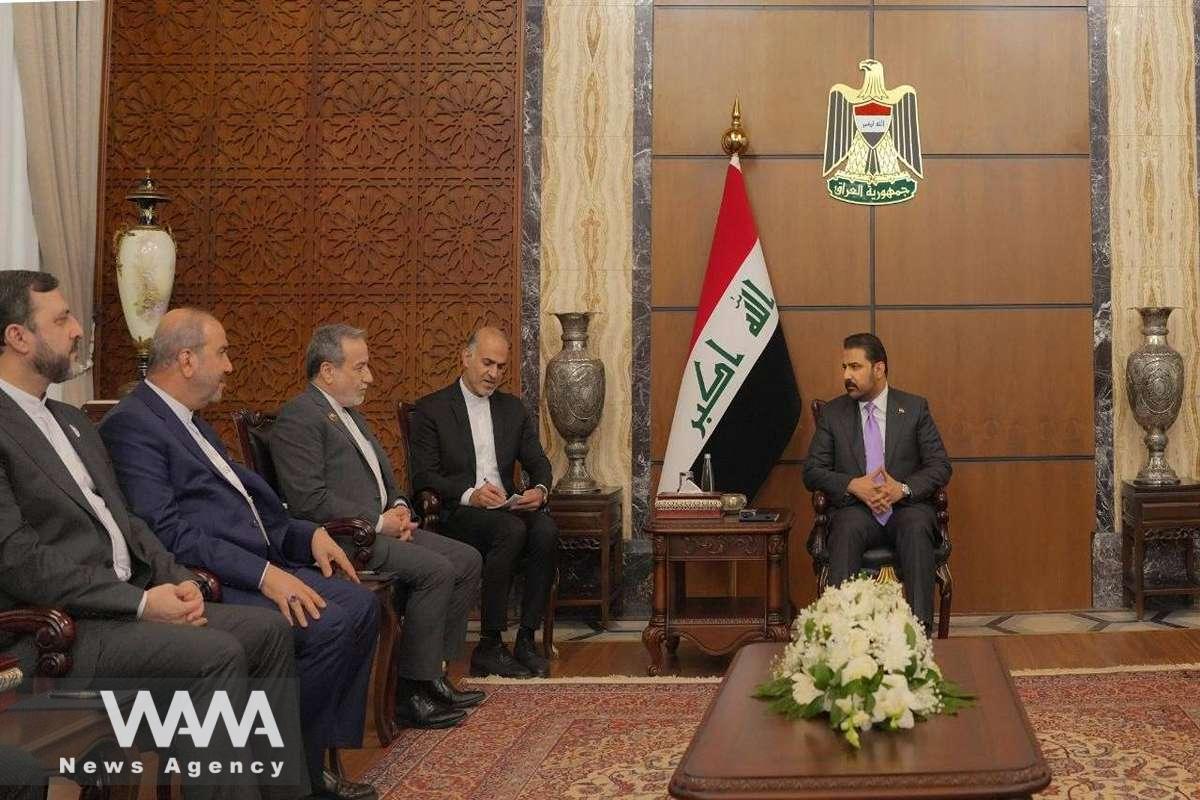
Araghchi Stresses Strengthening Iran-Iraq Ties in Meeting with Iraqi PM
WANA (Oct 18) – Iranian Foreign Minister Abbas Araghchi has emphasized Tehran’s determination to strengthen bilateral relations with Iraq, highlighting the role of the Organization of Islamic Cooperation (OIC) in supporting Palestine, addressing regional insecurity, and reducing tensions. Araghchi, who traveled to Baghdad to attend the 52nd Session of the OIC Council of Foreign […]
Iran Offers to Mediate in Yemen Crisis
Araghchi said Iran had announced its readiness to mediate between Saudi Arabia and Yemen’s Ansarullah movement, but had not yet received a response from either side.
He noted that Ansarullah had its own conditions for ending the conflict with Saudi Arabia, while Riyadh had its own demands that the Yemeni movement did not accept.
According to the Iranian foreign minister, efforts to bring the two sides closer together could help resolve the crisis.
Araghchi also stressed that neither Lebanon’s Hezbollah nor Yemen’s Ansarullah were subordinate to Iran, describing both as independent groups.
He said Iran regarded them as friends because they resisted and pursued what Tehran considered legitimate, lawful and just objectives. Iran supported them on that basis, he added, but such support did not mean they took orders from Tehran.
Tehran Opposes Foreign Military Intervention in Yemen
Asked about the possibility of Egypt entering the conflict against Ansarullah alongside Saudi Arabia and some Gulf countries, Araghchi said Egypt could draw on its past experience to avoid becoming involved in such a complicated conflict.
He stressed that the decision rested with the Egyptian government, but said Iran believed any foreign intervention in Yemen’s affairs or domestic political process would further complicate the situation.
Araghchi added that Egyptian officials had previously informed Iran that any future Egyptian involvement would be limited to defending Saudi Arabia and that Cairo would not directly enter the conflict with the Yemenis.

Baghaei: Yemen Issue Cannot Be Resolved Through Force
WANA (Oct 20) – Iranian Foreign Ministry Spokesman Esmaeil Baghaei said on Tuesday that the Yemen crisis could not be resolved through force or military action, stressing that a solution must be reached through dialogue and reconciliation between Saudi Arabia and Yemen. Speaking at his weekly press briefing on October 20, 2026, Baghaei addressed […]
Araghchi Holds Talks on Regional Issues During Baghdad Visit
Concluding the interview, Araghchi discussed his meetings in Baghdad, saying he had held talks with several foreign ministers attending the gathering on regional issues, particularly developments in Yemen.
He also confirmed meetings with the Iraqi foreign minister and prime minister, saying the discussions covered regional affairs, including the situation in Yemen and developments related to the war.
The Iranian foreign minister reiterated that Tehran, in cooperation with Oman, had laid the groundwork for an understanding on shipping routes through the Strait of Hormuz. However, he stressed that the waterway’s full reopening remained dependent on reaching an understanding between Iran and the United States.







