Baghaei: Oman Meeting Cancelled at Saudi Request; Iran-Oman Shipping Route Understanding Finalized

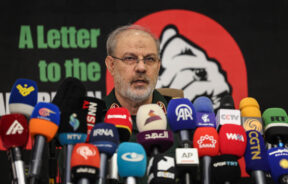
WANA (Sep 14) – Esmail Baghaei, spokesman for Iran’s Foreign Ministry, said a planned meeting of regional foreign ministers in Oman was cancelled at the request of Saudi Arabia.
Baghaei also said Iran and Oman had finalized their talks on navigation routes through the Strait of Hormuz and would jointly decide how to announce or formally record the understanding following further consultations.
Oman Meeting Cancelled at Saudi Request
Speaking at his weekly press conference, Baghaei said foreign policy and national security decisions are not based on a single factor, adding that fluctuations in oil prices or other temporary developments cannot, on their own, determine decisions on sensitive regional issues.
Defending the Iran-Oman initiative to convene the regional meeting, he said the two countries had reached an understanding on securing navigation routes following weeks of negotiations, and the arrangement was expected to be discussed at the Oman meeting with the participation of regional countries.

Iran-Oman Regional Meeting Postponed
WANA (Sep 13) – A meeting of the foreign ministers of the Persian Gulf coastal states, scheduled to take place in Oman’s Salalah on Monday, has been postponed. Omani Foreign Minister Badr Albusaidi said on Sunday that the regional meeting scheduled for Monday in Salalah had been postponed. He said the decision was made […]
According to Baghaei, the meeting was intended to provide an opportunity for neighboring countries to discuss ways to build a safer region and reduce interference by actors from outside the region. However, Saudi Arabia requested that the meeting not be held for the time being.
He also dismissed as a “misdirection” suggestions that the cancellation was linked to developments in Yemen or the attack on a Saudi oil pipeline, saying the problems in Yemen have deep-rooted and longstanding causes.
Iran-Oman Understanding on Strait of Hormuz Finalized
The Iranian Foreign Ministry spokesman said the understanding reached by Tehran and Muscat on navigation routes had been finalized, taking into account the sovereignty and responsibilities of the two littoral states.
He stressed that no final decision had yet been made on how the understanding would be publicly announced, adding that Iran and Oman would consult with each other before deciding on the next step.
Baghaei said the two countries had sought through the understanding to create an opportunity for dialogue on regional security and shipping routes, and that regional countries were expected to welcome the initiative.

Vessels in the Strait of Hormuz are visible near the beach of Bandar Abbas, Iran, August 26, 2026. Majid Asgaripour/WANA (West Asia News Agency)
Tehran: Ansarallah Makes Its Own Decisions
Asked about developments in the Bab el-Mandeb Strait and Iran’s role in Yemen’s military decisions, Baghaei said Tehran does not interfere in decisions related to Yemen.
He described Ansarallah as an “independent Yemeni party” that makes decisions based on its own interests and considerations, saying current developments in Yemen cannot be analyzed without taking into account years of war, blockade and attacks against the country.
Baghaei also referred to U.S. and Israeli attacks on Yemen in recent years, saying the position taken by the Yemenis toward the Gaza war and the Palestinian issue is part of the broader regional developments.
At the same time, he stressed that freedom of navigation and maritime trade must be guaranteed for all countries, arguing that a country cannot be attacked or subjected to a naval blockade while simultaneously being expected to ensure maritime security.
The Iranian Foreign Ministry spokesman called on regional countries to consider the realities on the ground and work toward resolving regional problems instead of resorting to blame-shifting and accusations.

Iran at a Crossroads: A New Regional Order or War?
WANA (Sep 13) – In recent days, a number of highly significant developments—some seemingly disparate but nonetheless interconnected—have unfolded across the region in relation to Iran. Despite their differences, these developments function as interconnected links in a chain through their mutual impact, with some working in Iran’s favor and others against it. On one […]
Iran Denies Involvement in Attack on Saudi Oil Pipeline
Baghaei also categorically rejected allegations by U.S. officials that Iran was involved in an attack on a Saudi oil pipeline from Iraqi territory.
He said the United States continues to produce “false news and claims” without bearing any cost, describing such accusations as an attempt to deepen divisions among regional countries.
Baghaei stressed that the allegation of Iranian involvement in the attack was “absolutely untrue” and was categorically rejected by Tehran.
Baghaei: U.S. Attack on Iranian Vessel Contradicts Maritime Security Claims
Elsewhere in his press conference, Baghaei described the U.S. attack on a vessel near Hengam Island as inconsistent with Washington’s claims that it is seeking to ensure maritime security in the region.
According to Baghaei, Jamshid Rajabi, an Iranian citizen, was killed in the attack, while several others, including two Pakistani nationals working aboard the vessel, were injured.
He said the U.S. military presence thousands of kilometers from American territory and its attacks on Iranian vessels near Iran’s coastline were incompatible with Washington’s stated concerns about the security and safety of regional waterways.

Baghaei: Lamerd Attack Constitutes a War Crime
At the beginning of the press conference, Baghaei also referred to his recent visit to Lamerd and inspection of the site of an attack on February 28, 2026, describing it as a war crime.
He said a missile containing three-gram fragments and four 500-kilogram missiles carrying a combined total of about 180,000 pellets were detonated in civilian areas. According to Baghaei, the attacks took place near a stadium, residential homes, a blood transfusion center and an educational facility, killing 21 people, including an Afghan national.
Baghaei also paid tribute to Mahmoud Najafi, a teacher and football coach, for attempting to rescue children who were near the stadium, describing him as a symbol of sacrifice during the attack.
The Iranian Foreign Ministry spokesman concluded by stressing the need to address the humanitarian consequences of such attacks and provide support to victims and those injured.

“My daughter was not in a military uniform”: U.S. attack in Lamerd, Iran
WANA (Sep 13) – “My daughter was not in a military uniform”: U.S. attack in Lamerd, Iran A Wound on the People of Lamerd
Incomplete IAEA Reports Create Grounds for Political Misuse
Baghaei, criticized the performance of Rafael Grossi, director general of the International Atomic Energy Agency (IAEA), saying that presenting facts incompletely or in a distorted manner could create grounds for the political misuse of the agency’s reports.
He said Iran would use every opportunity to clarify the issue and formally record its position.
According to Baghaei, despite the experience of the past, the IAEA and its director general have once again allowed the agency’s reports to be misused and become the basis for a resolution that, he said, is not even directly based on an IAEA report but has instead used it for political purposes.
The Iranian Foreign Ministry spokesman said that if the IAEA director general adopts a fair and technical approach, his first step should be to condemn the U.S. and Israeli attacks on Iran, particularly the attacks on Iran’s nuclear facilities.
He also said repeated threats by U.S. officials against Iran and its nuclear facilities should prompt a firm response from the IAEA director general, adding that no such response has been made so far.

Grossi: Signs of Activity Detected at Kuh-e Kolang, but No Information on Its Nature
WANA (Sep 10) – Rafael Grossi, Director General of the International Atomic Energy Agency (IAEA), said Thursday that satellite imagery and remote information indicated new activity around Iran’s Kuh-e Kolang site, but the agency has no specific or verified information about the nature of the activities there. In an interview with Bloomberg, Grossi said […]
Tehran: Claims About Mount Kolang Gazla Lack Technical Basis
Commenting on Grossi’s remarks about alleged signs of nuclear activity at Mount Kolang Gazla, Baghaei said the issue was not new and had previously been raised during negotiations between the administration of former President Ebrahim Raisi and the previous U.S. administration over construction in the area.
He stressed that Iran is not a party to the Additional Protocol and has provided the IAEA with all information it is required to submit under its safeguards obligations.
Baghaei said the site does not qualify as a nuclear facility in the strict safeguards sense and that discussions in the past about possible access to the location had been limited to a periodic inspection.
The Iranian Foreign Ministry spokesman described the latest statements about the site as part of a U.S. media and psychological campaign. He said allegations that Iran has been seeking to develop nuclear weapons have been raised for nearly three decades, but even the IAEA, despite Tehran’s disagreements and criticism of its conduct, has not stated in its reports that Iran has been in non-compliance with its obligations.

Did Trump Just Reveal the US Plan for Iran’s Oil? ‘Like Venezuela’
WANA (Sep 14) – Donald Trump’s latest remarks about the future of the U.S. presence in Iran have added a significant new dimension to the debate over the war: Oil is one of Washington’s calculations for the post-war period. Speaking during his visit to Ireland on Sunday, the U.S. president was asked whether the […]
Tehran Calls for an End to U.S. Actions Against Iran
Asked about Iran’s demands from the United States, Baghaei said Tehran’s position was clear: Washington must end all illegal and interventionist measures against Iran.
He said Iran and the United States reached an understanding at the highest level on June 18, but Washington unilaterally violated it 21 days later and resumed or intensified what he described as aggressive actions, including a maritime blockade and economic warfare.
Baghaei said the United States must halt its illegal actions, compensate for the damage caused by its measures, and end sanctions and economic warfare against Iran.
He stressed that as long as Washington continues what Tehran considers aggressive actions, a maritime blockade and other measures contrary to international law, Iran will continue taking necessary steps to counter them.

Baghaei: BRICS and SCO Seek to Counter U.S. Unilateralism
The Iranian Foreign Ministry spokesman also addressed the possibility of BRICS taking action against U.S. efforts to isolate Iran, saying Iran is not a country that can be isolated and that, in his view, its actions in self-defense have drawn the attention and support of many countries.
Baghaei meanwhile criticized the United States’ international standing, saying Washington’s attack on Iran and cooperation with Israel had weakened U.S. credibility and its position in the international system.
He said the United States had damaged international norms by politicizing the United Nations and the IAEA and by violating the principle prohibiting the use of force enshrined in the UN Charter.
Baghaei added that various countries, including members of the Shanghai Cooperation Organization (SCO) and BRICS, are using multilateral mechanisms to oppose this trend and find ways to address the consequences of U.S. unilateralism.
He also said that even some traditional U.S. allies, including Canada and European countries, had concluded that measures were needed to contain what he described as “aggressive and destructive U.S. unilateralism.”
Iran’s Nuclear Doctrine Is Clear
Ismail Baghaei, spokesman for Iran’s Foreign Ministry, rejected speculation about a possible change in Iran’s nuclear doctrine or its withdrawal from the Nuclear Non-Proliferation Treaty (NPT), saying the Islamic Republic’s policy on the issue is clear.
The Iranian Foreign Ministry spokesman said discussions about changing Iran’s nuclear doctrine or pursuing nuclear deterrence are the result of the conduct of countries that, in his view, have themselves undermined the philosophy behind the NPT.
He identified the NPT’s three main pillars as nuclear disarmament, preventing the proliferation of nuclear weapons, and the right to peaceful use of nuclear energy, saying nuclear-armed states had failed to fulfill their commitments in all three areas.
Referring to multiple attacks and acts of sabotage targeting Iran’s nuclear facilities, Baghaei said the facilities had been under IAEA monitoring and that Iran had complied with its safeguards obligations under the NPT.
He added that under such circumstances, it was natural for Iranian experts and lawmakers to discuss nuclear issues and deterrence. However, he stressed that Iran’s official policy on the matter remains clear.

Vessels in the Strait of Hormuz are visible near the beach of Bandar Abbas, Iran, August 27, 2026. Majid Asgaripour/WANA (West Asia News Agency)
Tehran: Hormuz Security Concerns the Two Littoral States
Asked about reports that the United States was pressuring regional countries to focus on the nuclear issue, Baghaei said he would not comment on media speculation but stressed that issues concerning Iran and Oman, particularly the understanding reached between the two countries, are matters between the two governments.
He said security in the Strait of Hormuz is primarily the responsibility of the two littoral states, adding that Iran understands its responsibilities toward the international community and regional countries.
Baghaei, however, attributed the current security situation affecting shipping in Hormuz to actions by the United States and Israel since February 28, 2026, saying Iran’s measures concerning traffic through the strait cannot be portrayed as the sole cause of insecurity without taking into account its underlying cause.
He stressed that statements by the United States or other countries on issues of their choosing would not affect Iran’s priorities or determination.

Is Iran Moving Toward a Nuclear Bomb?
WANA (Aug 23) – The remarks made last night by Mohsen Rezaei, secretary of Iran’s Supreme National Security Council, on nuclear weapons are highly significant. In an unusually direct statement, a senior Iranian security official linked the value of nuclear weapons to “national security” and “the survival of the country.” Rezaei said the attack […]
Baghaei: Iran-Turkey Ties Go Beyond Message-Passing
Addressing Turkey’s role in conveying messages between Tehran and Washington, Baghaei said relations between Iran and Turkey extend far beyond the issue of message-passing.
According to Baghaei, the two countries maintain extensive ties as neighbors and partners and remain in regular contact across various fields. He added that the foreign ministers of Iran and Turkey are also in frequent communication.
He said Tehran and Ankara share not only common interests but also concerns and views regarding certain regional developments, particularly what he described as Israel’s expansionist policies and its actions in Palestine, Lebanon, Syria and other parts of the region.
Tehran Welcomes China’s Role; Iran-U.S. Problem Is Not a Lack of Mediators
Asked about the possibility of China playing a mediating role between Iran and the United States, Baghaei said Tehran has consistently welcomed what he described as Beijing’s “principled and responsible” positions on regional security.
He pointed to China’s role in strengthening regional security and stability, saying Iran welcomes Beijing’s cooperation in this area and considers the positions expressed by the Chinese president at the BRICS summit valuable.
Baghaei nevertheless said the main problem between Iran and the United States is not the absence of a mediator, but Washington’s lack of genuine willingness and even the minimum level of goodwill needed to pursue diplomacy. He added that Pakistan has also been playing its role effectively.

Why Is China Standing With Iran?
WANA (Aug 27) – Beijing’s latest warning to Washington over Iran-related sanctions has once again highlighted an important reality: the relationship between China and Iran is no longer merely a trade partnership. It has become part of the broader equation of competition between China and the United States, as well as Beijing’s efforts to shape […]
Passenger Traffic Resumes at Iran-Iraq Border Crossings
The Iranian Foreign Ministry spokesman also announced that passenger traffic at Iran-Iraq border crossings has resumed.
Baghaei said talks between the Iranian Embassy and Iraqi officials, along with contacts between the two countries’ foreign ministers, had led to the resumption of traffic. He added that border crossings are expected to return to normal for commercial traffic within the next day or two.
Pezeshkian’s Meeting with Abu Dhabi Crown Prince Was Held at UAE Request
Commenting on Iranian President Masoud Pezeshkian’s meeting with the Crown Prince of Abu Dhabi on the sidelines of the BRICS summit, Baghaei said the meeting was held at the request of the Emirati side.
He said Iran agreed to the request as part of its policy of strengthening trust and relations among neighboring and regional countries. According to Baghaei, bilateral issues are the main focus of such meetings, although developments related to regional peace and security are also discussed.

Pezeshkian: Iran Will Not Bow to Bullying; US Does Not Want Iran to Remain Independent
WANA (Sep 11) – Iranian President Masoud Pezeshkian has criticized US and Israeli policies toward Iran, saying Tehran will not surrender to pressure or intimidation and stressing that the United States does not want Iran to remain independent. Speaking on Friday in New Delhi at a meeting with Indian religious leaders, intellectuals and businesspeople, […]
Tehran Has Yet to Receive News on Visas for New York Trip
The Iranian Foreign Ministry spokesman said Tehran had so far received no new information regarding the issuance of visas for the Iranian delegation to travel to New York, adding that any developments would be announced.
Asked about possible U.S. restrictions on Iran’s economic relations with neighboring countries, Baghaei said some of the reports and narratives surrounding the issue were aimed at intensifying the effects of the U.S. economic war against Iran.
He stressed that Iran maintains good relations with its neighbors, particularly Turkey, and will use all diplomatic tools available to prevent U.S. measures from being implemented.
Baghaei: There Is No Consensus at UN Security Council on Snapback
Regarding the so-called snapback mechanism and actions at the UN Security Council, Baghaei said fundamental differences had emerged within the council since last year, after the issue was raised by three European countries under U.S. pressure.
He said no consensus had so far been reached on restoring the UN sanctions resolutions that had previously been lifted against Iran.
According to Baghaei, the United States and European countries periodically hold Security Council meetings to maintain their position on the issue, while China, Russia and other countries opposed to the process have also made their positions clear.

Targeting the Lifeline: Iran’s Strike on the U.S. Air Support Chain
WANA (Sep 12) – The United States relocated its air and defense equipment to Al-Kharj and Al-Azraq to stay safe from Iranian strikes; however, the identification and targeting of the refueling supply chain of these bases turned a new vulnerability into an opportunity for Iran’s operations against the U.S. enemy. Iran’s initial strikes on […]
Tehran: Regional States Must Prevent Their Territories From Being Used Against Iran
Commenting on the postponement of the meeting between Iran and regional countries in Oman, Baghaei said the gathering could have provided, even as a small step, an opportunity to revive dialogue between Iran and the countries of the Persian Gulf.
He stressed that dialogue is not only necessary for Iran and the southern Persian Gulf countries; those countries themselves also need dialogue to resolve their differences, which, according to Baghaei, have in some cases contributed to the escalation of regional crises, including in Yemen.
The Iranian Foreign Ministry spokesman said the experience of the past six months had shown that the security and sovereignty of regional countries could be exploited by the United States and Israel. He said the first step toward building mutual trust is for regional countries to prevent their airspace, territory or facilities from being used for military attacks against Iran.
Tehran Calls Austria’s Action Against Iranian Delegation “Absolutely Unjustified”
Baghaei also described Austria’s refusal to issue visas to the head of Iran’s Atomic Energy Organization and members of the Iranian delegation as “absolutely unjustified.”
He said Austria, as the host country of international organizations, was obligated to facilitate the entry of the Iranian delegation. According to Baghaei, Tehran’s formal protest had been conveyed to the Austrian government, and Austria’s chargé d’affaires had also been summoned to Iran’s Foreign Ministry.
The Iranian Foreign Ministry spokesman described the move as part of diplomatic and legal pressure against Tehran, saying that at a time when resolutions are being adopted against Iran and reports concerning its nuclear activities are being issued, preventing Iranian representatives from attending to defend their position is inconsistent with the principles governing international activities.
Baghaei added that even if Austria had taken the step under U.S. pressure or at Washington’s request, this would not remove the host country’s responsibility. He said countries hosting international organizations and c onferences must protect their credibility and standing against external pressure.