Baghaei: Referral of Iran’s Case to the UN Security Council Has No Basis

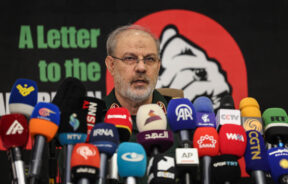
WANA (Sep 10) – Iranian Foreign Ministry spokesman Esmail Baghaei rejected the legal basis for referring Iran’s nuclear case to the UN Security Council, describing the latest resolution by the International Atomic Energy Agency’s Board of Governors as contradictory and politically motivated. He said Iran had committed no non-compliance.
Speaking on Wednesday night, September 9, Baghaei responded to the Board of Governors’ resolution against Iran, saying the measure contradicted claims that the “snapback” mechanism had been activated. He said Iran had previously made clear that snapback was illegal both legally and operationally, and that the return of previous resolutions could not be considered an accomplished fact.
Baghaei added that Iran’s position had been shared by China, Russia and several other countries, saying recent developments had demonstrated the validity of that position.
Response to the IAEA Access Issue
The Iranian spokesman described the resolution as containing contradictory demands, saying Iran was being asked to fulfill its safeguards obligations without any reference to the reason behind the IAEA’s limited access to Iran’s nuclear facilities.
He stressed that the current situation surrounding Iran’s nuclear facilities and the restrictions on IAEA access were the result of U.S. and Israeli attacks on Iran’s nuclear sites.
Regarding the possibility of referring Iran’s case to the UN Security Council, Baghaei said such a move had no basis because Iran had committed no non-compliance. He said what was being described as non-compliance was a consequence of the U.S. and Israeli attacks on Iran’s nuclear facilities.
He also said that if the IAEA had acted in accordance with its principles, it should have condemned the U.S. and Israeli attacks on Iran’s nuclear facilities at the time they occurred.
Criticism of the Voting Process
Referring to the vote at the Board of Governors, Baghaei said around one-third of IAEA member states either opposed the resolution or did not support it, stressing that the measure was not adopted by consensus.
He described the voting pattern as evidence of divisions among Board members, saying the United States and European countries had pressured or offered incentives to a number of other countries to support the resolution.
The Foreign Ministry spokesman also criticized Japan and Saudi Arabia for voting in favor of the resolution, pointing to Japan’s experience with the atomic bombings and Saudi Arabia’s experience of the consequences of U.S. and Israeli actions in the region.
Warning Over the Politicization of the IAEA
Baghaei said the process would produce no outcome other than further politicizing the IAEA and undermining the foundations of the nuclear non-proliferation regime.
He added that the non-proliferation regime was built around three main objectives, including disarmament and safeguarding countries’ nuclear rights. According to Baghaei, those objectives have failed to materialize because of what he described as the misuse of the non-proliferation regime by the United States and three European countries.