Baghaei Says Iran Will Respond to Any “Ill-Advised” Move by US and European States

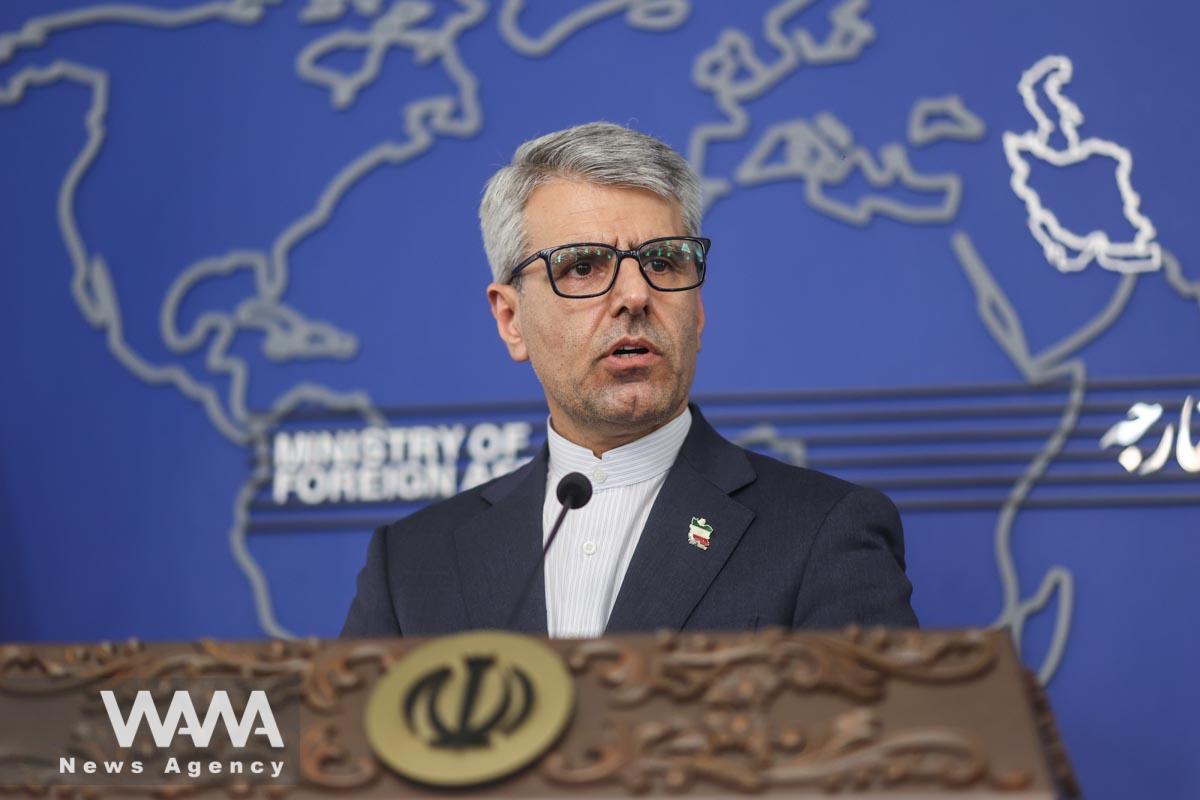
WANA (Sep 07) – Iranian Foreign Ministry spokesman Esmaeil Baghaei said Tehran would take necessary measures against any “ill-advised” move by the United States and three European countries seeking to pass an IAEA resolution that could refer Iran’s nuclear issue to the UN Security Council.
US Military and Economic Actions
Speaking at his weekly press conference on Monday, September 7, Baghaei condemned what he described as the recent US attack on Sirik, saying civilians had been killed during a wedding celebration in Kuhestak.
The spokesman said Iran had faced continuous US military aggression over the previous six months, allegedly in cooperation with Israel, and that the pressure had continued through various means, including a maritime blockade and economic warfare. He added that US economic warfare was not directed solely against Iran but also challenged the international community, the principles of the UN Charter, national sovereignty and free trade.
Iran Condemns Continuing Killing of Palestinians
Baghaei also addressed the situation of Palestinians in Gaza and the West Bank, saying that what he described as genocide was continuing without interruption. He said large numbers of Palestinian bodies were currently being recovered from beneath the rubble.
According to Baghaei, the international community should understand that the issue could not be reduced to a matter of numbers, arguing that the stain resulting from grave human-rights violations and crimes would never be erased from human civilization.

The Kuhestak Tragedy: When the “High Precision” of American Bombs Ends in a Human Disaster
WANA (Sep 04) – Images of the funeral procession for the victims of the attack on the Kuhestak wedding ceremony late Thursday afternoon on the outskirts of this village in Sirik County are not merely a tragic scene of local mourning; these images symbolize a deeper crisis in the pattern of U.S. military operations along […]
Absence of Meeting Between Pezeshkian and Xi
Responding to a question about the absence of a meeting between Iranian President Masoud Pezeshkian and Chinese President Xi Jinping in Tashkent, Baghaei described the Shanghai Cooperation Organisation summit as an important gathering attended by the leaders of member states.
He said Pezeshkian had held productive meetings with a number of counterparts, including the leaders of Tajikistan, Kyrgyzstan, India, Pakistan, Russia and Azerbaijan, as well as a constructive meeting with the Chinese prime minister.
Baghaei said it might not have been possible for the Iranian president to hold lengthy meetings with every leader attending the summit. He stressed that Iran maintained good relations with China and that contacts between the two countries remained active.
He added that the BRICS summit in New Delhi the following Saturday would provide another opportunity for Iran and other member states to engage with one another. He said the absence of a meeting during a particular gathering should not be regarded as decisive or particularly significant, adding that Iran would make use of the many available opportunities to maintain contacts with China and other friendly countries.
Diplomacy and Negotiations
Commenting on remarks by Mohsen Rezaei about a strategic shift in Iran’s diplomacy following the US withdrawal from the Islamabad understanding, Baghaei said negotiations were neither inherently good nor bad but were tools for advancing national interests and security.

Rezaei: Iran to Establish New Restricted Zone in Persian Gulf
WANA (Sep 06) – Iran’s Secretary of the Supreme National Security Council, Mohsen Rezaei, has announced a shift in Tehran’s strategy regarding the war, diplomacy and efforts to counter the US blockade, saying Iran will establish a new restricted zone in the Persian Gulf and Gulf of Oman in the coming days. Rezaei said […]
He said Iranian diplomacy had remained coordinated with other state institutions, supported the armed forces and worked alongside the Iranian people to protect national interests. He added that the Foreign Ministry would follow official instructions and continue its efforts.
Iran Rejects US Claims
In response to comments by US Vice President JD Vance, Baghaei said that words and statements could neither conceal what he described as military defeats nor hide the scale of alleged crimes. He said the world had witnessed the United States and Israel imposing a war on Iran and the region on February 28 in what he described as an overt violation of the UN Charter.
Baghaei characterized the military action as clear aggression and a violation of international principles. He said the United States should be held accountable both for imposing what he called an aggressive war and for each of the alleged crimes committed during it.
Israel’s Actions in Lebanon Criticized
Addressing recent Israeli attacks on Lebanon, Baghaei said Israel had benefited from a form of impunity because of US support, what he described as UN inaction, and the indifference of European countries that claimed to uphold law, human rights and international law.
He said the developments had further demonstrated the importance of resistance forces and their access to the necessary resources and capabilities to protect Lebanon’s sovereignty and territorial integrity. Baghaei added that the Lebanese people would continue resisting what he described as an effort aimed at undermining the country’s existence and sovereignty.
Iran Condemns Israeli Attacks Against Lebanon
WANA (Aug 11) – Iran’s Foreign Ministry spokesperson strongly condemned the recent attacks by Israel on areas in southern Lebanon, which resulted in the killing and injury of several Lebanese civilians and caused damage to infrastructure and residential properties. Ismail Baghaei, referring to the continuation of Israeli attacks and violations of Lebanon’s sovereignty and […]
Iran Criticizes US and European Efforts at IAEA
Responding to a question about efforts by the United States, Britain, France and Germany to pass a resolution at the IAEA Board of Governors that could lead to the referral of Iran’s nuclear file to the UN Security Council, Baghaei said the draft resolution was based on a report issued by the IAEA and its director general.
He said Iran had encountered similar patterns and procedures in the past. Baghaei compared what he described as the IAEA’s conduct, as well as that of its director general, to a traditional Persian story involving the scholar Azod al-Din Iji and a Mongol khan.
He argued that whenever the Western countries faced difficulties in other areas, they turned to the IAEA and its director general, while the director general, in his view, sometimes made himself available to be used by European countries and the United States as a means of applying political pressure on Iran.
Tehran Says European States Are Undermining Their Own Position
Baghaei described the proposed action as meaningless for several reasons. First, he argued that the European countries and the United States had previously claimed that the so-called snapback mechanism had restored UN Security Council sanctions resolutions.
He said their current effort to once again bring Iran’s nuclear issue before the Security Council contradicted that claim and demonstrated the validity of the positions taken by Iran, China and Russia, which had considered the snapback mechanism illegal and inapplicable.

Second, he said the three European countries were once again undermining their own credibility. According to Baghaei, they had previously pursued a similar course and had seen what he described as the consequences, including being humiliated and sidelined by the United States and contributing to greater complexity surrounding Iran’s nuclear issue.
Third, he said the demands being made were unreasonable. He argued that the United States and Israel were responsible for creating the current circumstances and that the reason the IAEA could not access Iranian nuclear facilities was the alleged attack by the United States and Israel on those facilities.
Baghaei said the two countries had blocked access and were now blaming Iran for the IAEA’s inability to reach its nuclear facilities. He described the position of the three European countries and the United States as contradictory and said it demonstrated bad faith and an intention to escalate tensions.
Warning of Countermeasures
Baghaei warned that Iran would take necessary measures against any “ill-advised” action by the US and three European countries, urging the Europeans to learn from past experience and saying that repeating a failed approach would be a mistake.
He also announced that an Iran-Oman understanding concerning the Strait of Hormuz would be registered with the International Maritime Organization in the coming days.

Iran, the US: War or a Return to Understanding?
WANA (Aug 29) – The fundamental problem with the US is that its president lacks any independent political or military insight, fails to grasp strategy, and relies solely on data fed by advisors who mostly take their marching orders from the Israelis. Much like what transpired in the military confrontation with Iran, this time […]
Defense of the June 18 Understanding
Baghaei reiterated that negotiations were simply a diplomatic tool and said the June 18 understanding had been reached after considering all relevant circumstances.
He said the US breach of its commitments should not lead Iran to question its own diplomatic achievements, stressing that Tehran had entered negotiations responsibly to defend its rights. He maintained that Washington, not Tehran, had violated the agreement.
Sirik Attack and Islamabad Understanding
Rejecting US officials’ denial of the reported attack on a wedding celebration in Sirik, Baghaei accused Washington of deliberately denying what had happened. He said attacks on civilians were part of a long-standing US pattern and argued that recent attacks showed Washington had adopted what he called Israel’s model of systematic targeting of civilians.
On the end of the Islamabad understanding, Baghaei said Iran had never initiated a breach of commitments and that Washington had failed to fulfill its obligations. He attributed the US withdrawal partly to internal disputes within the American leadership.
He said that, regardless of whether Washington considered the understanding over, Iran’s priority was the protection of its national interests and security. He stated that Tehran would not compromise on those issues.
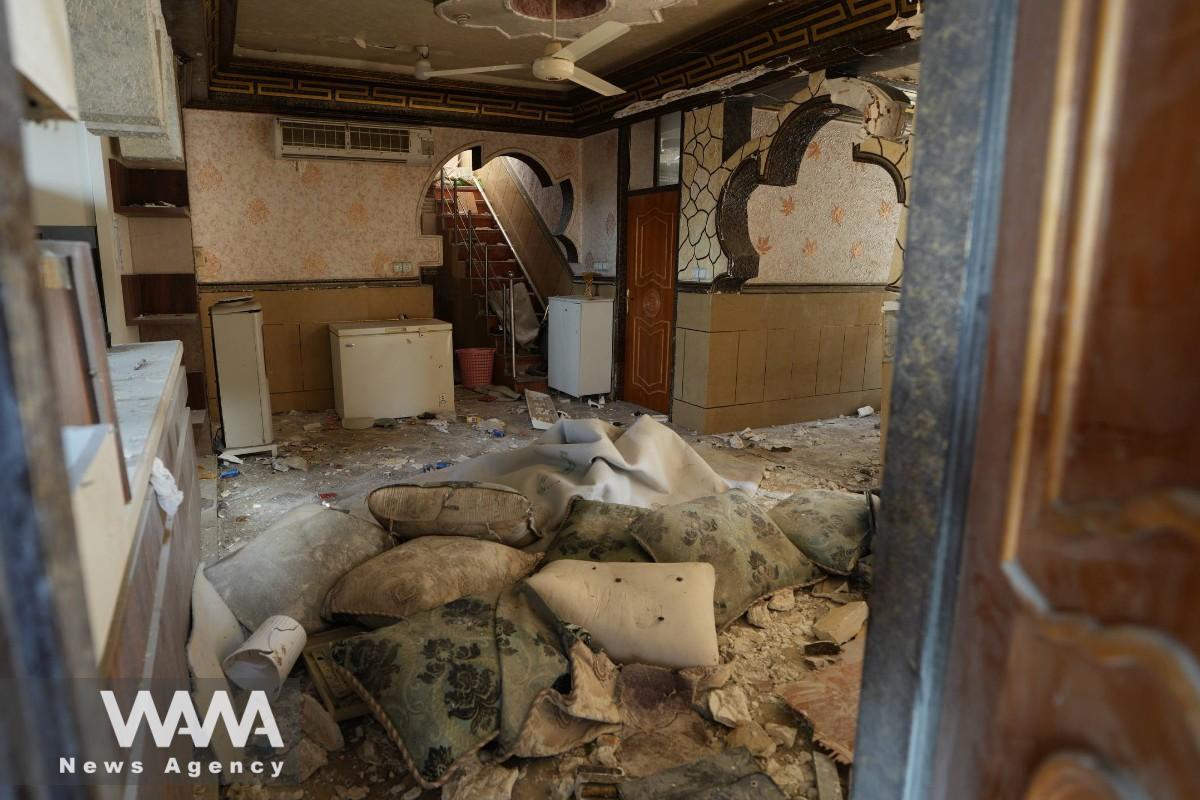
US Strike on Wedding in Sirik Kills 5, Injures More Than 50
WANA (Sep 02) – The U.S. airstrike on a residential home in Koohestak, Sirik County, where a wedding ceremony was underway, has once again put civilian casualties at the center of scrutiny over Washington’s military operations against Iran. According to local officials and the Iranian Red Crescent, the strike left at least five people […]
Baghaei Urges Europe to Resist US Pressure
Iranian Foreign Ministry spokesman said Europe needed to make its own decision rather than continuing to follow US demands at the IAEA Board of Governors and the UN Security Council.
He said European regulations condemned compliance with US secondary sanctions and argued that a recent European Union statement violated international law as well as the bloc’s own sovereignty and independence. Baghaei stressed that if the EU genuinely valued its sovereignty, independence and interests, it should not cooperate with the US economic war against Iran.
Israel Is Seeking Permanent Regional Tension
Commenting on Israeli Prime Minister Benjamin Netanyahu’s remarks concerning the October 7 operation, Baghaei said there should be no doubt that Israel viewed its survival as dependent on continued war, tension and insecurity in the region.
He described this as a historical pattern, saying that since Israel’s establishment in the 1940s, it had remained in conflict with countries across the region and had carried out assassinations and alleged crimes beyond the Middle East.
Baghaei added that what had changed international perceptions was that the world had increasingly recognized what he described as Israel’s use of concepts such as “anti-racism” to conceal its actions.

A billboard depicting U.S. President Donald Trump and Israeli Prime Minister Benjamin Netanyahu on a building in Tehran, Iran, July 21, 2026. Majid Asgaripour/WANA (West Asia News Agency)
Iran Dismisses Peru’s Diplomatic Move
Regarding Peru’s announcement that it would cut diplomatic relations with Iran, Baghaei said Tehran had no particular recommendation because, in his view, there had effectively been no diplomatic relationship to sever.
He suggested that the announcement had been made ahead of a planned visit by the US secretary of state to the region from September 8 to 10, arguing that Peru appeared to be presenting Washington with an action that did not represent a meaningful change.
Baghaei noted that Iran had neither an embassy in Peru nor Peru an embassy in Iran, and said those who expected to benefit from the move would realize after examining the matter that they had been misled.
Iran Warns South Korea Against US Regional Operations
Asked about reports that South Korea might provide civilian or intelligence support to the United States in the Strait of Hormuz, Baghaei said Iran’s position was clear.
He stressed that Tehran valued its traditionally good relations with South Korea but warned that any participation by Seoul or other countries in US military or interventionist actions in the region would amount to complicity in an overt act of aggression.

Peru Severs Diplomatic Relations with Iran Citing Regional Tensions and Human Rights
WANA (Sep 02) – The Ministry of Foreign Affairs of Peru announced on Wednesday that it has severed diplomatic relations with the Islamic Republic of Iran, citing escalating tensions in West Asia and aligning with broader U.S. policy actions against Tehran. In an official statement, the Peruvian Foreign Ministry asserted that the decision was […]
According to Baghaei, such involvement would only complicate the situation and would not make maritime routes safer. Although he said Iran had not issued a formal position on the reported plans, he confirmed that Iranian officials had been in contact with relevant South Korean authorities through Iran’s embassy in Seoul.
He also issued a broader warning to all countries to avoid becoming instruments for US military actions in the region.
Tehran Rejects the Term “Tanker War”
Addressing a question about the so-called “tanker war” in the Strait of Hormuz and Foreign Minister Abbas Araghchi’s telephone consultations, Baghaei said the term did not accurately describe the situation.
He argued that the current insecurity in the Strait of Hormuz and Persian Gulf had begun after the US and Israeli military attacks on Iran in late February, rather than as a result of Iranian actions. He said the situation had continued in various forms, including a maritime blockade.
Baghaei maintained that attacks on vessels, both in the region and in international waters, had been initiated by the United States. He said recent developments involving Iran’s defensive measures against US warships had subsequently been used as a pretext for American attacks on Iranian commercial vessels.

Vessels in the Strait of Hormuz are visible near the beach of Bandar Abbas, Iran, August 26, 2026. Majid Asgaripour/WANA (West Asia News Agency)
Attacks on Commercial Ships a War Crime
Baghaei described attacks on Iranian commercial vessels as violations of international law and acts of terrorism. He said that the US secretary of war’s apparent pride in the attacks amounted to an admission of responsibility for what he characterized as a war crime against commercial shipping.
He warned that as long as the economic war and maritime sanctions or blockade against Iran continued, they would constitute a continuation of US military aggression against the country.
Baghaei said this situation gave Iran the right, both legally and operationally, to take necessary measures to defend itself. He emphasized that Iran’s actions in response to continued US and Israeli aggression were entirely defensive.
Baghaei Mocks US Military Operation
Asked why the Pentagon had reportedly instructed its personnel not to use the name of the “Operation Epstein Fury,” Baghaei said the operation had initially been given that name by the US media and was later referred to as “Operation Epic Failer.”
He said one reason for the reported change was that the US operation had failed to achieve its objectives. At the same time, he argued, it had further damaged America’s credibility because of what he described as serious violations of international humanitarian law and international law.

Baghaei added that any rational American would be embarrassed by the use of such terminology to describe what he called an illegal war and act of aggression.
Iran Defends Strikes on US Military Targets
Baghaei argued that a country claiming to be the world’s greatest superpower should have no reason to take pride in threatening Iran or attacking commercial vessels in retaliation for Iran’s acknowledged strikes against US warships.
He also criticized Washington for allegedly using attacks on civilians, including the killing of children at a wedding celebration, as a means of pressuring Iran. He rejected the US version of events and stressed that Iran remained in a defensive position because of the continuing maritime blockade and economic war.
Baghaei said Iran’s strikes against US military bases and warships fell within the inherent right of self-defense, which he said was explicitly recognized under Article 51 of the UN Charter.
US Actions Are Behind Hormuz Insecurity
Baghaei said the insecurity in the Strait of Hormuz was a direct consequence of US actions. He questioned why the Strait had not faced such problems before the beginning of the US-Israeli military attacks in early March. He accused Washington and others of creating a false narrative by portraying Iran as the source of insecurity in the Strait.

Iran-U.S. Conflict: Continued Pressure on the Strait of Hormuz
WANA (Sep 03) – The military confrontation between Iran and the United States continued on Wednesday, with both sides carrying out further attacks. According to the assessment provided, the United States struck 34 targets across seven Iranian provinces, with a total of 96 reported strikes, while Iran attacked around 100 targets in seven countries. […]
According to Baghaei, the situation in Hormuz deteriorated because of US and Israeli attacks on Iran and the alleged use of the territories of southern Persian Gulf states for military purposes.
He stated that the Strait could not be considered secure as long as these circumstances continued, stressing that the problem was not caused by Iran but by continuing US and Israeli aggression in the form of a maritime blockade, economic warfare and attacks on Iranian commercial vessels.
Iran Continues Efforts to Locate Three Pilots
Iranian Foreign Ministry spokesman said efforts continue to determine the situation of three Iranian pilots whom he described as “brave.” He said the issue remained on the agenda during every diplomatic trip and official contact.
Baghaei added that a technical delegation from Iran’s Armed Forces General Staff had recently visited Qatar, where technical discussions and investigations concerning the pilots were continuing. He stressed that Iran would not abandon its efforts to clarify the pilots’ situation.
Tehran Follows Up on Four Iranians Detained in Kuwait
Regarding four Iranian citizens detained in Kuwait, Baghaei said the Iranian embassy in Kuwait was seriously pursuing their case. He noted that a consular visit had recently taken place and said diplomatic efforts were continuing. Baghaei expressed hope that the Kuwaiti government would take the necessary steps to facilitate the release of the four Iranian citizens.
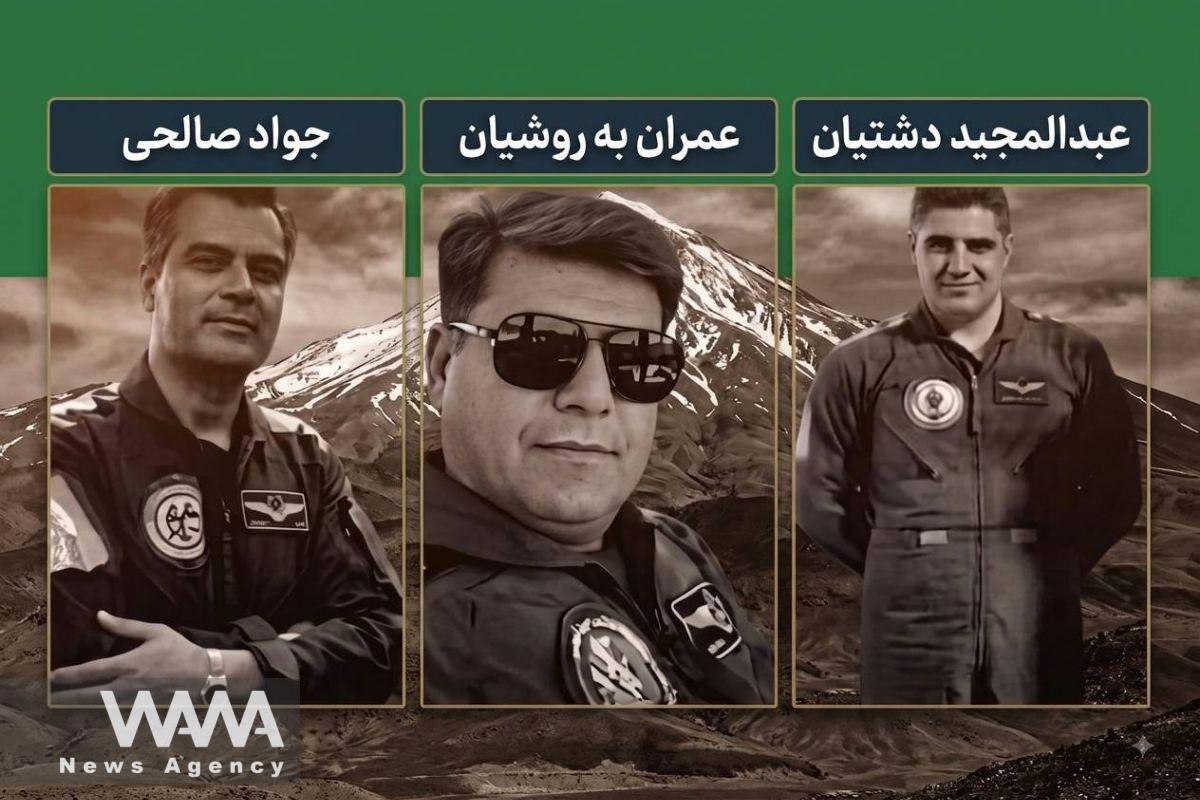
Where Are the Three Iranian Pilots?
WANA (Aug 16) – Six months after two Iranian Su-24 fighter jets crashed in Qatar, a case that had until now been handled largely behind the scenes has suddenly surfaced at the official level of Tehran-Doha relations. Iran says three pilots from the two fighter jets were captured alive by Qatari forces and remain […]
Iran Plans to Attend UN General Assembly in New York
Asked about President Masoud Pezeshkian’s possible trip to New York for this year’s UN General Assembly, Baghaei said Iran intended to use the opportunity to present and explain its positions on international issues.
He said Tehran planned to participate in the General Assembly, but stressed that this would depend on the host country fulfilling its obligations under the UN Headquarters Agreement and issuing the necessary entry visas on time.
Iran’s UN Mission Continues Its Work
Addressing questions about Iran’s Permanent Mission to the United Nations in New York and the return of Iran’s ambassador and permanent representative, Amir Saeid Iravani, Baghaei said the mission was functioning normally and that its affairs were proceeding well.
He explained that Iravani’s departure meant that, until a new ambassador and permanent representative was appointed, the mission would be managed by the second-ranking diplomat and the deputy head of the mission. Baghaei added that the work of Iran’s UN mission was continuing without disruption.
Regional Diplomacy Continues
Iranian Foreign Ministry spokesman Esmaeil Baghaei said diplomatic contacts with Oman, Pakistan and Qatar were continuing as part of regional efforts to reduce tensions. He said a Qatari delegation had visited Tehran the previous day and held constructive talks with Foreign Minister Abbas Araghchi.

Baghaei stressed that diplomacy was a continuous and dynamic process, adding that Iran would make full use of diplomatic tools to protect its national interests.
Baghaei Warns of Israeli Expansionism and Rejects US Pressure
Iranian Foreign Ministry spokesman Esmaeil Baghaei said there was growing recognition across the region that Israel sought to dominate the Middle East and undermine other regional countries.
Responding to threats by a former Israeli prime minister to bomb Qatar and remarks by Prime Minister Benjamin Netanyahu describing Qatar as an enemy state, Baghaei said Israel’s repeated threats against regional countries, including previous threats against Turkey and references to a “Greater Israel,” reflected its expansionist ambitions.
He warned regional states to identify what he described as the real threat to peace and security and said they should not allow other issues to distract them from the main danger or encourage further Israeli actions.
Iran Says US Must End Regional Insecurity
Asked about reports that Washington was seeking a new agreement with Iran covering the Strait of Hormuz and Iran’s nuclear program, Baghaei said Tehran’s position remained clear.

Baghaei: US and Israel Are Behind Insecurity in the Strait of Hormuz
WANA (Aug 16) – Iranian Foreign Ministry spokesman Esmail Baghaei outlined the latest developments surrounding the Islamabad agreement, the situation in the Strait of Hormuz and the positions of other countries, saying Tehran considers the current insecurity in the waterway to be the result of US and Israeli actions. Baghaei said Iran, as one […]
He said the insecurity imposed on the region by the United States could only be addressed by Washington itself through ending its alleged acts of aggression and intervention, as well as economic sanctions and the maritime blockade.
Baghaei said Iran had clearly stated its position from the beginning of the diplomatic process and had included its demands explicitly in the June 18 memorandum of understanding.
He argued that the problem was on the US side because Washington had violated all its commitments only 22 or 23 days after signing the understanding. Using a common diplomatic expression, he said the ball had long been in the US court because Washington had initiated both the military aggression and the subsequent breach of the agreement.
Baghaei Responds to Israeli Threats
Asked about renewed Israeli threats against Iran and claims that Israel had sought Iran’s collapse from the beginning, Baghaei responded by quoting a Quranic verse from Surah As-Saff saying that attempts to extinguish God’s light would ultimately fail.
He also referred to a Persian poem suggesting that whoever tries to blow out a divinely lit lamp will ultimately burn himself. Baghaei jokingly added that since the Israeli officials in question had no beards, the reference should presumably be understood as meaning their “roots.”

Symbolic mock-ups of Iranian missiles are displayed on a street, amid the U.S.-Israeli conflict with Iran, in Tehran, Iran, March 22, 2026. Majid Asgaripour/WANA (West Asia News Agency)
Iran Criticizes US Territorial Rhetoric
Commenting on US President Donald Trump’s recent post featuring the Moon and saying that it “belongs to us,” as well as his reported proposal to rename New Mexico as “America,” Baghaei said the issue had international implications.
He described it as an unusual situation in which the government of a country appeared unwilling to respect international principles, particularly state sovereignty and geographical borders.
Baghaei added that some of the unusual behavior seen from US officials, which often receives extensive media and public attention, was part of their political habit and the nature of the current US administration. He argued that such actions were also used to maintain media attention and advance what he described as a broader “cognitive war” being waged around the world.