

Baghaei: Yemen Issue Cannot Be Resolved Through Force

WANA (Oct 20) – Iranian Foreign Ministry Spokesman Esmaeil Baghaei said on Tuesday that the Yemen crisis could not be resolved through force or military action, stressing that a solution must be reached through dialogue and reconciliation between Saudi Arabia and Yemen.
Speaking at his weekly press briefing on October 20, 2026, Baghaei addressed the latest developments in Iran’s foreign policy, the ongoing situation in Palestine, Iran’s diplomatic contacts with Russia and regional countries, tensions in the Strait of Hormuz, and the possibility of renewed military aggression against Iran.
He also discussed the Organization of Islamic Cooperation (OIC) meeting, Iran’s relations with Pakistan and Azerbaijan, the war in Yemen, and international developments involving the United States, Russia, China, and European countries.
Gaza Genocide Continues, Israeli Occupation Root of Regional Problems
Referring to diplomatic developments over the past week, Baghaei said that despite ongoing regional tensions, Iran had a humanitarian and moral responsibility, as well as an international legal obligation, to speak out against the crimes continuing in the occupied Palestinian territories.
He stressed that the genocide in Gaza had not stopped and identified the Israeli regime’s occupation and expansionism as the primary causes of problems in the region. Baghaei also described the recent meeting of the Organization of Islamic Cooperation as highly important.

Regional Crises Have No Military Solution; U.S. and Israeli Aggression Drive Persian Gulf Insecurity
WANA (Oct 19) – On Monday, Foreign Minister Seyed Abbas Araghchi met with Russian Foreign Minister Sergey Lavrov in Tehran for a high-level meeting and joint press conference, where he declared that European nations are partners in the recent U.S. war against Iran and emphasized that regional issues have no military solutions, requiring resolution through […]
Iran Has No Insistence on Negotiations Except to Secure National Interests
Responding to a question about why Iran continued to consider negotiations with the United States despite Washington’s repeated breaches of agreements, and what benefits such talks could offer, Baghaei said Iran insisted on nothing other than securing its national interests.
He stressed that Iran’s concerns and position were centered on the country and its interests.
Baghaei noted that the United States had a clear record of violating commitments, both over the past two years and continuously since 2018. However, he said, Iran’s diplomatic apparatus could not neglect its responsibilities solely because of bitter past experiences.
He explained that Iran was obligated to use every available means to protect its national interests, adding that diplomacy was itself part of the country’s defense and struggle. He emphasized that the military arena and the diplomatic arena should not be separated when it came to securing the Iranian people’s rights.
Baghaei said Iran would pursue diplomatic efforts if there were even the slightest possibility that they could prevent an escalation of tensions.

Araghchi outlines Iran’s Seven-Day Plan to Reopen the Strait of Hormuz
WANA (Sep 26) – Iranian Foreign Minister Abbas Araghchi has outlined Iran’s seven-day plan to reopen the Strait of Hormuz, provided that the United States accepts the conditions of the Islamic Republic. Speaking at a stakeout at the United Nations headquarters in New York on Friday, Araghchi said that the seven-day period begins once […]
Lavrov’s Visit to Tehran Part of Ongoing Consultations With Russia
Asked about reports surrounding Russian Foreign Minister Sergey Lavrov’s visit to Tehran, including claims that the main focus was negotiations between Iran and the United States and that the two sides had discussed uranium enrichment, Baghaei said Iran had not deviated in any way from its principled positions because those positions were aligned with its national interests.
He explained that Lavrov’s visit was part of the two countries’ ongoing consultations and had been on the agenda for a long time.
According to the spokesman, the discussions covered all issues relevant to the national interests of both countries. Regional matters, including Ukraine and the Persian Gulf, were naturally among the topics discussed, while the nuclear issue was also raised.
However, Baghaei said earlier speculation that the visit was specifically intended for discussions on Iran’s nuclear issues had been incorrect.
He added that Russia had consistently stated its readiness to do whatever it could to reduce tensions, and Iran had appreciated Moscow’s positive and constructive approach in this regard.

Iran and Russia oppose America’s excessive demands
WANA (Oct 19) – Iran and Russia oppose America’s excessive demands Russia’s Foreign Minister Visits Tehran
Iran Prevented Divisive Language on Yemen in OIC Final Statement
Commenting on the adoption of a resolution concerning Yemen’s Ansarullah movement at the OIC meeting, Baghaei stressed the need to distinguish between the Baghdad Declaration and the organization’s final statement.
He explained that the most important outcome of the OIC Council of Foreign Ministers’ meeting was its final statement, which was adopted by consensus.
Baghaei noted that Foreign Minister Abbas Araghchi had also addressed the issue and that Iran had insisted that the statement should not include language that could create divisions among Islamic countries.
He said Iran had firmly conveyed its position and prevented the inclusion of two specific paragraphs concerning Yemen, arguing that their wording was in no way consistent with the interests of the Muslim world.
Baghaei reiterated that the Yemen issue should be resolved through dialogue and reconciliation between Saudi Arabia and Yemen. He noted that Yemenis had endured more than a decade of an illegal and inhumane blockade, stressing that the crisis could not be resolved through force or military power.

Araghchi: Military Approach in Yemen Will Escalate Regional Tensions
WANA (Oct 12) – Iranian Foreign Minister Abbas Araghchi held a phone call with Saudi Foreign Minister Faisal bin Farhan on Sunday evening to discuss regional developments and ways to ease tensions. During the call on October 11, Araghchi expressed concern over escalating tensions in the region, stressing that insisting on a military approach […]
The spokesman added that an issue had been raised during the second day of the meeting, with some participants expecting it to be adopted by consensus.
Baghaei Rejects Reports of U.S. Attack
Asked about reports alleging that the United States had attacked Kuh-e Kalang and sent a message to Iran regarding the incident, Baghaei said the published reports were entirely incorrect.
Iran-Pakistan Border Crossings: Technical Issues Being Addressed
Addressing reports about the closure of border crossings between Iran and Pakistan, as well as Pakistan’s possible mediation efforts, Baghaei said Iran had been informed that several technical issues were being addressed in an effort to resolve the situation.
He explained that Iranian exports were continuing, while exports from the other side had been halted. Baghaei described Iran’s relations with Pakistan as excellent, emphasizing that both countries were determined to value and preserve their friendly ties.
He added that relations between the two countries benefited both nations and expressed appreciation for the steadfastness of their leaders in maintaining the relationship.

UAE Ports Lose Out to Iran-Pakistan Overland Corridor
WANA (May 30) – The opening of the Iran-Pakistan overland corridor has broken the United Arab Emirates’ maritime monopoly on West Asian transit. By connecting to China’s $60 billion mega-project, this newly activated route successfully bypasses naval choke points in the Strait of Hormuz. Iran’s new strategy to circumvent the Strait of Hormuz has […]
The spokesman said the issue would be resolved, noting that Pakistani officials had explained that some technical problems needed to be addressed and that certain technical updates were underway.
Iran Urges Persian Gulf States to Reconsider Their Statements
Responding to a question about a recent statement by the foreign ministers of the Persian Gulf Cooperation Council (PGCC) in Manama, Baghaei criticized the bloc’s position on Iran.
The statement had described Iran as fully responsible for missile and drone attacks against PGCC member states, called for full compensation for damages, raised unresolved issues involving Iran, including the nuclear issue, and urged Tehran and Washington to return to dialogue.
Baghaei said Iran expected officials from these countries to reflect more carefully before making such statements.
He noted that Iran had gone through an extremely bitter experience and argued that repeating statements that were neither a sign of goodwill nor indicative of good-neighborly relations would not help build trust between Iran and the countries concerned.
The spokesman said Iran had acted magnanimously in response to the events that had taken place.
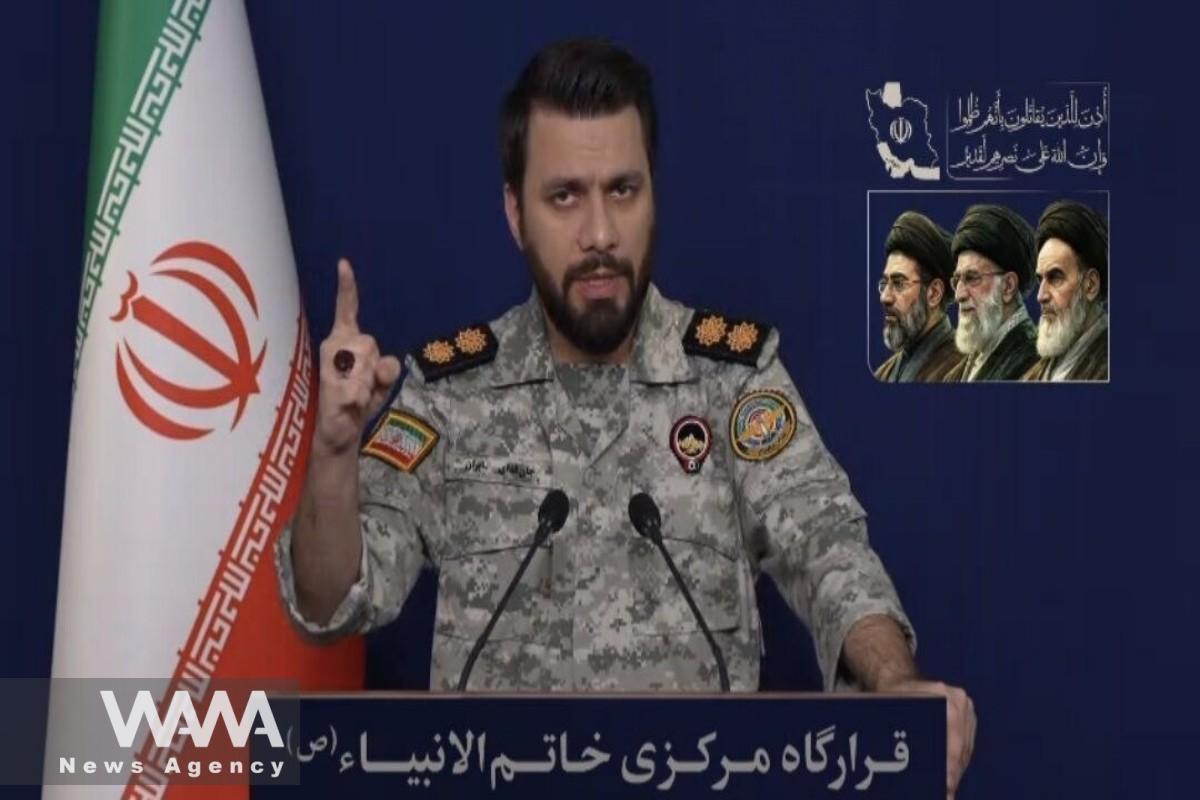
Khatam al-Anbiya Central Headquarters Warns Regional Countries Against Cooperating with U.S. Military
WANA (Sep 02) – The spokesperson for Iran’s Khatam al-Anbiya Central Headquarters issued a formal warning that any nation facilitating or collaborating with U.S. military operations against Iran will face severe consequences. According to the official statement, Iranian armed forces have executed high-speed missile and drone strikes against U.S. bases across the region. […]
He stressed that Iran knew, and the countries involved also knew, that their territories and facilities had been used to support military aggression against Iran.
According to Baghaei, this was not merely an Iranian claim: the United States, as the party that carried out the aggression, had acknowledged the role of Persian Gulf countries at the highest level and praised them for their significant contribution to the military operation against Iran.
He said that portraying Iran’s defensive strikes against bases and facilities used for such purposes as Iranian military aggression would not change the reality of what had happened.
Baghaei reaffirmed that Iran believed in good-neighborly relations with regional countries, but stressed that a clear condition was that they must not allow their territory or facilities to be used for attacks against another Muslim country.
Baghaei Dismisses Pentagon’s Delayed Report on Minab School Attack
Asked about the Pentagon’s decision to postpone the release of its internal report on the attack on the school in Minab, as well as Amnesty International’s reaction, Baghaei urged caution in assessing the significance of the U.S. investigation and the delay in publishing its findings.
He questioned whether a party that had itself committed a crime should be considered the authority for determining how that crime was characterized.

The Minab school damaged by a strike on February 28, in Minab, Iran, August 27, 2026. Majid Asgaripour/WANA (West Asia News Agency)
Baghaei stressed that U.S. actions amounted to crimes not only in Sirik, Lamerd, and Minab, but across all the attacks it had carried out, because the United States had committed the crime of aggression.
He said that, from an international perspective, the U.S. refusal even to acknowledge a crime that had been unquestionably deliberate demonstrated the other side’s disregard for the law.
Baghaei emphasized that refraining from attacking civilians was a fundamental principle and that respect for civilians during wartime was an assumption that should be taken for granted.
Iran Supports Regional Dialogue Among Persian Gulf States, Iraq
Asked about a proposal to hold a joint meeting involving the Persian Gulf states, Iran, and Iraq, Baghaei said the idea had been under discussion for a long time.
He noted that one such meeting had taken place on the sidelines of the United Nations General Assembly.
Describing the proposal as a positive step, Baghaei said Iran generally supported any initiative that could strengthen trust among countries in the region.

Pezeshkian: Regional Security Depends on Countering Coercive Approaches
WANA (Sep 01) – Iranian President Masoud Pezeshkian has stressed the need to build a multipolar world based on multilateralism, sovereign equality and the rule of law, calling for a fairer and more effective role for the United Nations and Security Council in addressing global developments. Addressing the Shanghai Cooperation Organization (SCO) summit, President […]
Iran Prepared for Any Possible Renewed Attack
Responding to reports in some Hebrew-language media about the possibility of an attack against Iran, Baghaei said Iran lived with that possibility day and night and was not currently in a state of peace.
He stressed that, as the naval blockade against Iran continued and the Iranian people were repeatedly threatened in various ways, the country was obligated to take every possibility into account at all times.
Nevertheless, Baghaei said Iran’s defenders were prepared to repel any hostile action by aggressors, having learned from the experiences of the past two years, relying on God, and drawing strength from public support.
Iran Expresses Hope for Resolution of Azerbaijan’s Hijab Issue
Asked about the law banning hijab in the Republic of Azerbaijan and Iran’s lack of an official position on the matter, Baghaei described the Azerbaijani people as mature and perceptive.
He said the people of Azerbaijan were capable of determining how best to express their views in their dealings with their government to protect their principles, in a manner consistent with their country’s interests.
Baghaei expressed hope that the issue would be resolved through mutual understanding in a country with which Iran maintained good relations and shared bonds of brotherhood and friendship.
He said such a resolution should take place with due regard for shared values and respect for people’s fundamental rights.

Iranian Students and Clerics Protest Azerbaijan’s Hijab Ban
WANA (Oct 14) – New restrictions on hijab in educational institutions in the Republic of Azerbaijan have prompted reactions in Iran. Students from the University of Tehran protested by putting up a banner outside the Azerbaijani Embassy, while Ayatollah Mohammad Javad Fazel Lankarani, a prominent cleric in Qom, condemned the restrictions and urged people in […]
Iran Rejects Claims of Regional Hegemonic Ambitions
Baghaei said Iran had never sought domination over the region, adding that the origins of the term “hegemony” and the way it had entered regional political discourse should be examined.
He stressed that Iran’s approach had been based on cooperation and that no party should take steps toward establishing regional hegemony.
According to the spokesman, the only party in the region pursuing expansionism and invoking the concept of “Greater Israel” was the Israeli regime, which he said was driven by fear.
Baghaei urged regional countries not to be misled by false narratives, emphasizing that Iran was a friend to all countries in the region.
Baghaei Says Macron’s Remarks on France Unrest Amount to Deflection
Commenting on French President Emmanuel Macron’s remarks attributing unrest in France to the war involving Iran, Baghaei described the statement as an attempt to deflect responsibility.
However, he said the remarks contained an underlying reality: those responsible for certain actions, or those who had failed to fulfill their responsibilities, had to accept the consequences.

Baghaei Calls on France to Respect Human Rights in Dealing with Protesters
WANA (Oct 02) – Iranian Foreign Ministry Spokesman Esmail Baghaei condemned the violent handling of protesters by French security forces and called on France to respect fundamental human rights and basic freedoms in dealing with protests by students and workers. Speaking to reporters, Baghaei said those who, as he put it, had made extensive […]
Baghaei noted that France, as a permanent member of the United Nations Security Council and a member of the United Nations, had an obligation under international law to take a position against the blatant aggression by the United States and Israel.
Instead, he said, France and some other European countries had openly or indirectly supported the aggression.
The spokesman also recalled a widely discussed text message exchanged between the French and U.S. presidents, which had been interpreted as indicating that France was aware of the planning of the U.S.-Israeli attack against Iran.
Baghaei stressed the importance of correctly understanding cause and effect, arguing that countries could not remain silent in the face of injustice, assist those responsible, and then expect to escape the consequences.
Iran Says Relations With Russia and China Based on Mutual Interests
Asked about U.S. President Donald Trump’s remarks that Russia and China were providing little assistance to Iran, Baghaei said he did not intend to comment on U.S. officials’ rhetoric concerning Iran’s bilateral relations with its partners. He noted that Iran could not prevent U.S. officials from commenting on any subject.
Baghaei stressed that Iran was not naive and understood that every country pursued its own interests. He added that Iran and Russia, as well as Iran and China, had defined their mutual interests and established agreements. He said Tehran intended to advance these relations without being influenced by U.S. rhetoric.

Iran’s Foreign Minister Abbas Araghchi meets with Russia’s Foreign Minister Sergei Lavrov in Tehran, Iran, October 19, 2026. Majid Asgaripour/WANA (West Asia News Agency)
PGCC-Russia Meeting Did Not Produce Joint Statement, Baghaei Says
Asked about a purported joint statement by the Persian Gulf Cooperation Council and Russia, Baghaei clarified that the meeting between the Russian foreign minister and GCC foreign ministers had not produced a joint statement. He explained that the statement being discussed was issued by the PGCC itself.
U.S. Aggression Responsible for Insecurity in Strait of Hormuz
Addressing a question about insecurity in the Strait of Hormuz, Baghaei said its cause was clear: the continuation of U.S. aggressive actions.
He added that if the United Nations wanted the issue to be resolved in a principled manner, it should help deter the United States from continuing its aggressive actions.
Baghaei Says U.S. Appears Confused Amid Global Crises
Asked to assess the situation between the United States and its allies, as well as the war in Ukraine, Baghaei said Washington appeared to be experiencing a degree of confusion.
He noted that the United States had involved itself in military aggression in the region while simultaneously increasing its interventions in other parts of the world to their highest levels.
Baghaei expressed hope that these developments would awaken countries to the reality that they could not ensure peace and security at home by cooperating or colluding with a party that showed no regard for international norms.

The Sensitive Pulse of the Internet Beneath Strait of Hormuz
WANA (Sep 30) – Submarine cables in the Strait of Hormuz are a vital part of the data transmission routes connecting continents. However, damage to these invisible arteries can lead to lengthy repairs, high costs, and disruptions to internet communications. No government in the world would allow a foreign company to cross its territory […]
Iran Opposes Further Intervention in Yemen
Commenting on reports of possible Egyptian cooperation with Saudi Arabia in the war in Yemen, Baghaei said Yemen had been a subject of discussion in every relevant meeting, including talks with Islamic countries and the secretary-general of the Organization of Islamic Cooperation.
He stressed that security and stability in the Arabian Peninsula were important to Iran and other countries in the region. Baghaei said Iran did not consider further intervention beneficial to regional peace and security, warning that it would make the situation more complicated.
He emphasized that the Yemen issue should be resolved through dialogue and implementation of the roadmap agreed upon several years ago.
The spokesman added that during Foreign Minister Abbas Araghchi’s talks with his Egyptian counterpart, Araghchi had conveyed Iran’s position on the matter.
Baghaei said Iran did not believe further intervention by Islamic countries under the current circumstances would improve the situation, adding that it would undoubtedly make the issue more difficult to resolve.
Iran Says Security of Eastern Borders a Longstanding Priority
Asked about security along Iran’s eastern borders, Baghaei said the issue was neither new nor limited to recent developments, explaining that it had always been on Iran’s agenda in its dealings with both Afghanistan and Pakistan.
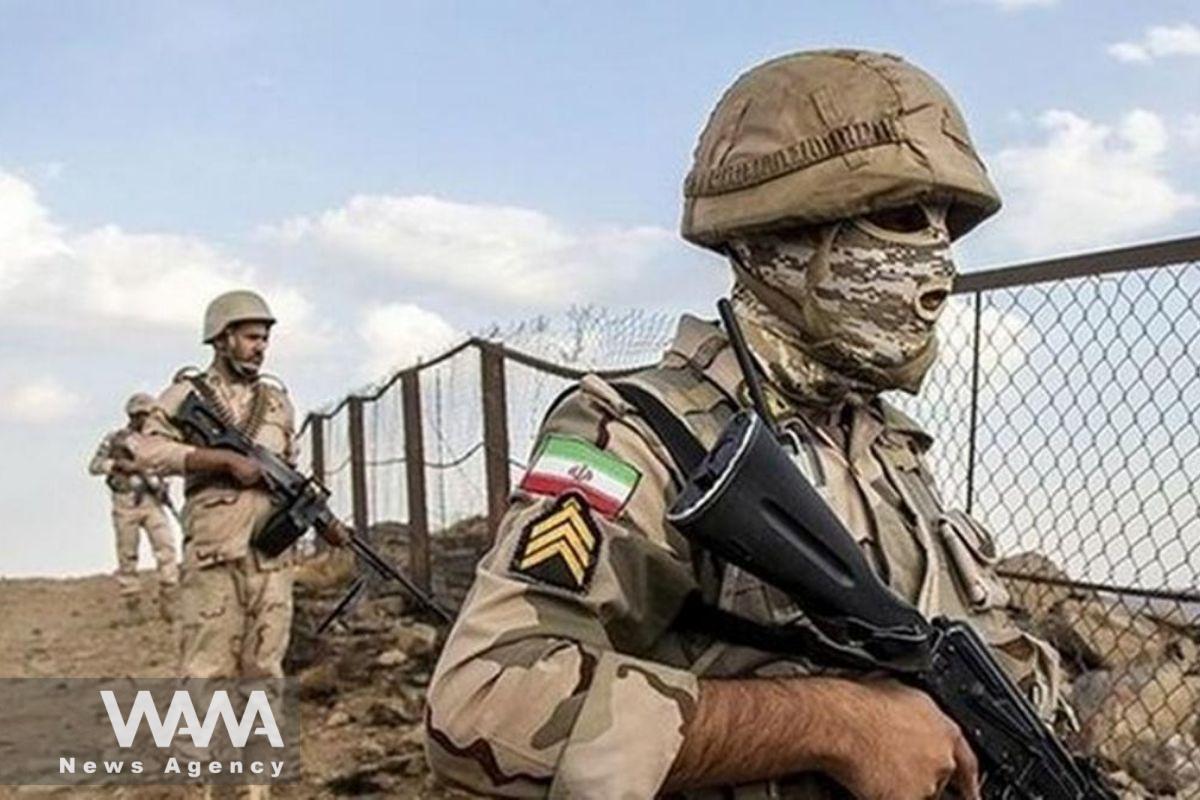
Iran’s Army ground force combatants in Eastern Border. Social media/ WANA News Agency
He noted that all three countries understood that security was a shared yet costly commodity. Baghaei added that the issue was consistently addressed in Iran’s discussions with officials from Pakistan and Afghanistan.
Baghaei Says Iran Prepared for Any Development After Eight Months of War
Asked about the Qatari Foreign Ministry spokesman’s remarks suggesting that the world might be approaching a third world war, Baghaei acknowledged that he did not possess the ability to predict the future.
He said Iran had endured at least eight months of what he described as an imposed war with pride and resilience.
Baghaei stressed that Iran had learned from past experiences, was prepared for any eventuality, and needed to remain ready for all possible developments. He added that Iran had to be prepared in every respect to defend the country.
Iran Comments on China’s Role in Reducing Regional Tensions
Asked whether China had the motivation and was taking serious action to reduce regional tensions, Baghaei said it was natural for countries to pursue their own interests.
He referred to a piece of advice whose exact origin he could not recall, according to which, when one’s enemies or rivals are busy making mistakes, one should not stop them.

Baghaei: U.S. Must Decide on Iran’s Seven Demands
Asked whether Pakistan’s Chief of Army Staff Asim Munir was carrying a message or a warning about a possible war, Iranian Foreign Ministry Spokesman Esmaeil Baghaei said Munir should arrive so they could meet and discuss what he wanted to address.
He noted that exchanges between Iran and Pakistan were frequent and that relations between the two countries were important and excellent at various levels. Some of these exchanges concerned negotiations, he said, while most focused on bilateral relations.
Asked about Iran’s seven-day proposal, whether negotiations with the United States were still underway, and Washington’s latest response, Baghaei said contradictory statements by U.S. officials were nothing new.
He stressed that both the international community and the Iranian people had witnessed Tehran’s good-faith efforts to convey its proposals to the United States through Qatari mediation, in clearly defined formats, to safeguard Iran’s national interests. However, the response received from the other side was incomplete, he said, adding that Iran had communicated its positions in return.
Baghaei emphasized that the seven demands were not unusual, noting that they had already been included in the agreement dated June 18 and constituted Iran’s legitimate and rightful demands under any assessment.
He said Washington must make a decision, stressing that Iran remained committed to diplomacy to safeguard its national interests and preserve regional peace and security while remaining steadfast in defending the country.

Pakistan Army Chief to Visit Tehran on Tuesday
WANA (Oct 19) – Pakistan’s Army Chief, Field Marshal Asim Munir, will travel to Tehran on Tuesday to meet with Iranian officials, as part of ongoing bilateral cooperation between Iran and Pakistan and Islamabad’s role in Iran-U.S. negotiations. The visit comes amid close cooperation between the two countries, particularly in security and bilateral affairs, […]
Iran to Review Reports About Oil Tankers in Sri Lanka
Commenting on reports concerning Iranian oil tankers in Sri Lanka, Baghaei said the matter needed to be examined.
He described relations between Iran and Sri Lanka as good and noted that Sri Lanka had provided effective cooperation in matters related to the Iranian vessel Dena.
Baghaei: Regional Security Must Be Ensured by Countries of the Region
Iranian Foreign Ministry spokesman Esmaeil Baghaei said Russia had proposed initiatives for collective and self-reliant security in the Persian Gulf region, adding that Iran supports the principle of regional countries relying on one another to ensure their security rather than depending on outside powers.
Asked about Russia’s proposal involving Persian Gulf countries, Jordan and even permanent members of the UN Security Council to ensure security in the Persian Gulf and the Strait of Hormuz, Baghaei said media reports had presented the proposal in a fragmented manner.
He explained that Russia had pointed out that Iran, China and Russia had each put forward proposals for collective and self-reliant security in the Persian Gulf region, and that Moscow was pursuing the issue.
Baghaei added that Russia had been proposing measures to strengthen collective security mechanisms in the Persian Gulf, the Gulf of Oman and the broader West Asian region for several years, raising the issue at appropriate opportunities.
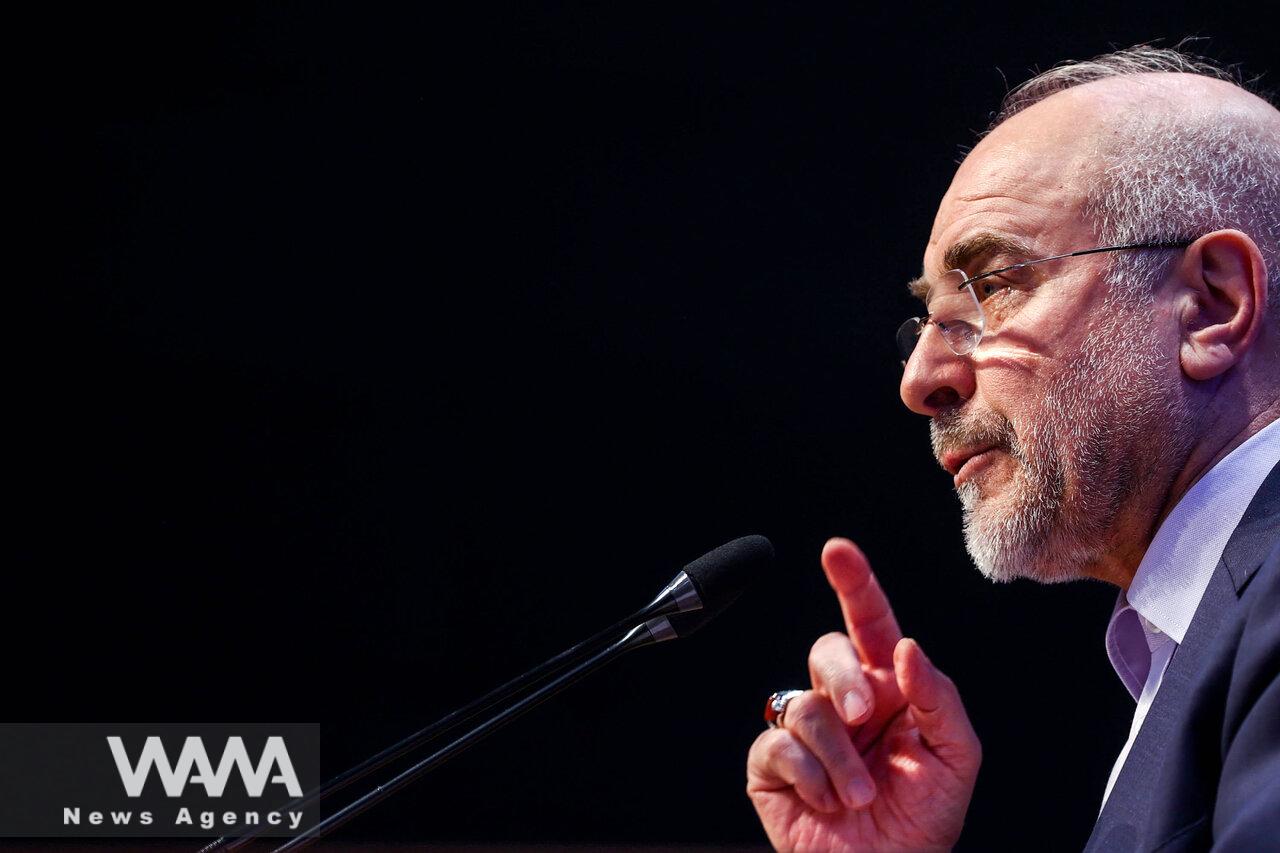
Ghalibaf: Regional Security Depends on the Absence of U.S. Forces
WANA (Jul 22) – Mohammad Bagher Ghalibaf, Speaker of Iran’s Parliament, responded to recent remarks by U.S. President Donald Trump, saying the equation of the conflict is clear: “Either everyone, or no one.” In a post on X, Ghalibaf said that if Iran is prevented from exporting its oil, no other country in the […]
He said Iran also supported the principle that regional security should be ensured by countries of the region themselves, rather than by actors that had shown little regard for the genuine security of regional countries and were concerned only with the security of an aggressor and expansionist party.
However, he stressed that achieving this goal required regional countries to begin building mutual trust and establish a reliable security mechanism without foreign pressure or interference from the United States and other outside parties that, he said, did not genuinely care about the region’s security.
Iran Calls on Regional Countries to Prevent Use of Their Territory for Attacks
Asked about Qatar’s Foreign Ministry statement that any agreement with Iran should address the security concerns of all parties, particularly Persian Gulf states, and that the region needed a new security framework, Baghaei said Iran’s own demand was precisely that regional countries demonstrate their commitment to establishing a regional security mechanism.
He said the first step should be preventing outside parties from exploiting their territory to threaten or attack other countries.
Baghaei identified good-neighborliness as a fundamental principle in relations between states, explaining that it required mutual respect for sovereignty and territorial integrity.
He added that genuine good-neighborly relations could not be discussed while regional countries hosted an aggressor that had used their territory and military bases to attack another country.
Baghaei Says Highlighting Qatar’s Statement Was a Sign of Goodwill
Asked about Qatar’s official document stating that Iran’s attacks against Qatar had targeted exclusively U.S. military objectives, with almost no civilian or public targets struck, Baghaei was also questioned about a subsequent post by Qatar’s Foreign Ministry spokesman accusing him of selectively citing Qatar’s positions and pointing to other statements made by Doha.

The Iranian spokesman said Tehran maintained good relations with Qatar, adding that Iran’s selective reference to Qatar’s statement was itself a sign of goodwill.
He said Iran had done nothing wrong by highlighting a position that Qatari officials had expressed honestly.
Baghaei noted that Qatar had stated in an official document that Iran’s defensive strikes had targeted only U.S. military objectives and bases.
He said Qatar should welcome the fact that it had made the statement itself and that Iran had chosen to highlight that factual and sincere position rather than emphasize what he described as unfounded accusations.
Baghaei added that he did not believe Iran’s decision to highlight Qatar’s statement provided any grounds for complaint.







