Behind the Scenes of a Tense Day in New York: From Iran-U.S. Contact to the UN Podium

WANA (Sep 24) – If the state of Iran-U.S. relations on the evening of September 23 is to be captured in a single frame, two images from New York tell much of the story.
In one, Iranian President Masoud Pezeshkian stands at the UN podium, holding images of Iran’s late leader and children killed in the U.S. attack on a school in Minab, and tells Trump that Iran will not bow under pressure. In the other, reports emerge of a three-hour contact between representatives of Tehran and Washington — a contact that Donald Trump described as “very good” and “very productive.” Tehran, however, characterized the communication not as a deal taking shape, but as contact through intermediaries to convey Iran’s conditions.
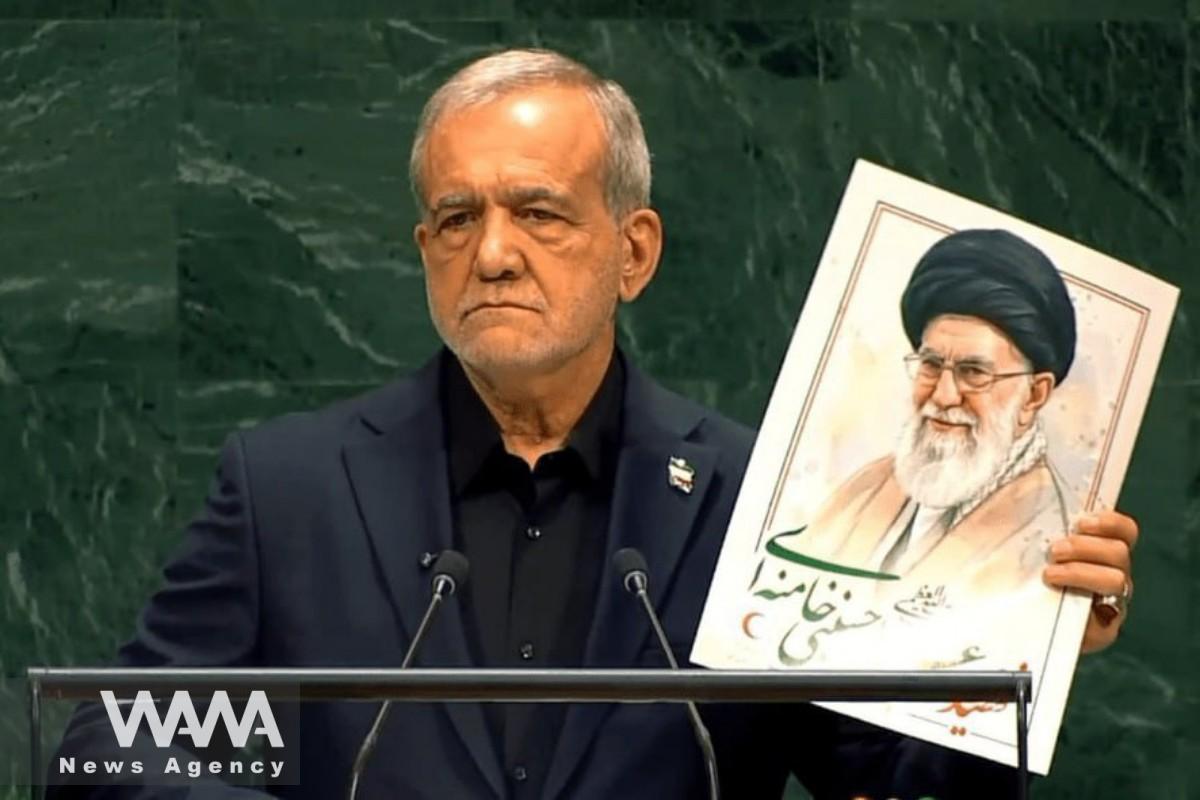
Pezeshkian at UN: Iran Cannot Be Forced to Surrender Through War
WANA (Sep 23) – Iranian President Masoud Pezeshkian told the 81st United Nations General Assembly that Iran cannot be forced to surrender through war, stressing that Tehran has never initiated a war and remains committed to negotiations, while also making clear that it is not afraid to defend itself. Pezeshkian opened his speech by […]
Washington spoke of Steve Witkoff and Jared Kushner speaking with the Iranian side, while Tehran emphasized that Iranian Foreign Minister Abbas Araghchi’s contact with the American side took place through Qatari mediation.
Esmail Baghaei also confirmed that communication had taken place between the two countries’ delegations, while making clear that Iran’s stated positions had not changed. An end to the war on all fronts, a halt to U.S. military actions, an end to the maritime blockade and economic warfare, and the release of Iranian assets are among the conditions Tehran has put forward for changing the current situation.
Against this backdrop, Pezeshkian’s speech was more than a routine address to the UN General Assembly. He turned it into a direct response to Trump, who had spoken at the same podium a day earlier about the possibility of the “destruction” of the Islamic Republic. In response, Pezeshkian said Iranians had been victims of terrorism, not perpetrators, and stressed that Iran had not started the war and would not back away from defending itself.
Yet one of the most significant parts of his speech came when, after making those firm statements, he also defined a conditional path toward dialogue. Tehran, he said, is prepared for “dialogue, diplomacy and negotiations,” but not under the language of force. In this way, Pezeshkian outlined a framework in which negotiations are not rejected in principle, but neither is their outcome to be determined under military pressure or predetermined threats.
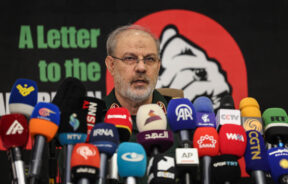
 The General Assembly chamber itself also became part of the confrontation. During Pezeshkian’s speech, the U.S. representative left the hall, while the Israeli delegation was also absent. Marco Rubio later rejected the Iranian president’s remarks, saying Tehran could not lecture others on human rights and the international system. In Tehran, Armed Forces Chief of Staff Ali Abdollahi described Pezeshkian’s speech as a reflection of Iran’s position and stressed the continuation of the armed forces’ response to threats.
The contrast before and after the speech was not confined to political positions; it was also reflected in energy markets. Before the speech, news of the three-hour contact and the possibility of easing tensions pushed Brent crude below $100 for the first time in about two weeks. After Pezeshkian’s speech and his emphasis that Iran would not submit, the market direction changed, with Brent rising nearly 4% to finish Wednesday’s trading session at $103.08 a barrel.
The market reaction further underscored the importance of the Strait of Hormuz. Tehran had previously said it was prepared to reopen the strait within a week if its conditions were accepted. Pezeshkian also stressed at the UN that the security of the waterway should be ensured within a regional framework and that Iran could not allow the Strait of Hormuz to become a route for transferring weapons against the country.
Washington, meanwhile, has spoken of part of the oil transit route reopening, but data on trackable vessels continue to indicate that traffic through Hormuz remains highly limited. This gap between the two sides’ assessments has turned Hormuz from a purely maritime issue into one of the main levers of the crisis — a point where any change in its status can affect both political calculations and energy prices.

People drive past a billboard about the Strait of Hormuz, on a building in Tehran, Iran, September 16, 2026. Majid Asgaripour/WANA (West Asia News Agency)
The pressure has not been limited to Hormuz. As of September 23, the threat of secondary sanctions against airports and companies providing services to sanctioned Iranian airlines entered the implementation phase. Baghdad halted acceptance of Iranian flights, while flights from Iran to Muscat were also suspended. Iran’s air network, however, has not been completely disrupted, with routes to China, Türkiye, Armenia, Najaf and Dubai still scheduled.
The development has extended the confrontation beyond the military arena and oil markets into Iran’s international connectivity — an area where the effectiveness of U.S. pressure also depends on the cooperation of other countries. Tehran’s response therefore focused on those countries as well.
Mohsen Rezaei, secretary of Iran’s Supreme National Security Council, warned neighboring countries against cooperating with the United States over Iranian flights, saying that Iran could respond by suspending flights to countries cooperating with Washington. Mohammad Marandi, who is close to Iran’s negotiating team, also responded to the issue by saying that if Persian Gulf states cooperate with U.S. efforts to halt Iranian flights, Tehran could, if necessary, use force to shut down their airports.

Rezaei: Hormuz Will Remain Closed Until Iran’s Conditions Are Met
WANA (Sep 23) – Mohsen Rezaei, secretary of Iran’s Supreme National Security Council, said no negotiations between Iran and the United States are currently taking place in New York, stressing that Iran’s seven conditions have been conveyed to intermediaries through Foreign Minister Abbas Araghchi. He said the Strait of Hormuz would remain closed and no […]
Rezaei also said that Iran’s seven conditions had been conveyed through diplomatic channels and that Tehran holds the Strait of Hormuz as leverage for negotiations. The statement further clarifies the connection between the Hormuz and negotiations files: for Tehran, the waterway is not simply a matter of shipping; it is part of the balance of leverage on the basis of which decisions about ending the confrontation are to be made.
For this reason, the picture of New York cannot be explained by a single phone call or speech. What unfolded on September 23 brought together three arenas: Pezeshkian’s political position at the United Nations, the practical response of the United States and its allies through pressure measures, and the energy market’s reaction to every shift in the level of tension.
Against this backdrop, Pezeshkian’s speech drew a clear line: Tehran wants negotiations to be separated from pressure. Until the two sides can separate those two tracks, any political development can once again reverberate through Middle East security, the Strait of Hormuz and oil prices.