

From an Olive Branch at the Nobel Peace Prize to Trump’s Sanctions on The Hague

WANA (Oct 13) – The selection of Navi Pillay, a South African judge and legal scholar, as the recipient of the 2026 Nobel Peace Prize has once again left Donald Trump without a prize he has long sought. The decision also triggered sharp reactions in the United States and Israel, particularly because Pillay is among the legal figures who have criticized Israel’s actions in Gaza and examined developments in the territory in the context of allegations of genocide.
In response, Palestinian cartoonist Alaa Allaqta depicted a dove of peace carrying an olive branch in its beak while defecating on Trump’s head, mocking the US president’s repeated assertions that he deserves the Nobel Peace Prize.
The reality on the ground stands in stark contrast to Trump’s claims of being a peacemaker. From the wars in Gaza and Lebanon to the military confrontation involving the United States, Israel and Iran, as well as the Russia-Ukraine war and the conflict in Yemen, Washington’s foreign policy record has been marked by numerous military confrontations. Meanwhile, US arms support for Israel during the war in Gaza has remained a major source of criticism of the Trump administration’s policies.
Against this backdrop, the selection of a figure who has emphasized accountability for war crimes and violations of international law carries significance beyond the award itself. Particularly amid US pressure on international judicial institutions, the decision has renewed a fundamental question: Can international institutions act independently when confronted by major political and military powers?

A cartoon by a Palestinian cartoonist Alaa Allaqta. Social media /WANA News Agency
The Nobel Committee and a Stand for International Law
Navi Pillay, an 85-year-old South African legal scholar, previously served as the UN High Commissioner for Human Rights and held judicial positions in international courts. She also chaired the UN Independent International Commission of Inquiry on the Occupied Palestinian Territory, including East Jerusalem.
In recent years, Pillay has emerged as a prominent critic of Israel’s policies toward Palestinians, supporting investigations into allegations of genocide, war crimes and crimes against humanity. She has also addressed Israel’s policies within the framework of apartheid and described ending the occupation of Palestine as essential to resolving the conflict.
In June 2022, Pillay said: “The root of the problem is clearly the occupation of Palestine, which must end.”
During the war in Gaza, she also criticized attacks on civilians and civilian infrastructure, emphasizing the need to hold those responsible for violations of international law accountable. Her support for an arms embargo on Israel and restrictions related to Israeli settlements has also been part of her record.
Following the announcement of the award, Pillay reiterated her position on Gaza, saying: “What is happening there is genocide.”
She also made a pointed reference to Trump’s desire for the prize when she responded to applause from the audience by saying: “If you applaud me a little more, perhaps I will share this prize with Trump!”

Navi Pillay, a South African judge. Social media /WANA News Agency
A Track Record That Fueled Concerns About a Trump Award
Despite the positive response to Pillay’s selection, the Nobel Committee’s history shows that the Peace Prize has repeatedly faced criticism over the criteria used to choose its recipients. That record had made the possibility of Trump receiving the award a serious concern for his critics.
Under Alfred Nobel’s will, the prize is intended for those who have made the greatest efforts to promote fraternity among nations, reduce conflicts and advance peace. However, several past selections have raised questions about whether the recipients consistently met those criteria.
Barack Obama received the Nobel Peace Prize in 2009, less than a year after taking office as US president. The decision drew criticism because of the gap between the timing of the award and the tangible results of his policies. During his presidency, US forces remained involved in several military conflicts.
Henry Kissinger, the former US secretary of state, also received the Nobel Peace Prize in 1973, despite his role in US military policies in Southeast Asia, including extensive bombing campaigns that remain the subject of historical criticism.
The selection of María Corina Machado, a Venezuelan opposition figure and supporter of Israel, as the previous year’s laureate also prompted criticism over the political criteria behind the award. By contrast, Mahatma Gandhi, the leader of India’s independence movement, was never awarded the prize despite being nominated multiple times.
This history, combined with Trump’s repeated insistence that he deserves the Peace Prize, fueled concerns that this year’s selection could become politicized. Trump had previously received FIFA’s Peace Prize at a football-related event, further fueling debate over the political use of peace awards.
 Trump: The Nobel Peace Prize Should Have Gone to Me

Pillay’s selection prompted a sharp reaction from Trump. The US president described the decision as an insult to the Nobel Prize, saying: “They gave the Nobel Peace Prize to a person I have never heard of, and nobody knows who she is.”
Trump went on to criticize the decision, saying the United States, represented by him as president, should have received the award. He described the Nobel Committee’s choice as a source of shame for Norway.
His reaction once again highlighted the gap between Trump’s preferred image of himself as a peacemaker and criticism of his administration’s foreign policy. The issue was not simply that Trump had failed to win an award. Pillay’s selection also drew attention to her legal and political record, as well as US support for Israel during the war in Gaza.
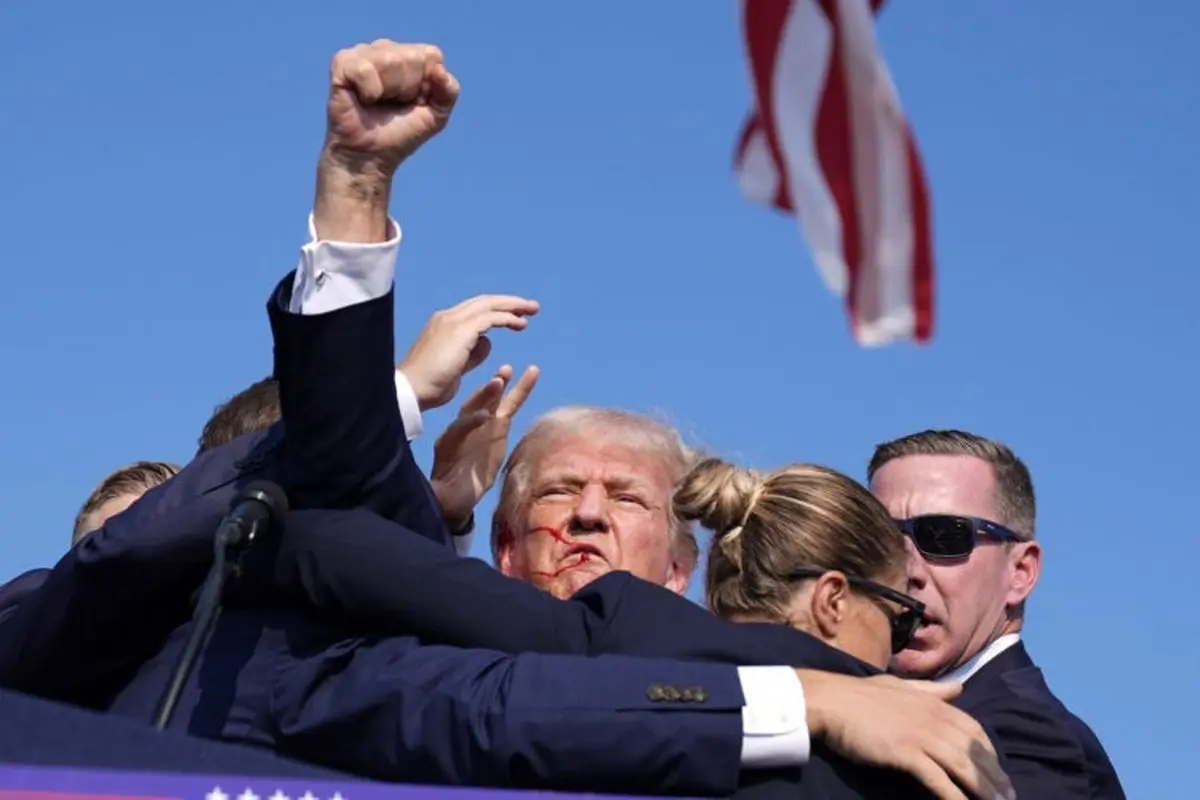
Trump: I Prevented 5 Wars, But Others Get the Nobel!
WANA (Jul 05) – The U.S. President has once again revealed his long-standing dream of receiving the Nobel Peace Prize—this time claiming he prevented five wars between various countries, yet the prize continues to be awarded to others. Speaking at a rally in Iowa to celebrate the passing of what he called the “big, […]
Trump’s Anger and Renewed Sanctions on The Hague
Hours after Pillay’s selection was announced, the Trump administration announced new sanctions against the International Criminal Court (ICC), based in The Hague. Pillay had previously held a judicial position at the court.
In a statement announcing the measures, US Secretary of State Marco Rubio described the ICC as a “rogue court” and said Washington would prohibit transactions with the institution, target its resources and restrict its ability to continue operating. He also warned that the court must stop what the United States considers threats or Washington would take steps to end its operations.
Under the announced measures, the ICC’s assets within US jurisdiction would be targeted, while American individuals and companies would be barred from conducting transactions with the court. Certain commercial partners would also be given a deadline to end their cooperation with the institution.
This is not the first confrontation between Washington and the ICC. The United States had previously imposed sanctions in response to the court’s actions involving Israeli officials, including Prime Minister Benjamin Netanyahu and former defense minister Yoav Gallant, as well as investigations into the conduct of US forces in Afghanistan.
The ICC was established in 2002 to prosecute genocide, crimes against humanity and war crimes. It has 125 member states, while the United States and Israel are not members.
The US sanctions raise a fundamental question about the future of international justice: If a judicial institution faces economic and political pressure for pursuing cases involving powerful officials, how independently can it carry out its mandate?

Araghchi Reacts To Nobel Peace Prize Winner’s Praise For Israeli Officials
WANA (Nov 04) – Iran’s Foreign Minister, Seyed Abbas Araghchi, has criticized the Nobel Peace Prize Committee after this year’s laureate praised Israeli leaders, calling the move another sign of the prize’s “loss of credibility” and “politicization.” In a post on X, Araghchi wrote: “For many people around the world, the Nobel Prize has […]
Israeli Anger and Palestinian Support
Israel’s Foreign Ministry also criticized Pillay’s selection, accusing her of spreading falsehoods and displaying hostility toward Israel. The ministry argued that her role in advancing allegations of genocide against Israel was part of a political campaign to damage the country’s image.
Palestinian groups, by contrast, welcomed the decision. Bassem Naim, a member of Hamas’s political bureau, described the award to Pillay as a step toward strengthening justice and a message of hope for Palestinians, particularly the people of Gaza.
In a statement, Hamas said the recognition of Pillay’s work in defending human rights and international law, particularly in the Palestinian territories, was an important step toward international justice. The movement added that Palestinians continued to await accountability for those responsible for war crimes through international judicial institutions.
International Institutions Under Pressure From Major Powers
The significance of Pillay’s selection cannot be reduced to Trump’s failure to win the Nobel Peace Prize. The decision comes at a time when international legal institutions face political and economic pressure from major powers, repeatedly challenging their independence.
If the criteria for the Peace Prize include defending human rights, advancing international law and holding those responsible for crimes accountable, selecting a figure such as Pillay can draw public attention to the responsibilities of these institutions. The reactions from the United States and Israel, meanwhile, demonstrate that pursuing sensitive international cases can carry significant political costs for the institutions and individuals involved.
The Nobel Peace Prize ceremony is scheduled to take place in Oslo on December 10. Yet the event’s significance lies not in Trump’s likely reaction on the day, but in the question it has once again placed before the international community: Do the principles of international law stand independently of states’ political and military power, or does the pursuit of justice remain dependent on the influence of those accused?







