How Can Iran Make America Pay a Higher Price for Economic Warfare?

WANA (Sep 05) – After Washington failed to achieve its desired objectives quickly through military force, the United States is now placing greater emphasis on economic pressure and blockade. The logic behind this shift is straightforward: if military confrontation comes at a high cost, Washington can turn to an instrument that appears, at least on the surface, to be less costly. But this raises a fundamental question: If Iran can increase the cost of economic warfare for the United States, could Washington’s calculations change once again?
Governments rarely change course overnight. A strategy is usually reconsidered when the gap between the costs being paid and the results being achieved becomes too wide. As long as a policy remains manageable and delivers sufficient returns, there is little incentive to abandon it. But when the costs continue to rise while the gains diminish, staying on the same path becomes increasingly difficult to justify.
Part of Washington’s recent shift can be viewed through this lens. After several rounds of direct military confrontation, the United States has faced growing pressure both on and off the battlefield. A Reuters poll at the end of August put President Donald Trump’s approval rating at just 33 percent. Only 36 percent of Americans supported the war, while 71 percent were dissatisfied with how the administration was handling the cost of living. A University of Massachusetts poll likewise found that more than two-thirds of respondents were unhappy with Trump’s handling of the war.
At the same time, questions have emerged over U.S. weapons stockpiles. Reuters reported in early August that the United States had used almost all of its inventory of some precision long-range missiles during the war, while military sources warned of shortages in certain offensive and defensive systems. Other reports have also pointed to significant pressure on U.S. Patriot interceptor stocks.

U.S. Seeking to Force Countries to Cut Economic Ties with Iran Through “Economic Terrorism”
WANA (Aug 26) – Iranian Foreign Minister Abbas Araghchi has sent a letter to UN Secretary-General António Guterres, the president of the UN Security Council and UN member states, describing the latest U.S. measures against Iran as “economic terrorism” and calling for the condemnation of Washington’s sanctions and threats against countries maintaining lawful economic relations […]
Trita Parsi, executive vice president of the Quincy Institute, has argued that Trump would likely prefer to keep the conflict at a relatively low level until the midterm elections—neither moving toward a major agreement nor allowing the crisis to escalate into another full-scale war. For the White House, reducing tensions is not simply a diplomatic objective; fuel prices and inflation are directly linked to how American voters view the economy.
That is why Washington is increasingly looking at economic warfare as a lower-cost alternative—an instrument intended to put greater pressure on Iran without having to bear the costs of a full-scale military conflict.
But there is a weakness in this calculation: low-cost pressure for the United States is not a fixed reality.
If Tehran can shift part of the cost of that policy onto the U.S. economy and the interests of Washington’s regional partners, the equation changes.

Vessels in the Strait of Hormuz are visible near the beach of Bandar Abbas, Iran, August 26, 2026. Majid Asgaripour/WANA (West Asia News Agency)
Hormuz: Iran’s Most Important Leverage
The Strait of Hormuz is Iran’s most important leverage point in this equation. Its significance goes far beyond the amount of oil passing through it. Any serious disruption in the waterway can simultaneously affect oil prices, shipping insurance, transportation costs and, ultimately, fuel prices.
This week, as limited hostilities resumed, Brent crude once again climbed above $90 a barrel, while vessel traffic fell sharply. For the U.S. economy, higher energy prices do not remain a foreign-policy problem. Rising gasoline prices can add to inflationary pressures and, at a time when American public opinion is highly sensitive to the cost of living, turn into a domestic political issue.
This is precisely what makes Hormuz more than a military or geographic issue. It can also become an economic lever. The more sensitive global energy markets become to developments in the waterway, the higher the economic cost of Washington’s decisions becomes.

New U.S. Economic Pressure on Iran: Maximum Pressure or Psychological Warfare?
WANA (Aug 24) – A senior Iranian intelligence source described the Trump administration’s new economic pressure campaign against Iran as part of a media and psychological operation aimed at increasing pressure on the Iranian people, stressing that the plan would not represent any new action on the ground despite the publicity surrounding it. The […]
The Cost of Pressure Can Reach the United States
Because of its geographic distance from the region, Washington can keep much of the direct impact of war away from American citizens. But that distance offers far less protection against economic consequences.
Higher energy prices, disruptions to supply chains and rising transportation costs cannot simply be contained in the Middle East. Their effects can reach the U.S. economy and ultimately show up in household expenses.
Meanwhile, a prolonged crisis can increase the cost of protecting critical infrastructure and economic networks inside the United States. The wider the threats to energy, financial and communications infrastructure become, the more resources Washington must devote to protecting and strengthening them.
Under such circumstances, economic warfare is no longer a low-cost operation taking place somewhere overseas. Part of its cost can begin to appear inside the United States itself.
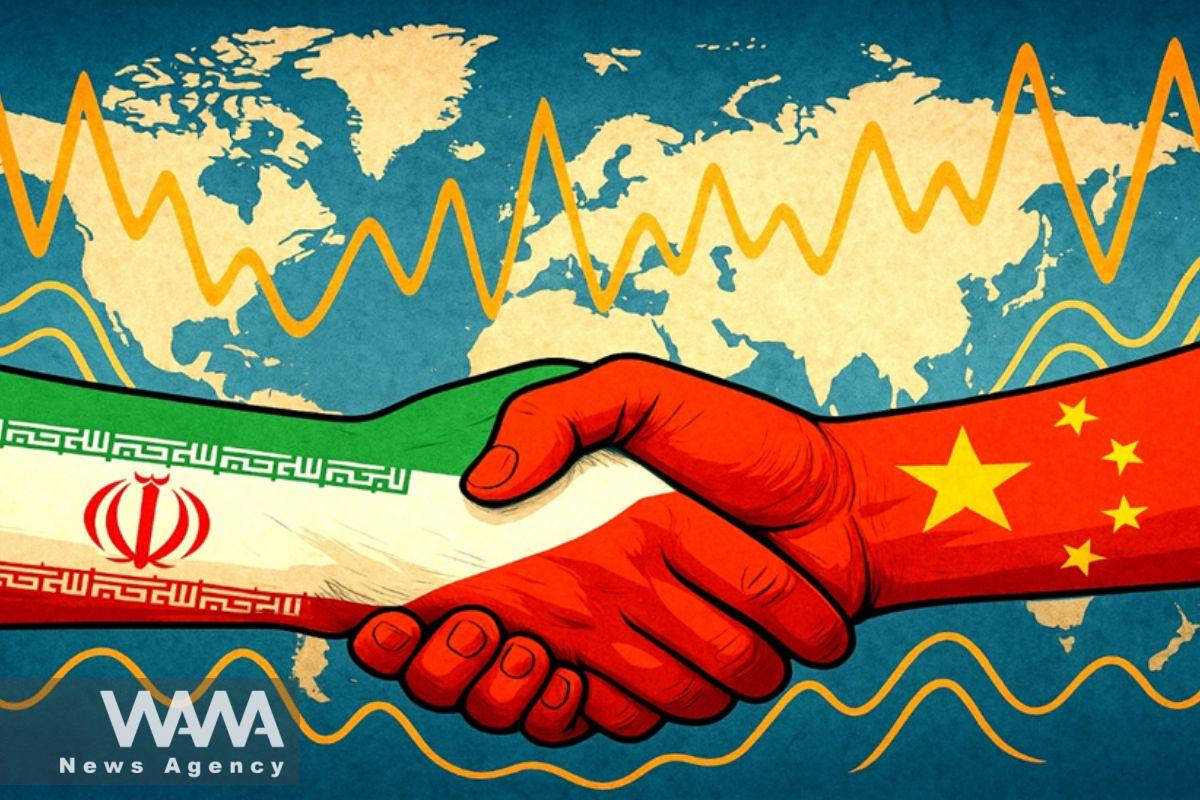
Why Is China Standing With Iran?
WANA (Aug 27) – Beijing’s latest warning to Washington over Iran-related sanctions has once again highlighted an important reality: the relationship between China and Iran is no longer merely a trade partnership. It has become part of the broader equation of competition between China and the United States, as well as Beijing’s efforts to shape […]
Regional Partners Cannot Be Left Out of the Equation
Another part of the equation concerns the countries of the region. Although Arab governments in the region cooperate with the United States on many security issues, their interests do not necessarily align with Washington’s on every matter.
Their economies depend heavily on energy, maritime trade, foreign investment and regional stability. A prolonged crisis and rising risks along export routes can impose direct economic costs on them.
The greater those costs become, the greater the possibility of a gap emerging between Washington’s political objectives and the economic interests of its regional partners.
For Iran, this means economic blockade cannot be viewed solely through the relationship between Tehran and Washington. If maintaining the pressure also becomes costly for regional states, pressure to manage and de-escalate the crisis could begin to emerge from within the same coalition supporting Washington.

People walk near a billboard depicting U.S. President Donald Trump on a building in Tehran, Iran, August 31, 2026. Majid Asgaripour/WANA (West Asia News Agency)
The Military Option: The Final Layer of Pressure
Alongside economic tools, Iran has also kept the military option on the table as a possible response to continued blockade. Senior Iranian officials have recently warned that if the current situation persists, Tehran could resort to military measures to counter the blockade.
Such a move could broaden the confrontation and impose additional costs on those enforcing the blockade and their partners. At the same time, however, unlike economic and diplomatic instruments, the military option carries a much greater risk of directly escalating the conflict.
Its significance, therefore, lies not only in whether it is used. **Its presence in the calculations of the other side can itself affect Washington’s decisions.** The United States is more likely to pursue economic warfare confidently if it believes that such a campaign will not return the conflict to the military arena.

Iran, the US: War or a Return to Understanding?
WANA (Aug 29) – The fundamental problem with the US is that its president lacks any independent political or military insight, fails to grasp strategy, and relies solely on data fed by advisors who mostly take their marching orders from the Israelis. Much like what transpired in the military confrontation with Iran, this time […]
The Real Issue Is Changing Washington’s Calculation
Iran is not simply confronting sanctions or a financial blockade. The broader problem is that the United States appears to believe it can intensify economic pressure without paying a comparable price.
If that assumption changes, Washington’s behavior could change as well.
Greater sensitivity in energy markets to developments in Hormuz, the transmission of the crisis into U.S. fuel prices and the wider economy, higher security and defense costs, increased economic pressure on regional partners, and maintaining the military option as a deterrent could all make Washington’s calculations more complicated.
The objective of such an approach is not necessarily to escalate tensions. It is to eliminate the perception that economic pressure on Iran comes at little cost to the United States.
Washington is more likely to reconsider its strategy when the cost of continuing down the same path exceeds its potential gains. Therefore, if the United States has chosen economic warfare as an alternative to military confrontation, Iran’s response cannot simply be to absorb the pressure. It must also seek to ensure that the economic war comes with a price for the other side.

Who Will Win the Great Iran-U.S. Test?
WANA (Aug 24) – The U.S. economic war against Iran goes beyond a bilateral confrontation, placing the world before a historic choice: between a Washington-led unilateral order and a multilateral system that strengthens countries’ economic independence, regional security, and Iran’s strategic role in the Strait of Hormuz. At a time when Trump and Vance […]