

Iran Better Prepared for Potential Threats Than at Start of 40-Day War
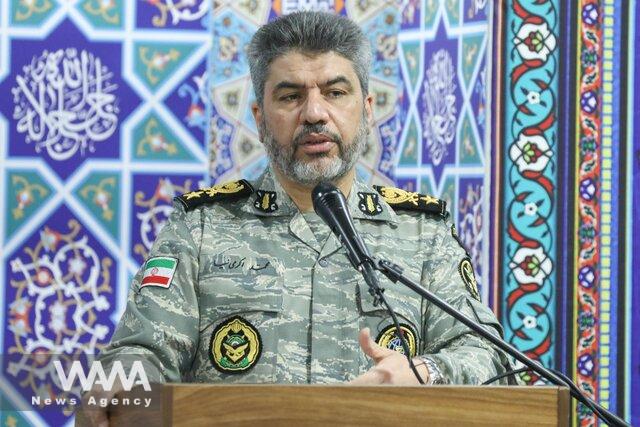
WANA (Nov 01) – Iran’s armed forces are now better prepared to respond to any potential threat than they were at the beginning of the 40-day war, with their operational readiness strengthened, target banks updated, and defensive and offensive capabilities expanded, the Iranian Army spokesman said.
Brigadier General Mohammad Akraminia made the remarks in a radio interview while explaining the strategic aspects of a meeting between senior armed forces commanders and the Commander-in-Chief of Iran’s Armed Forces. He said the measures taken since the recent war had significantly enhanced the country’s military preparedness.
Referring to the Commander-in-Chief’s emphasis on ‘intelligent combat readiness,’ Akraminia said this approach was a key pillar of Iran’s defense strategy. He explained that the armed forces had managed to compensate for part of the equipment gap with their adversaries through asymmetric and unconventional warfare, operational intelligence, and the use of appropriate tactics.
He said the experience of the recent war had demonstrated the importance of intelligent combat readiness, adding that the armed forces had managed the conflict by relying on their operational capabilities, command measures, and public support.
The enemy had been forced to announce a ceasefire after nearly 40 days, he said, noting that the experience was now serving as the basis for improving combat capabilities and preparing for future threats.
US Interests Beyond West Asia Could Also Be Targeted
Akraminia said that, in line with the Commander-in-Chief’s emphasis on responses without geographical limitations, the scope of any future conflict could extend beyond West Asia.
He noted that the recent war had spread from the occupied territories to US military bases in regional countries. However, he warned that if another act of aggression occurred, the geographical scope of the conflict could expand to areas beyond West Asia.
The army spokesman said Iran’s armed forces were updating their target banks in accordance with issued orders, focusing on various tangible and intangible assets belonging to the US-Israeli enemy. He added that, in the event of a new act of aggression, US facilities, equipment, personnel, and interests could be targeted wherever they were within reach.
Referring to a message he had previously published on the issue, Akraminia stressed that a future war would have a wider geographical scope, describing this as a serious approach adopted by the armed forces. The enemy should not assume that Iran’s response would necessarily remain confined to the geographical boundaries of previous confrontations, he said.
He also stressed the need for an immediate response to any aggression, noting that the outbreak of the war on February 28 had demonstrated the armed forces’ ability to react swiftly. He said they were now at a higher level of readiness, drawing on operational experience and improvements to their military organization.
Washington Cannot Unilaterally Decide When a Future War Ends
Addressing the possible end of a future war, Akraminia said the US president had believed before the 40-day war that he could launch a short, swift conflict and then unilaterally declare it over.
However, developments during the war demonstrated that the management and termination of a conflict would not be determined solely by Washington’s will, he said.
The army spokesman warned that any new aggression could lead to a future war lasting considerably longer than the previous one, adding that the US president would not be able to determine its duration or the conditions for its conclusion on his own.
He said the American people and the country’s European allies should also understand that Iran’s initiative would play a fundamental role in determining the outcome of such a conflict.
Changes to Defense Doctrine and Upgrading Army Operational Capabilities
Akraminia identified the deepening of indigenous defense capabilities and the updating of military doctrine and tactics as other key issues emphasized by the Commander-in-Chief.
He said Iran had begun shifting its defense doctrine from an exclusively defensive approach toward a more offensive one, adding that this shift had also been put into practice during the recent war.
The armed forces have sought to increase their ability to respond to threats in line with changing circumstances by adopting new tactics and developing military technologies, he said, adding that the process would continue.
Referring to measures taken during the ceasefire, the army spokesman said some weapons had been modernized, new equipment had been added to the armed forces’ operational structure, and new technologies and tactics had been introduced.
These measures had collectively increased the combat readiness of the army and other branches of the armed forces compared with the beginning of the 40-day war, he added.
Akraminia also described strengthening spiritual resilience and a spirit of dedication as important components of the armed forces’ strength, saying that the motivation to defend the country, alongside equipment and operational capabilities, played a decisive role in maintaining combat readiness.
He expressed appreciation for the public’s participation in nightly gatherings in support of the armed forces, saying their continuation, now approaching the 244th night, had boosted the motivation, morale, and sense of responsibility of military personnel toward the nation.
The army spokesman also thanked the government and the Ministry of Defense for their support in providing equipment, financial resources, and other logistical requirements, describing this assistance as an effective factor in maintaining and improving operational readiness.
Prepared to Counter Simultaneous Threats on Multiple Fronts
Asked about coordination between the Army, the Islamic Revolutionary Guard Corps (IRGC), and other armed forces in the event of simultaneous threats on several fronts, Akraminia said operational coordination and joint operations had always been on the armed forces’ agenda and had also been maintained throughout the recent war.
He said coordination among the armed forces had been further strengthened since the war, adding that operational plans to counter potential threats from different fronts had been prepared and communicated to military units. Forces stationed along the country’s borders were also fully prepared, he said.
Describing some of the lessons learned from the recent war, Akraminia said the enemy had sought to equip anti-revolutionary and separatist groups based in Iraq’s Kurdistan Region in an attempt to establish a ground front along Iran’s western borders.
However, the deployment of armed forces units and preemptive operations against the groups’ positions had prevented them from achieving their objectives, he said.
He added that during these operations, fighter jets belonging to the Army’s Air Force, along with the missile and drone capabilities of the armed forces, had targeted the positions of the groups in question, depriving them of the initiative.
Akraminia said the experience gained from the war had increased the armed forces’ confidence and preparedness, assuring that Iran’s defensive deployment and the presence of military units along all its borders provided the necessary capabilities to counter potential threats from multiple fronts.
Electronic Warfare and Upgrading Military Equipment
The army spokesman also addressed electronic warfare and efforts to counter disruptions to communications and radar systems.
He said significant measures had been taken to strengthen electronic warfare capabilities, drawing on the experience of the recent war and the Commander-in-Chief’s emphasis on military information architecture and the use of modern technologies.
Akraminia added that damaged equipment had been repaired and returned to operational service. At the same time, new offensive, defensive, and radar equipment had been incorporated into the armed forces’ structure, while existing systems had been upgraded.
He concluded that the measures taken in the areas of equipment, new technologies, operational readiness, and the morale and motivation of personnel had placed the armed forces at a higher level of preparedness than before, giving them the capabilities and determination needed to respond to any potential enemy adventurism.







