

Iranian Sunni Leader’s Silence After Police Official’s Killing Raises Questions
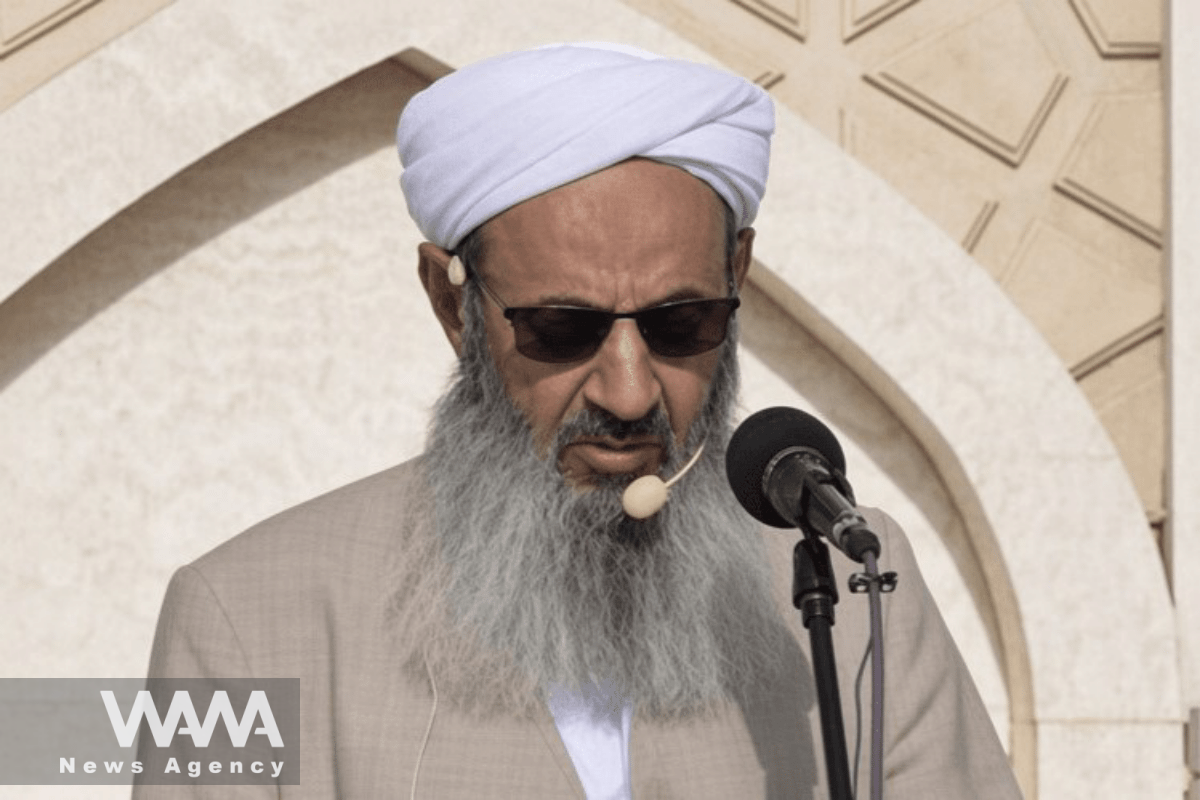
WANA (Oct 10) – Nosrat Eftekhari, deputy for cultural and social affairs at the Sistan and Baluchestan provincial police command, was killed in a bomb attack targeting a police vehicle in the Cheshmeh Ziarat area of Zahedan, southeastern Iran. The armed group Jaish al-Adl, referred to as Jaish al-Zolm in Iranian official sources, claimed responsibility for the attack. However, Sunni cleric Molavi Abdolhamid Esmaeilzehi, Zahedan’s Friday prayer leader and head of the Makki Mosque, has yet to publicly comment on the killing.
According to Saeed Montazer al-Mahdi, the Iranian police spokesperson, Eftekhari had been sent to Cheshmeh Ziarat to address the concerns and problems of local ethnic communities and tribes and to help prepare for the implementation of a community-focused initiative. A native of Sistan and Baluchestan Province, she worked in the police force’s cultural and social affairs division, which is responsible in part for strengthening ties between law enforcement and local communities and fostering cooperation among the province’s different ethnic and religious groups. Montazer al-Mahdi also said the main suspect in the bombing was killed while fleeing the scene.

Nosrat Eftekhari, deputy for cultural and social affairs at the Sistan and Baluchestan provincial police command. Social media /WANA News Agency
Silence Amid Calls for Security for All
Abdolhamid’s lack of a public response to the attack has drawn attention in light of his recent remarks on the importance of security in Sistan and Baluchestan. In his latest Friday sermon, he emphasized the historical and family ties connecting the province’s various ethnic and religious communities and called for those bonds to be preserved. He also described security on roads and in cities, and the safety of all residents, as vital, urging everyone to contribute to maintaining it.
Yet, as of the time of writing, Abdolhamid had issued no public statement condemning the attack that killed Eftekhari. The silence comes despite Jaish al-Adl’s claim of responsibility, highlighting the role that influential religious and community figures can play in responding to armed violence.
This is not the first time Abdolhamid’s lack of a public response to a security incident in the province has attracted attention. According to published reports, he has not publicly commented on the killing of Mamosta Gorgij, a Sunni religious figure in Zahedan who was targeted in an attack around 25 days before Eftekhari’s death. No public response from Abdolhamid has also been reported regarding an armed attack on a minibus carrying personnel from Iran’s Army Ground Force in Nikshahr or a shooting targeting civilians in Jakigur, in Rask County. In contrast, a number of local religious scholars and community elders condemned the attack on the army personnel.
Abdolhamid has, however, publicly addressed other social issues and the deaths of public figures, including the head of the Sistan and Baluchestan Science and Technology Park and the father of Nobel Peace Prize laureate Narges Mohammadi. Differences in his public responses to various events have raised questions about the criteria guiding his statements on security incidents in the province. Nevertheless, the absence of a public statement alone does not establish a person’s private position on, or support for, an incident.

Why Has Molavi Abdolhamid Remained Silent on the Alleged Insult to the Holy Kaaba?
WANA (Feb 11) – In recent days, numerous reports and documents have been published regarding an alleged “insult to the Holy Kaaba by Jeffrey Epstein,” described as one of the most notorious figures in the United States. The reports claim that the act took place with lobbying by certain figures and officials in Saudi […]
Who Is Molavi Abdolhamid?
Molavi Abdolhamid Esmaeilzehi is one of Iran’s most prominent Sunni religious leaders. He serves as the Friday prayer leader in Zahedan and heads Makki Mosque, one of the most important Sunni religious centers in southeastern Iran.
In recent years, Abdolhamid has addressed not only religious matters but also issues including Sunni rights, the socioeconomic conditions of Sistan and Baluchestan, security-related policies and the concerns of local residents. His religious standing and social influence mean that his statements on major developments in the province often receive significant attention.
Against this backdrop, his lack of a public response to the killing of a police official who, according to police authorities, had been sent to the area to address local communities’ concerns has become particularly noteworthy, especially following his recent call for the security of all residents to be protected.







