

IRGC Spokesman: New Weapons Will Be Deployed If Nature of Conflict Changes

WANA (Sep 29) – Iran’s Islamic Revolutionary Guard Corps (IRGC) is continuously developing and mass-producing new weapons to strengthen its defensive capabilities, IRGC spokesman Brigadier General Hossein Mohebbi said, adding that Iran would deploy new weapons if the nature of any future conflict changed.
Speaking at a press conference on Tuesday, September 29, on the “IRGC letter to the American people,” Mohebbi said the IRGC had prepared a letter addressed to the people of the United States, stressing that it is a genuine letter rather than a media campaign designed to create publicity.
He described the letter as logical, concerned, realistic and detailed, saying the IRGC had sought to speak honestly and rationally with the American people.
We Seek to Explain the Realities to the American People
Mohebbi, the IRGC spokesman, said the force believed that the American people might not be sufficiently familiar with Iran’s logic and positions and that the letter is intended to provide a basis for greater understanding.
He said Iran faced limitations in terms of access to the many media outlets operating inside the United States, while the U.S. has hundreds of television and radio networks. Mohebbi said the IRGC had therefore sought through the letter to explain the realities to the American people.
He said that if the IRGC had intended to carry out a publicity campaign, it would have produced something short and immediately influential in the media, such as a tweet or several tweets. However, he said, the IRGC had chosen not to do so and instead wanted to speak honestly and logically with the American people.

IRGC Spokesperson Hossein Mohebbi speaks during a press conference in Tehran, Iran, September 29, 2026. Majid Asgaripour/WANA (West Asia News Agency)
Mohebbi Questions U.S. Military Spending
Referring to U.S. military expenditures, Mohebbi said that if the objective of these expenditures is to defend the country’s territory and the area in which Americans live, the United States’ defense would naturally already be secured, and it would not need 800 military bases around the world or an annual defense budget of $1.1 trillion.
He added that the annual budget of the Islamic Republic of Iran’s armed forces is equivalent to one percent of the annual budget of the U.S. military. He also said that Afghanistan’s military budget is less than one percent of Iran’s, while Yemen’s military budget is lower than the combined military budgets of Iran and Afghanistan.
Mohebbi asked why the United States had been defeated in its war with Iran and why Iran is now the winner of the war. He said this is not an exaggerated assertion, adding that even U.S. experts, both military and others, had acknowledged and repeatedly stated this.
He said that in the war in Afghanistan, the United States had left behind $85 billion worth of weapons and equipment and fled after three years. Mohebbi added that in its confrontation with Yemen, the United States had, within a short period, been forced to formally apologize to Yemen and withdraw.
He asked why a powerful and capable military, equipped with such large quantities of weapons and military equipment, possessing numerous military bases and an annual budget of more than $1 trillion, would be defeated by countries with less than one percent of that military budget.
Mohebbi said the letter explained the reason for the defeat, namely what he described as the U.S. military’s lack of capability. He called on the American people to read the letter so they could become familiar with what he described as the reality of U.S. defeats and the reasons behind them.

Rezaei: Hormuz Will Remain Closed Until Iran’s Conditions Are Met
WANA (Sep 23) – Mohsen Rezaei, secretary of Iran’s Supreme National Security Council, said no negotiations between Iran and the United States are currently taking place in New York, stressing that Iran’s seven conditions have been conveyed to intermediaries through Foreign Minister Abbas Araghchi. He said the Strait of Hormuz would remain closed and no […]
Mohebbi Questions Poverty and Homelessness in the United States
Turning to the United States’ domestic capabilities, Mohebbi said Americans lived in a country that was among the most fertile lands in the world and had abundant water resources.
He said the United States also possessed large and valuable energy and mineral resources and spent heavily to invite the world’s elites and thinkers to the country and make use of their intellectual and professional capabilities. However, he asked U.S. leaders why, despite all this wealth, 39 million people in the country lived below the poverty line.
He also questioned why millions of homeless people lived in U.S. cities and why, recently, even sleeping in the streets and under bridges had been prohibited for this vulnerable group.
Mohebbi asked whether this approach was anything other than a sign of what he described as weak management by U.S. rulers and a lack of attention to the priorities of the people.
He said it appeared that the welfare and peace of the American people were not a priority for U.S. rulers and that profiteering by officials themselves and partners of the Israeli regime had instead been defined as the main priority.
He said that to better understand what he described as this profit-seeking approach, it was enough to look at the wealth of the U.S. president, adding that official figures showed that the president’s assets had increased from $2.3 billion to $6.7 billion in less than two years after taking office.

People drive near a billboard depicting U.S. President Donald Trump on a building in Tehran, Iran, September 16, 2026. Majid Asgaripour/WANA (West Asia News Agency)
The IRGC spokesman said these deep contradictions required serious reflection by the American people and careful analysis of why the authorities prioritized personal interests over public welfare.
He said the reality was that U.S. foreign defeats and domestic crises were two sides of the same coin and reflected what he described as the inefficiency of the country’s management structure.
Why Is Trump Afraid to Travel to Many Countries?
Mohebbi went on to raise questions about U.S. foreign policy and the performance of its government, asking why the U.S. president did not dare to travel to many countries and why, when he did travel to a country, he was accompanied by extensive security measures and faced protests there.
He said Iran believed this was because people were dissatisfied with and hostile toward the killings carried out by the U.S. president and government. He added that people were aware that the U.S. military committed crimes and spread hatred, and that many people today hated U.S. leaders because the roots of killings in other countries could be traced back to the United States.
The IRGC spokesman asked whether people in the United States should not think about why this was the case, saying that the U.S. had been attacking different countries continuously for 70 years.
Mohebbi asked the American people what they had gained from these repeated attacks and the brutal killing of innocent and defenseless people, and whether they had gained anything other than greater debt, global hatred toward the United States and insecurity for Americans in different countries.
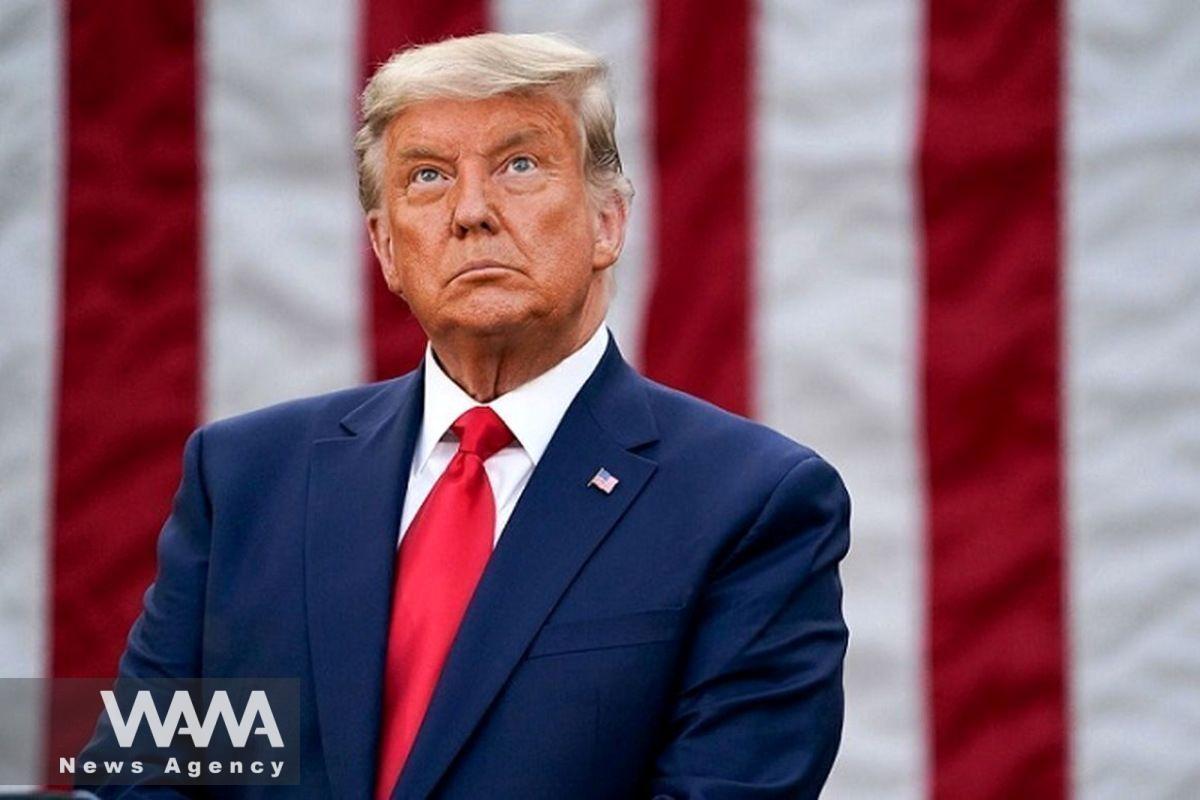
Trump Has Declared Victory 66 Times!
WANA (Sep 08) – The head of the Parliament’s National Security and Foreign Policy Commission took a jab at U.S. President Donald Trump by posing a question to Grok, the artificial intelligence system developed by Elon Musk’s xAI. He asked Grok: “How many times has Trump declared victory so far?” Grok responded that Trump […]
He said Americans should ask why there were so many wars, killings, aggression and plunder, who benefited from these actions and who ultimately suffered the losses. He said the country became indebted, while repayment of its debts fell on people who paid taxes to cover these costs.
Mohebbi said these were among the fundamental issues mentioned in the letter and asked the American people whether they had ever considered why the United States supported what he described as Israeli killings in Gaza, Lebanon and elsewhere.
He asked whether Americans knew that 73,900 people in Gaza had been killed with weapons supplied by their country, and whether they knew that more than 21,000 children in Gaza had been killed with weapons provided by their government to the Israeli regime.
He said Americans should consider why their country should itself commit crimes, support those committing crimes and supply their weapons, adding that young Americans should think about why their leaders’ priority is not the American people.
Referring to Trump’s campaign slogan about putting the American people first, Mohebbi asked why the American people were not the priority and why Israel came first. He said these were issues that required consideration and that they had been addressed in the letter.
Mohebbi also referred to the extent of destruction in Gaza, asking whether people knew that the number of bombs dropped on Gaza, despite its small size, was greater than the number of bombs used in World War II and all wars since then.

People attend a gathering to support Gaza following the Israeli strike on Nasser Hospital in Gaza, in Tehran, Iran, August 25, 2025. Majid Asgaripour/WANA (West Asia News Agency)
He asked whether people could imagine that the level of destruction in Gaza was greater than that caused by the nuclear bombs in Hiroshima and Nagasaki. He asked whether this was what the American people wanted, adding that these issues had been included in the letter and recommending that Americans read it.
The IRGC spokesman continued by asking whether Americans were aware that the U.S. military and the Israeli military it supports had bombed and destroyed thousands of schools, hospitals, universities, research centers, mosques and even churches.
Mohebbi said some Americans might not be aware of these issues, but asked who should inform them, adding that members of the media had a responsibility to convey information.
Referring to the U.S. economic capacity, he said that with the wealth and assets available to the United States, it could have had no poor people and could have helped poor countries as well. He questioned why poverty nevertheless existed inside the country and said Americans should think about this issue.
He said the letter addressed these matters and that more issues would become clear if people read it.
U.S. Does Not Have a Comprehensive Healthcare System
Mohebbi also addressed the state of healthcare services in the United States, saying that the country still did not have a clear and comprehensive healthcare system. He said a U.S. resident told him that if someone were involved in a street accident, they might not have money to pay for an ambulance to take them to a hospital.

health services Cause life expectancy in Iran reached 75 years
WANA (Mar 19) -Growth in the field of health and improvement of health services have been among the commitments of the revolutionaries in Iran. This happened to a large extent, although it is far from an ideal situation. Iran’s deputy health minister announced today that before the revolution, health and nursing experts from India, […]
He said this showed, in the case of a wealthy country, that its rulers were not thinking about their people. He added that their priorities were profits and other issues that media members knew better than he did, asking who benefited from the weapons produced and exported to many countries.
The IRGC spokesman then addressed the IRGC’s designation on terrorist lists and U.S. efforts to have the organization designated as terrorist, asking why the IRGC was designated as a terrorist organization and why the United States pressured other countries to do the same.
He asked whether the IRGC was really a terrorist organization. Mohebbi said the letter explained what kind of organization the IRGC was, how it was established, how deeply rooted it was among the people and how much support it had among them.
He added that the letter also addressed the IRGC’s services to the Iranian people, including construction, poverty alleviation, healthcare and medical services, as well as services it had provided to people in the region.
He said the letter explained the basis on which the IRGC had been designated as a terrorist organization, adding that one stated reason was that the IRGC was considered an obstacle to plunder, aggression and the killing of people.
EU Officially Lists IRGC as Terrorist Organization
WANA (Feb 19) – Following a political agreement reached by the European Union’s foreign ministers, the Council of the European Union on Thursday formally decided to add Iran’s Islamic Revolutionary Guard Corps (IRGC) to the EU’s so-called terrorist list. The decision, which stems from a political consensus reached by the Council of the European […]
Mohebbi said Americans should ask questions, study the history of the IRGC’s establishment and examine its services to determine whether the IRGC was really a terrorist organization.
The IRGC spokesman also said that many experts around the world believed the United States was experiencing decline. He said this was not merely Iran’s view but was also expressed by experts in the United States and other countries.
Mohebbi asked whether Americans did not want to know why their country was declining. He said the letter explained the reasons for the decline of the United States and offered recommendations on what Americans could do to prevent it.
25 Years of the Claim That Iran Is Weeks Away from a Nuclear Weapon
Mohebbi said that 25 years ago, the U.S. president had announced that Iran was only a few weeks away from obtaining a nuclear weapon. “I ask the American people: Have those few weeks that remained before Iran supposedly acquired a nuclear capability still not passed?” he said, arguing that this was either a major lie.
The senior military official said that if Iran was seeking a nuclear weapon and the United States claimed that it wanted to prevent Iran from obtaining one, then there was a question as to why the U.S. president had torn up the JCPOA.
He asked whether Iran had not been committed to not building nuclear weapons through an agreement signed by six countries, including the United States itself. He also asked whether International Atomic Energy Agency inspectors had not conducted periodic inspections of Iran and whether Iran had not been placed under controls regarding the construction of nuclear weapons.

Pezeshkian: Iran Has Never Been an Aggressor, Not Seeking Nuclear Weapons
WANA (Sep 13) – Iranian President Masoud Pezeshkian has stressed that Iran has never been the initiator of a war, saying Tehran has defended itself against attacks by the United States and Israel while remaining ready for talks within the framework of international law and the Treaty on the Non-Proliferation of Nuclear Weapons (NPT). […]
He questioned why the JCPOA had been torn up, saying that, according to the parties to the agreement, the JCPOA had been a pathway to prevent Iran from obtaining a nuclear weapon.
Mohebbi continued by asking that if the United States genuinely claimed that it did not want Iran to obtain a nuclear weapon, why it had assassinated the leading Shiite religious authority, whom he described as the only Shiite marja, who had declared the construction and production of an atomic bomb and the acquisition of nuclear weapons forbidden.
The Issue for the U.S. Is Not Nuclear Weapons
The IRGC spokesman said the issue for the United States is therefore not nuclear weapons. He said the issue was the “plundering” of the Iranian people, the “partition” of Iran and turning Iran back into a country that would serve as a colony for the United States.
He added that if the issue were nuclear weapons, the United States itself knew that Iran had not been seeking nuclear weapons.
American People Should Know About U.S. Military Crimes
Explaining why the IRGC had chosen this time to write the letter to the American people, he said the force believed that the American people were unaware of the facts. He said the United States had been continuously involved in wars for the past 70 years and that its conflicts with various countries had now intensified.
Referring to the U.S. confrontation with Iran, as well as what he described as U.S. efforts to intensify tensions and conflict with Greenland and Cuba, Mohebbi said it was good for the American people to become aware of the crimes committed by their country’s military so that they could help prevent such crimes.

A view of a residential building, which was damaged in a U.S. and Israeli strike on March 9, in Tehran, Iran, June 7, 2026. Majid Asgaripour/WANA (West Asia News Agency)
New Weapons Will Be Deployed If Conflicts Take a Different Form
Mohebbi said Iran is continuously designing new weapons and upgrading its existing weapons for self-defense. He said Iran is also constantly mass-producing weapons so that it can defend itself and is using all the world’s technologies to develop weapons capable of defending the country and its people.
The IRGC spokesman stressed that if conflicts took a different form, Iran would also deploy new weapons.
We Are Prepared for New Enemy Scenarios
IRGC spokesman Brigadier General Hossein Mohebbi said Iran is prepared for the enemy’s new scenarios, stressing that they would be defeated again.
He said the enemy had first sought to force Iran to surrender through a military presence, then turned it into a 40-day attack, followed by economic warfare and maritime and air blockades, but had failed in all cases.
Mohebbi said Iran is also prepared for other possible scenarios and would continue to prevail, adding that the blood of innocent victims, including the children of Shajareh Tayyebeh School in Minab, would strengthen their resolve. He said the United States had no choice but to acknowledge its defeat and leave the region, adding that the war would end with this outcome.

Minab: From the Schoolyard to the Rows of Graves
WANA (May 23) – As dusk falls, Minab slowly takes on a different face. Until just a few weeks ago, the sound of school bells and the lively noise of children formed part of the city’s daily rhythm. Now, every evening, the town sinks into a heavy silence. On land that was once a […]
Reality Is Not in the U.S. Government’s Interest
In response to a question about why the letter was addressed to the American people rather than the U.S. government, and what reaction he expected from the U.S. government given its repeated breaches of commitments, Mohebbi said the reason was that the letter presented the truth and reality, which he said was not in the interest of the U.S. government.
He said the truth would not benefit U.S. officials and would instead be harmful to them, whereas if the American people understood the reality, their views would, in his view, be different. He added that the U.S. government already knew the reality and that the letter would have no effect on it, although it might make officials angry, while it could have an impact on the American people.
Mohebbi said he could not accurately predict the U.S. government’s reaction, but believed that the U.S. government would oppose and take action against anything aimed at raising awareness and presenting facts. He cited restrictions imposed on some U.S. media outlets from entering the White House, saying they had been prevented from doing so because they reported facts.
He said these outlets were neither Iranian nor supporters of Iran, adding that the U.S. president had repeatedly become angry and insulted journalists when they reported facts. He said anything that exposed the truth and caused what he described as their disgrace would naturally not receive a positive response from them.
We Are Not Indifferent to the U.S. Economic Blockade
Asked about the continuation of the economic blockade, U.S. bases carrying out military activities against Iran and Iran’s plans in response, Mohebbi said Iran is certainly not indifferent to the U.S. blockade in any form and has various measures and approaches to counter it, some of which have already been implemented to prevent the blockade from causing serious damage.
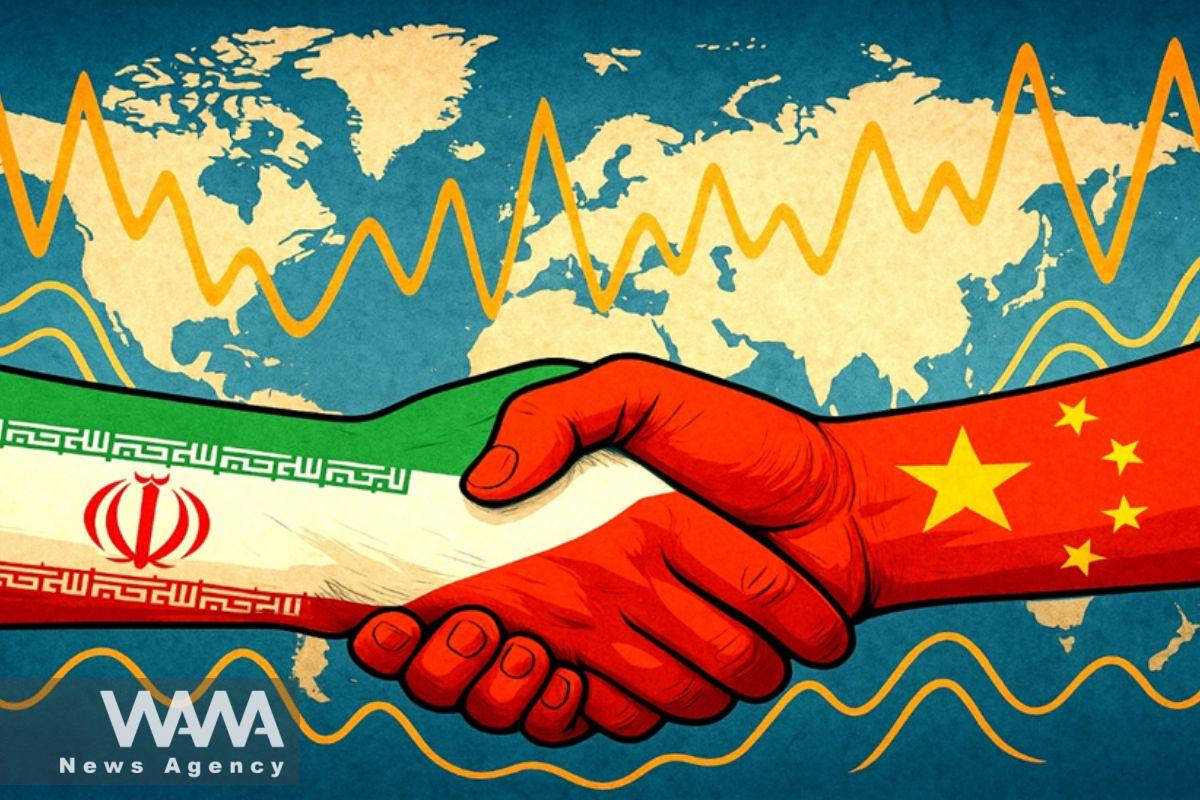
China-Iran Rail Corridor Defies Maritime Blockade
WANA (Sep 07) – As restrictions on maritime routes create new challenges for the flow of goods into Iran, overland and rail routes have become increasingly important. Freight trains from China continue to enter Iran, with official figures indicating a significant increase in rail traffic between the two countries in recent months. Sadr al-Din […]
He described the economic blockade as a crime against a nation, patients in need of medicine, global trade, people’s livelihoods and the economy of a country. He said that as defenders of the country and its people, Iran would never allow such blockades to cause serious harm to its people, country or economy.
Mohebbi said the blockade could not ultimately succeed, adding that the United States could never block Iran’s relations with its neighbors. He said Washington might create limitations, but could not sever those ties, noting that Iran was a vast country with 15 neighboring states and thousands of years of relations with them, as well as generational, religious and cultural ties. He said the United States would ultimately be defeated in this blockade.
He added that the United States had been imposing a blockade on Iran for 47 years and had continued doing so despite repeatedly failing.
Addressing Iran’s neighbors, Mohebbi said he believed they had realized that U.S. military bases did not create security for them but instead created insecurity. He said the United States had established bases in these countries by spending trillions of dollars and deploying extensive military equipment, airports, military infrastructure and various weapons in the name of regional security.
However, he said, these bases had not only failed to provide security but had themselves become sources of insecurity and had even been unable to defend themselves.
Mohebbi said most U.S. bases in the region had been damaged and were now unusable, adding that it was not economically viable for the United States to rebuild them. He said these bases would therefore not provide security and that regional countries had certainly understood this.
He also described the regional pact concluded among Saudi Arabia, Pakistan and Turkey as a step toward regional countries providing their own security and reducing or ending the presence of foreign powers. He said this showed that countries had understood the situation and that any country that had not yet realized it—although he considered such a case very unlikely—would understand it in the near future.

IRGC Spokesperson Hossein Mohebbi speaks during a press conference in Tehran, Iran, September 29, 2026. Majid Asgaripour/WANA (West Asia News Agency)







