

Pezeshkian at UN: Iran Cannot Be Forced to Surrender Through War
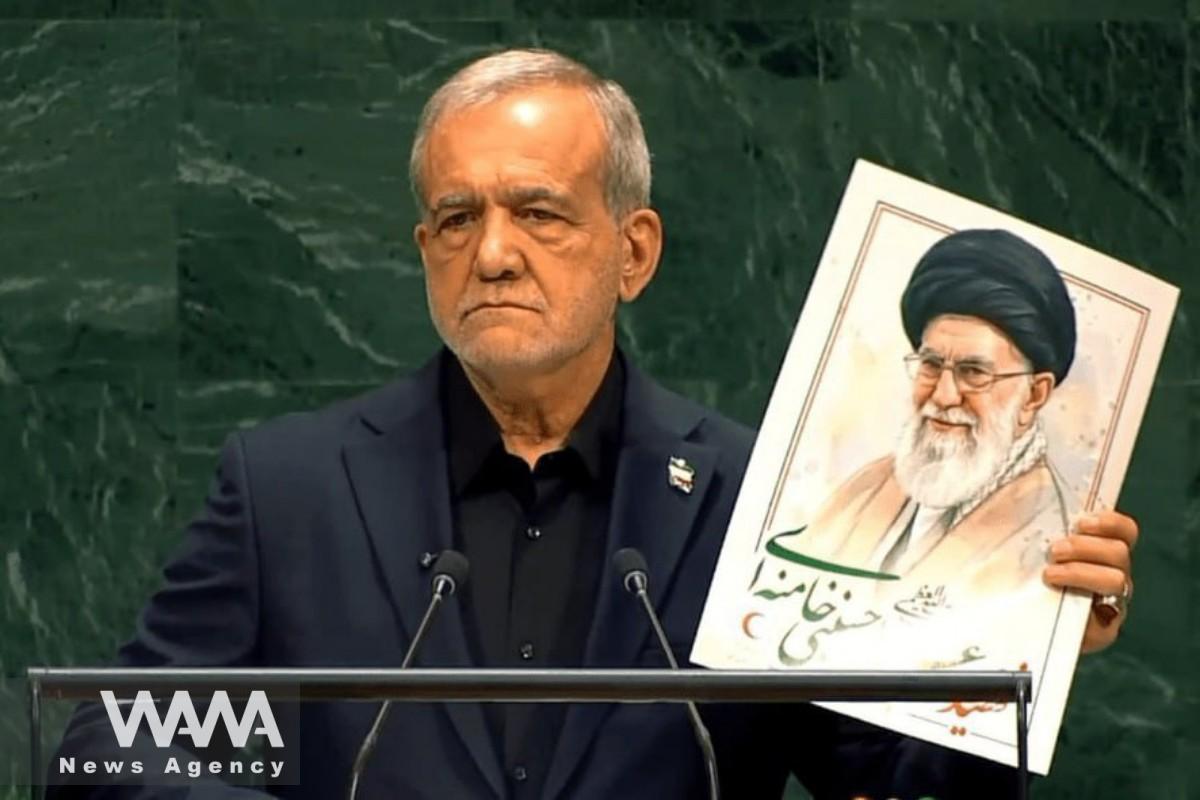
WANA (Sep 23) – Iranian President Masoud Pezeshkian told the 81st United Nations General Assembly that Iran cannot be forced to surrender through war, stressing that Tehran has never initiated a war and remains committed to negotiations, while also making clear that it is not afraid to defend itself.
Pezeshkian opened his speech by referring to U.S. President Donald Trump’s description of Iran as a terrorist country, saying that Iran itself has been a victim of terrorism.
He referred to the assassination of Hamas political bureau chief Ismail Haniyeh in Tehran and then displayed images of Iran’s late leader, the Shajareh Tayyebeh girls’ school in Minab and a sports hall in Lamerd.
Pointing to the images of the Minab school, Pezeshkian said the children who were killed there had done nothing wrong. He also showed images of the Lamerd sports hall, where children had been exercising, saying that the United States had used cluster bombs that broke apart into thousands of pieces.
He said the United States and Israel had targeted Iranian scientists, civilians, women and children, while at the same time describing Iran as a country of terrorists and those who train terrorists. Iran, he said, had only defended itself.
Pezeshkian said the United States and Israel had attacked Iran using their latest military equipment, but Iran defended itself, refused to bow and responded to the attacks without targeting ordinary people.
He said attacks had been launched from territories equipped with advanced weapons against schools, hospitals, scientific centers, bridges and other infrastructure, describing such attacks as contrary to international law.
Referring again to Haniyeh’s assassination, Pezeshkian said it took place on the first day after he assumed office, adding that Israel bombs and carries out assassinations wherever it wants.

Gaza and the Question of Double Standards
Turning to Gaza, Pezeshkian said that more than 80,000 innocent people had been killed and hundreds of thousands displaced, describing what has happened there as genocide carried out using the tools and technology available today.
He questioned why those responsible for killing and destruction were treated as actors for security and peace, while others were labeled terrorists.
Pezeshkian said Iran had become a target because it wanted to live independently and refused to bow to pressure. In his view, a country that cannot defend itself will ultimately be crushed, which is why Iran believes it must possess sufficient power to protect itself.
He criticized a world in which powerful actors destroy rather than think about people, humanity, justice and democracy, and then label those they seek to destroy as terrorists.
Pezeshkian said Iran had not attacked another country in 200 years and had always defended itself. He rejected the characterization of Iran as a source of insecurity in the region, saying Tehran seeks strength for defense, not invasion.
Iran’s energy resources, he said, are intended for development rather than bombs, destruction or threatening other societies, and Iran wants to contribute to regional security.
He said that for seven months, Iranian people had taken to the streets every night to defend their country and prevent those he said had been encouraged or armed by the United States and Israel from creating insecurity inside Iran.
“The people are our power,” Pezeshkian said.
He said Iran must be powerful enough that its survival cannot be threatened, responsible enough not to use its power to dominate others, and farsighted enough not to seek its own security through insecurity for its neighbors.
Iran, he added, had developed defensive systems so that no one would believe bombing Iranian cities would go unanswered. The country’s military power, he said, is intended for defense, and Iran does not need anyone’s permission to defend itself.

Iran’s Nuclear Program
Pezeshkian also addressed the long-running dispute over Iran’s nuclear program, saying that years of discussion had focused on centrifuges, uranium enrichment, sanctions and the possibility of a nuclear bomb.
He described nuclear technology as Iran’s right to development, saying that nuclear energy can serve patients, agriculture and food security, industry, technology and the country’s future need for sustainable electricity.
Iran, he said, will not accept a situation in which knowledge of nuclear technology is reserved exclusively for a small number of countries.
At the same time, Pezeshkian said Iran does not regard nuclear weapons as a source of security and will not give up peaceful nuclear science, industry and energy.
“Iran wants neither nuclear weapons nor deprivation of nuclear knowledge,” he said.
He argued that the nuclear issue cannot be resolved on the battlefield. Instead, he said, the solution is an agreement that provides the international community with credible assurances about the peaceful nature of Iran’s nuclear activities while also assuring the Iranian people that their rights will be respected.

Rezaei: Hormuz Will Remain Closed Until Iran’s Conditions Are Met
WANA (Sep 23) – Mohsen Rezaei, secretary of Iran’s Supreme National Security Council, said no negotiations between Iran and the United States are currently taking place in New York, stressing that Iran’s seven conditions have been conveyed to intermediaries through Foreign Minister Abbas Araghchi. He said the Strait of Hormuz would remain closed and no […]
Strait of Hormuz and Regional Security
Pezeshkian also addressed the Strait of Hormuz, describing it as a region where war can cross borders and a crisis can quickly spread to neighboring countries.
Iran, he said, does not regard its neighbors as security rivals and wants them to be strong.
However, he questioned how countries could all benefit from the waterway while Iran, which he described as a historic guardian of the route, is denied freedom of navigation even in its own waters through what he called unjust sanctions.
“They close the route to us, then transfer weapons, explosives, missiles and energy for the destruction of countries through the same waterway,” Pezeshkian said.
Iran, he added, would not allow this situation to continue.
He said the permanent presence of hostile fleets and the expansion of war cannot create security, stressing that the security of coastal states must not be disrupted.
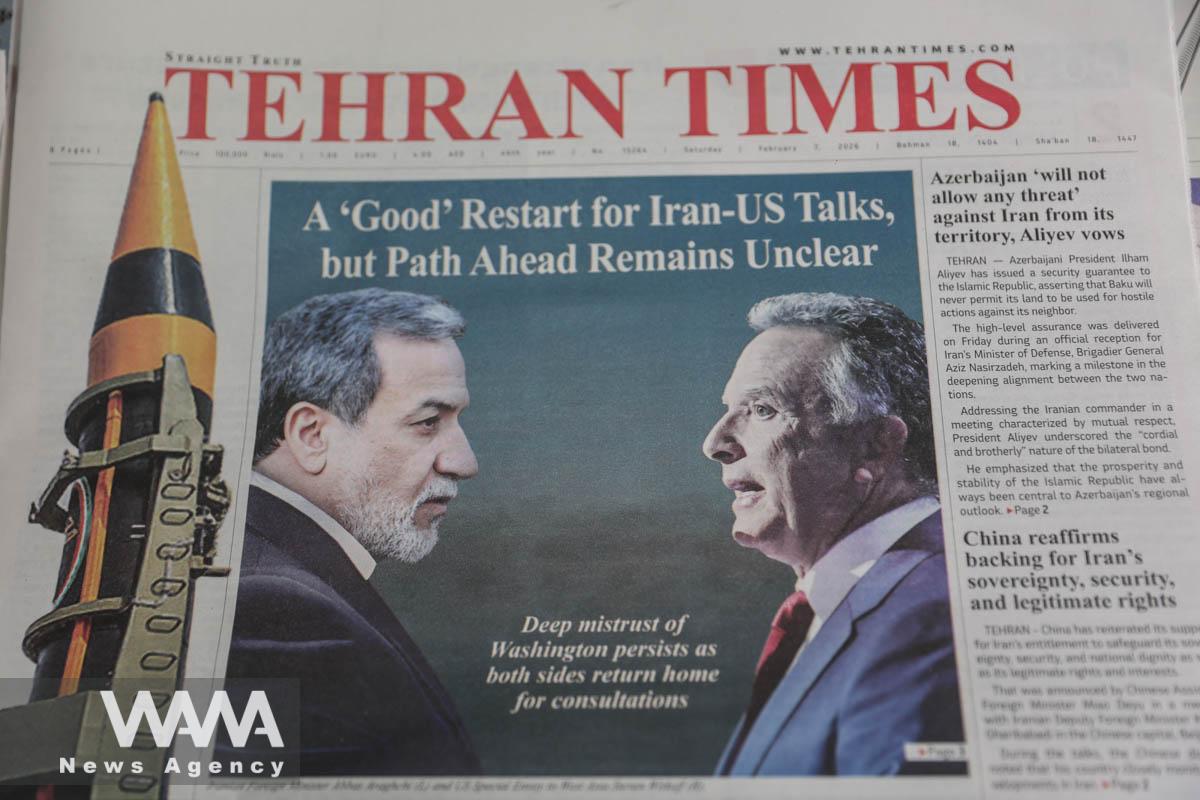
Latest Updates on Iran-US Talks: War or Peace?
WANA (Sep 23) – As the UN General Assembly gets underway in New York, mounting political pressure and increased U.S. military activity in the region have once again put the future of Iran-U.S. relations at the center of attention. On one side are diplomatic messages and mediation efforts aimed at conveying the two sides’ positions; […]
Palestine and Gaza
Pezeshkian described Palestine as a wound on the conscience of the international community and Gaza as a symbol of the failure of international mechanisms to prevent suffering among civilians.
He said that despite decades of international resolutions, occupation and violence have continued.
It is impossible, he argued, to speak of peace while ignoring Palestine. Lasting peace in West Asia cannot be achieved without justice for the Palestinians, he said, adding that as long as occupation, aggression and injustice continue, resistance will also continue.
“If one form of resistance is harmed, another, perhaps stronger, will emerge,” he said.
Pezeshkian said the situation in Gaza demonstrates that resistance cannot be forced to surrender through bombs and blockade, despite relentless killings and widespread destruction.
He described resistance as part of human nature, arguing that when a person is expelled from their land or their home is bombed, they will resist.
“What else can they do?” he asked, arguing that people cannot reasonably be expected to accept coercion and expulsion in silence and then have their self-defense described as terrorism.
He also called for regional issues to be resolved by the countries of the region before they become pretexts for wars involving distant powers.
Strategic independence, he said, means that no foreign relationship should become a means of waging war against neighboring countries.
“Iran Cannot Be Forced to Surrender Through War”
Pezeshkian then directly addressed those responsible for decisions to attack Iran, as well as those who planned and carried out the attacks.
The Iranian people, he said, had experienced military power and its consequences firsthand, and the attacks had tested Iran’s resilience.
“They now know that Iran cannot be forced to surrender through war,” he said.
Pezeshkian stressed that Iran never initiates war and has repeatedly demonstrated its commitment to negotiations.
The war, he said, was imposed on Iran, but the country had demonstrated that it neither fears war when defending itself nor retreats from negotiations when seeking peace.
He said Iran would stand “to the death” for its country.

Double Standards and the International Order
Referring to the theme of the 81st UN General Assembly, “restoring trust,” Pezeshkian said trust cannot be rebuilt without ending double standards.
He questioned why nuclear weapons and weapons of mass destruction in Israel are treated differently while Iran is subjected to demands for inspections.
He said Israel had killed 70,000 people in Gaza while Iran was attacked even as it was sitting at the negotiating table.
Pezeshkian also pointed to what he described as Israel possessing a nuclear bomb while not being a party to the Nuclear Non-Proliferation Treaty and never allowing inspectors into the occupied territories, while receiving billions of dollars in weapons and immunity from consequences for attacks on regional capitals.
“Bombs in Israel, inspectors in Iran,” he said, describing the situation as a tragedy in which Israel kills while Iran faces sanctions.
He said sanctions ultimately affect poor people, patients and innocent civilians, and accused the United States of seeking to sacrifice people, particularly in Iran.
If justice is to exist, Pezeshkian said, friends and rivals must be measured according to the same standards. Human rights, he added, should not become a tool of geopolitical competition.
Iran wants equal rights rather than special privileges, he said, and is prepared to accept its responsibilities.
A Call for a Different International Order
Pezeshkian said Iran had learned that a world without power is dangerous, but also that a world in which power is the only language cannot achieve lasting security.
Even the strongest armies, he said, cannot create lasting security if trust disappears.
If international law is enforced only when it serves the interests of powerful states, more countries will rely solely on their own power, creating an increasingly dangerous international environment.
Pezeshkian called on the international community not to allow the 21st century to return to a politics of force and rule by power.
Military power, he said, should not replace legitimacy, sanctions should not replace diplomacy, assassination should not replace politics, and war should not replace dialogue.
Iran, he said, extends its hand in cooperation and calls on the international community to pursue peace and justice rather than another war.
This, he said, is not a gesture of weakness but a reflection of Iran’s confidence in its own strength and its recognition that no country in the region can achieve security alone.
“Either we build security together, or we endure insecurity together,” Pezeshkian said.
He called for a future in which security, justice and human dignity are inalienable and shared rights; no nation is marginalized, no voice is lost, and no power determines the future of others.
The international order, he said, must be based on equality, justice, fairness and the collective will of humanity.
“There will either be peace for all, or there will be no peace. There will either be justice for all, or there will be no justice.”

One-Line Summary of the U.S. President’s UN Speech: Trump Caught Up in the War with Iran
WANA (Sep 22) – Donald Trump’s speech at the 81st session of the United Nations General Assembly focused more than anything else on the war with Iran and on defending Washington’s decision to enter the conflict. A significant portion of the U.S. president’s remarks was devoted to explaining the reasons for launching the war, Washington’s […]
“Iran Is Ready for Dialogue, But Not Under Threat”
In his closing remarks, Pezeshkian referred to Trump’s remarks the previous day, saying they reflected a logic of bullying and the use of force and were contrary to the principles of the UN Charter.
Threats, he said, only make the Iranian people more united and stronger and increase their resistance.
The Iranian people, he said, would not bow, and those who attacked Iran would eventually regret their actions.
“This is what Trump and those who want to bully must understand,” Pezeshkian said.
Iran, he stressed, remains ready for dialogue but will not accept negotiations conducted through the language of force.
The Images Pezeshkian Displayed
During his speech, Pezeshkian displayed images of Iran’s late leader, the Shajareh Tayyebeh girls’ school in Minab and the Lamerd sports hall.
He presented the images as examples of what he described as crimes committed by those who speak of human rights, showing photographs from before and after the attacks.
The images of the Minab school were particularly significant, as Pezeshkian referred to the students who were killed there and said the children had done nothing wrong.
Why Did Pezeshkian Wear Black?
Iranian President Masoud Pezeshkian wore black during his appearance at the 81st United Nations General Assembly.
Black clothing is traditionally associated with mourning in Iranian-Islamic culture. According to the explanation provided, the Iranian president chose to wear black as a sign of mourning for Iran’s late leader and the 168 students killed at the Minab girls’ school.
Overall, Pezeshkian’s speech focused on several key themes: defending Iran’s right to maintain military capabilities for the purpose of protecting the country; rejecting nuclear weapons while emphasizing Iran’s right to the peaceful use of nuclear technology; stressing collective security in the region and the role of the Strait of Hormuz; supporting the rights of Palestinians; criticizing what he described as double standards in the application of international law; and, ultimately, emphasizing Iran’s readiness for negotiations, provided that the language of force is set aside.
The central message of the Iranian president’s speech was also clear: Tehran considers itself prepared to defend the country, but sees negotiations as the path to peace and insists that such negotiations cannot take place on the basis of threats and coercion.







