

Russia and China Oppose Returning Iran’s Nuclear File to UN Security Council
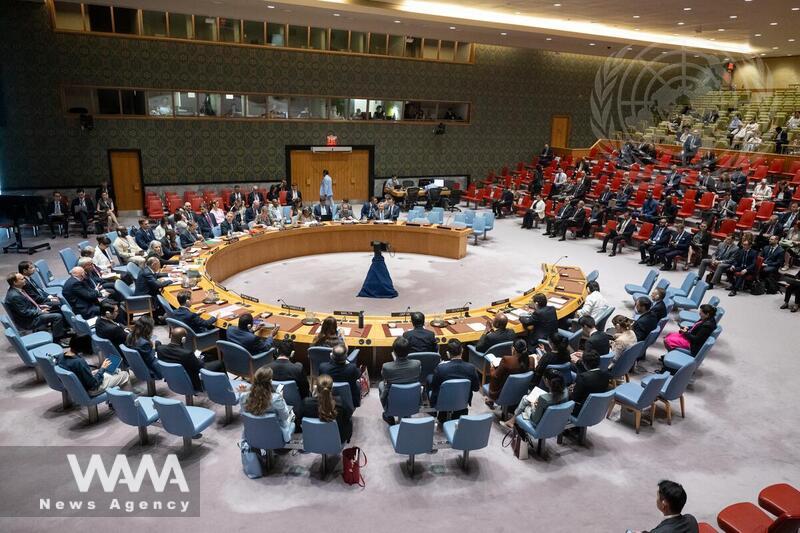
WANA (Oct 27) – Russia and China opposed Western efforts to bring Iran’s nuclear file back onto the UN Security Council’s agenda on Tuesday, arguing that Resolution 2231 has expired and that there is no basis for continuing the process.
The UN Security Council held a meeting on nuclear non-proliferation on Tuesday, during which Western representatives reiterated their positions on Iran’s nuclear program. Russian and Chinese representatives, however, criticized the Western approach and called for an end to efforts to refer Iran’s case back to the council.
China Says Resolution 2231 Has Expired
Fu Cong, China’s representative to the UN Security Council, said Resolution 2231 had expired in October last year.
Criticizing Western countries for insisting that Iran’s nuclear file remain under consideration by the Security Council, he stressed that neither the council nor the International Atomic Energy Agency (IAEA) should continue examining the issue.
The Chinese representative also called on the United States to abandon its willingness to launch further attacks against Iran, warning that a resumption of hostilities would lead to a “disaster.”
Russia: There Is No Alternative to Diplomacy
Vasily Nebenzya, Russia’s representative to the UN Security Council, also rejected efforts to refer Iran’s nuclear safeguards issues to the council and urged its members to abandon what he described as a “destructive path” regarding Iran’s nuclear file.
Nebenzya criticized the United States and European countries for overlooking two key facts in the dispute over Iran’s nuclear program: the US and Israeli attacks on Iran and Washington’s unilateral withdrawal from the 2015 nuclear deal, formally known as the Joint Comprehensive Plan of Action (JCPOA).
“Russia believes that there is no alternative to a diplomatic solution to the dispute surrounding Iran, and there can be none,” he said.
US and France Insist on Keeping Iran’s Case on the Agenda
In response to the Russian and Chinese positions, representatives of the United States and France criticized the two countries and reiterated their positions on Iran’s nuclear program.
They argued that Iran’s case should remain on the Security Council’s agenda over what they described as Tehran’s non-compliance with its commitments.
Western countries have repeatedly sought to impose UN Security Council sanctions on Iran, but their efforts have faced opposition from Russia and China.
IAEA Chief Calls for Access to Damaged Nuclear Facilities
Rafael Grossi, director general of the International Atomic Energy Agency, also reiterated his previous positions on Iran’s nuclear file during the meeting, calling on Tehran to allow inspections of nuclear facilities damaged in US and Israeli attacks.
Grossi said the agency had requested access to the facilities but that its inspection requests had not been accepted by Iran. He emphasized the need for Tehran to cooperate with the IAEA.
The requests come amid continued tensions between Tehran and international institutions over monitoring and inspections, as well as the US and Israeli military strikes on Iranian nuclear facilities.







