

Sayyari: Iran’s Plans for Retaliation Remain in Place

WANA (Sep 29) – Rear Admiral Habibollah Sayyari, Deputy Coordinator of the Iranian Army, said Iran’s plans for retaliation against its adversaries remain in place following recent attacks that killed a number of military commanders and civilians, stressing that any retaliatory action could take place “anywhere and at any time.”
Sayyari said Iran has faced three major periods of war in recent decades: the eight-year Iran-Iraq War, the 12-day war, and what he described as the ongoing “Ramadan war.” He argued that these conflicts shared similar objectives, including efforts to undermine the Islamic Republic and threaten Iran’s territorial integrity.
“The enemy failed to achieve its objectives”
Sayyari said Saddam Hussein’s objective in launching the war against Iran was to defeat the Islamic Revolution, undermine Iran’s territorial integrity and potentially separate Khuzestan from the country. He said the same objectives were visible during the 12-day war, including efforts aimed at what he described as the “collapse” of the Islamic Republic and challenges to Iran’s territorial integrity.
He also described the Iran-Iraq War as a proxy conflict, arguing that global powers supported Iraq at the time. According to Sayyari, Israel has played a similar role in more recent conflicts, while countries supporting Israel have provided it with the facilities and resources needed for military operations.
Sayyari said several southern Gulf states provided Iraq with financial resources, manpower and other assistance during the Iran-Iraq War. He added that, during more recent conflicts, some countries in the region had also made their military facilities available to forces hostile to Iran.
The Iranian commander said the enemy had repeatedly miscalculated Iran’s response. Saddam, he said, had received intelligence suggesting that conditions were favorable for an attack and that he could achieve his objectives, but lacked an understanding of the “spirit and determination” of the Iranian people.
He said a similar miscalculation occurred during the more recent wars, when the enemy expected military strikes and bombardments to turn the Iranian public against the government. “That did not happen,” he said.
Sayyari argued that in all three conflicts, the attackers failed to achieve their objectives and said this meant the attackers had been defeated while Iran, as the defending side, had prevailed.
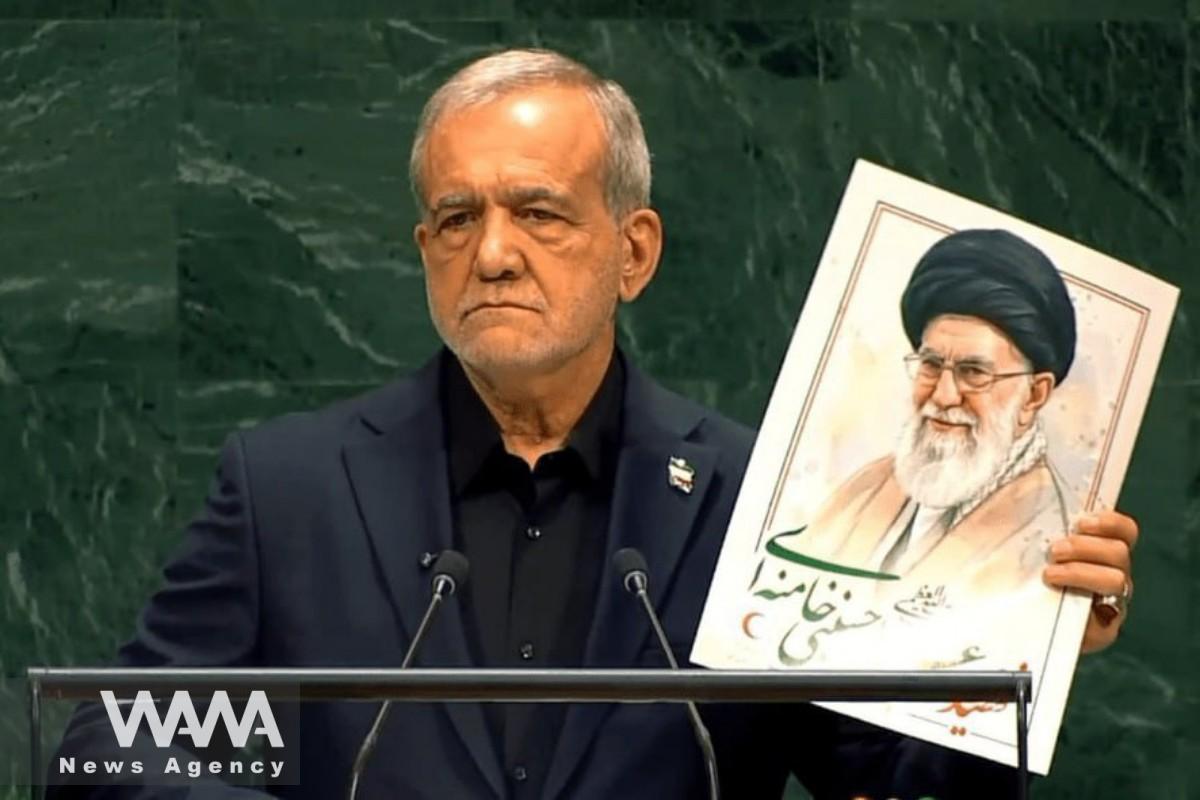
Pezeshkian at UN: Iran Cannot Be Forced to Surrender Through War
WANA (Sep 23) – Iranian President Masoud Pezeshkian told the 81st United Nations General Assembly that Iran cannot be forced to surrender through war, stressing that Tehran has never initiated a war and remains committed to negotiations, while also making clear that it is not afraid to defend itself. Pezeshkian opened his speech by […]
Emphasis on rapid military responses
Sayyari said Iran had sought to respond rapidly to attacks during all three conflicts, particularly during the Iran-Iraq War and the more recent fighting.
He recalled that on the first day of the Iran-Iraq War, Iraqi aircraft bombed Iranian airports at around 2 p.m., after which the Iranian Air Force carried out a retaliatory operation against the Iraqi aircraft after they returned to Baghdad. He said Operation Kaman 99 was launched 48 hours later with the participation of 140 aircraft.
Sayyari said that during the 12-day war and particularly the most recent conflict, Iran’s armed forces responded jointly about two hours after the initial attack. He said the adversary had not expected Iran’s forces to be ready to respond so quickly.
He added that, in Iran’s assessment, the objectives pursued by its adversaries have remained unchanged since the Islamic Revolution: weakening Iran, undermining its power and forcing it to surrender.
Strait of Hormuz: “Transit requires authorization”
Sayyari also addressed the situation in the Strait of Hormuz, saying Iran controls key parts of the waterway and will not allow foreign parties to carry out activities in the area without authorization.
He said the Strait of Hormuz, the Persian Gulf, the northern Indian Ocean, Iran’s territorial waters and its maritime surveillance zone are strategically important to Tehran.
According to Sayyari, the western part of the Strait of Hormuz falls under the responsibility of the Islamic Revolutionary Guard Corps Navy and other IRGC forces, while the eastern part is under the responsibility of the Iranian Army.
He stressed that vessels would only be permitted to transit with authorization and said Iran had maintained firm control over the Strait of Hormuz, which he described as one of the country’s strategic strengths.
Sayyari said the opposing side was seeking to reopen the waterway and had made numerous statements to that effect, but added that “nothing has happened” to change the situation.

People drive past a billboard about the Strait of Hormuz, on a building in Tehran, Iran, September 16, 2026. Majid Asgaripour/WANA (West Asia News Agency)
“Sanctions and pressure have not weakened Iran’s resolve”
The Iranian commander said Iran had faced sanctions and threats since before the 1979 Islamic Revolution, with restrictions particularly affecting access to military equipment.
He said Iran had subsequently experienced military, economic and cultural pressure as well as what he described as “soft war,” adding that these pressures had become more direct and explicit but had not weakened the determination of Iran’s armed forces or population to defend the country.
Sayyari said preventing hostile forces from entering Iranian territory remained a red line for the Iranian public and added that the armed forces had conducted numerous exercises along the Makran coast and in southern Iran to prepare for different scenarios.
Emphasis on military unity
Sayyari identified the leadership, fallen soldiers, the armed forces and the Iranian public as key factors behind what he described as Iran’s successes in past and recent conflicts.
He said the Iranian Army, the Islamic Revolutionary Guard Corps, the Law Enforcement Command, the Basij and the Ministry of Defense had operated together during recent confrontations, arguing that efforts by Iran’s adversaries to create divisions within the armed forces had failed.
He also said hostile media outlets had sought to encourage elements of Iran’s armed forces to surrender, but argued that such efforts could not undermine their cohesion.
Sayyari said Iran’s territorial integrity, the Islamic Revolution and what he described as the country’s honor and dignity were red lines for its armed forces.
He also highlighted the role of the Iranian public in supporting the war effort, saying that during the Iran-Iraq War, public assistance played an important role in supplying the front lines. He said large public gatherings during the final days of the 12-day war similarly demonstrated what he described as the enemy’s miscalculation of Iranian public sentiment.

U.S.-Israel Plan to Fuel Unrest Inside Iran
WANA (Sep 28) – The United States and Israel are reportedly considering a strategy aimed at increasing pressure on Iran through a combination of internal unrest, economic and security pressure, and renewed military threats. The scenario comes amid growing tensions between Tehran and Washington and follows recent remarks by U.S. President Donald Trump, who […]
“Today’s war is a hybrid war and a war of will”
Sayyari described current conflicts as “hybrid wars” involving not only military operations but also economic, cultural, social and political dimensions.
He described “soft war” as an effort to influence people’s beliefs, thinking and behavior, saying Iran’s adversaries sought to weaken domestic cohesion by creating despair, portraying the country negatively and driving divisions among Iran’s ethnic communities.
He also stressed the importance of the media battlefield, urging the public to obtain information from official sources and use the statements of government officials as their reference.
Sayyari said the current confrontation was a “war of will and resilience,” arguing that the side capable of remaining in the field longer would have greater capacity to continue the struggle.
Emphasis on domestic military production
The Army commander also pointed to the changes in Iran’s defense capabilities compared with the Iran-Iraq War, saying that during the early years of that conflict, Iran faced shortages of missiles, artillery shells and other military equipment.
He said the situation is different today, with a significant share of Iran’s military equipment produced domestically.
According to Sayyari, Iran’s defense industries, Ministry of Defense, Army, IRGC and other related institutions continue producing missiles and drones while using them, and production has not stopped despite attacks on production facilities.
Sayyari referred to an attack on one production center that killed 15 people and said production continued despite the casualties. He also recounted the case of a woman whose husband was killed at the facility and who subsequently returned to work there and continued producing drones.

Iranian missiles are displayed next to a banner with a picture of Iran’s Supreme Leader Mojtaba Khamenei, on a street in Tehran, Iran, September 27, 2026. Majid Asgaripour/WANA (West Asia News Agency)
Lessons from recent wars
Sayyari said Iran’s armed forces had drawn lessons from the Iran-Iraq War as well as the 12-day war and more recent confrontations. These lessons, he said, have been incorporated into weapons production, personnel training, military exercises, tactics and force organization.
He identified mobility and avoiding the concentration of personnel and equipment in a single location as one of the key lessons learned. He also said Iran had placed greater emphasis on passive defense measures.
Retaliation remains on Iran’s agenda
In his final remarks, Sayyari referred to the deaths of military personnel and civilians in recent attacks, including victims in Minab, Lamerd and the Dena warship, and said Iran regarded the attacks as an injustice inflicted on the country.
“Retaliation remains on our agenda, and we must include retaliation in our planning — wherever and whenever it happens,” he said.
Sayyari also addressed reports about casualties suffered by the opposing side, saying the enemy does not fully disclose its losses. He argued that the number of dead and wounded was higher than the figures publicly announced.
He said Iran has the capability to target enemy warships and claimed that foreign forces had reduced their presence in the region and were moving some of their bases farther away.
Sayyari concluded by describing unity and cohesion as key to Iran’s ability to withstand pressure and reiterated the need for continued military preparedness.
He also referred to a recent message by Iran’s leader, saying it emphasized maintaining Iran’s dignity and strength, military preparedness, national unity, adherence to Iran’s positions including on the Strait of Hormuz, honoring those killed in the conflicts, the role of the public and women, and the lessons learned from the eight-year war and more recent fighting.







