Tehran Friday Prayer Leader: Resistance Marks Beginning of End for US Presence

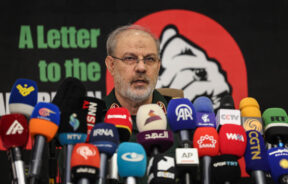
WANA (Oct 02) – Tehran’s Friday prayer leader Hojatoleslam Seyed Mohammad Hassan Aboutorabi-Fard said the world is on the verge of fundamental changes, arguing that recent developments at the UN General Assembly reflected what he described as the decline of the West’s political influence and the waning of U.S. hegemony.
Speaking during his Friday prayer sermons in Tehran, Aboutorabi-Fard said the contemporary world was witnessing fundamental developments and that the voices of dissatisfaction among nations and governments were being heard louder than ever.
Referring to developments at the UN General Assembly, he cited the departure of 77 delegations during the speech by the Israeli prime minister as evidence of what he described as the changing global political landscape.
Aboutorabi-Fard also pointed to the growing political awakening among people worldwide, the Islamic world’s return to its religious and moral identity, the growing strength of the resistance front, and what he described as major victories by Islamic resistance forces against the United States, Israel and Western-aligned powers.
He said these developments indicated shifts in political and economic power at the beginning of the third millennium, adding that the decline of the West would pave the way for an end to unilateralism in the world.
Afghanistan and Iraq: The Experience of U.S. and Western Military Intervention
Aboutorabi-Fard referred to the U.S. and Western military interventions in Afghanistan and Iraq, saying both campaigns had been launched with the stated objective of changing the Middle East’s map in favor of Israel and the United States.
He said Afghanistan had remained under U.S. and allied occupation from 2001 to 2021, while Iraq had been invaded in 2003 by U.S. armored and mechanized forces with Western support.
Referring to statements by U.S. officials about the wars in Afghanistan and Iraq, Aboutorabi-Fard cited the U.S. defense secretary under President George W. Bush as saying that B-2 bombers could cross oceans and continents without being seen and bring justice from the skies to the ground.
He also referred to remarks by George W. Bush at his 2004 inauguration, saying the former U.S. president had stated that military forces would be used to expand democracy and freedom and end what he described as tyranny.
Aboutorabi-Fard said the peoples of the region and the world have witnessed the consequences of “American democracy” for the region, including the deaths of hundreds of thousands of Muslim men, women and children in Afghanistan and Iraq.
He said the “crimes” committed by the United States and its Western allies are known around the world. Referring to a Reuters report, he added that around 4,500 U.S. military personnel had been killed during more than two decades of war and military operations in Iraq.
Aboutorabi-Fard said the U.S. withdrawal from Iraq had marked the beginning of what he described as a period of greater independence and standing for the Iraqi people and government, while the U.S. withdrawal from Afghanistan had similarly marked the beginning of what he called greater dignity and strength for the Afghan people.
U.S. and the West: A Long History of Power Projection and War
The Tehran Friday prayer leader said the U.S.-led system of global power had pursued dominance and warfare under the banner of democracy, freedom and human rights since the beginning of the 19th century.
He cited U.S. wars in the late 19th century involving the Philippines, Cuba and Pacific islands, as well as conflicts in Europe, Asia, Africa and Latin America during the 20th century.
Aboutorabi-Fard also said the United States had supported authoritarian governments for nearly two centuries and noted that Israel currently received the largest share of U.S. military assistance.
Iran’s Resistance and the Future of U.S. Presence in the Region
Referring to Iran and the broader resistance front, Aboutorabi-Fard said the resistance of Iran, Afghanistan, Iraq, Lebanon, Gaza, Palestine, Yemen and other parts of the Muslim world marks the beginning of the end of the U.S. presence in the region.
Citing an article in The Wall Street Journal, he said the war with Iran has exposed uncomfortable realities for Washington, including that the United States could not sustain a short war against a regional power without depleting vital reserves and ammunition.
Aboutorabi-Fard said the United States and its allies had learned this lesson from the Iranian people, as well as from Iran’s police forces, Islamic Revolutionary Guard Corps and Army.
He also cited a senior Brookings Institution fellow as concluding that what Aboutorabi-Fard described as the United States’ third regional adventure — referring to the Ramadan War, the Hormuz War and the current battlefield — could potentially be its last regional intervention.
According to Aboutorabi-Fard, the analyst had written that the war would mark the end of U.S. efforts to dominate the region. He described this as the assessment of what he called knowledgeable analysts around the world regarding the conflict and Iran’s resistance.
Call to Preserve the Gains of Victory
Aboutorabi-Fard stressed the need to preserve what he described as the major victory, saying this required safeguarding the achievements of national unity, cohesion and the Iranian people’s collective resilience.
He said preserving the victory also required strengthening ties among the Iranian people, consolidating cooperation among the three branches of government, and maintaining what he described as an unbreakable bond between the people and the Islamic Republic under the leadership of the Leader of the Islamic Revolution.
He called for safeguarding this “great asset” through rationality, faith and perseverance, expressing hope for further victories for the Muslim world.