

What Does “Iran’s Response Will Have No Geographical Limits” Mean?
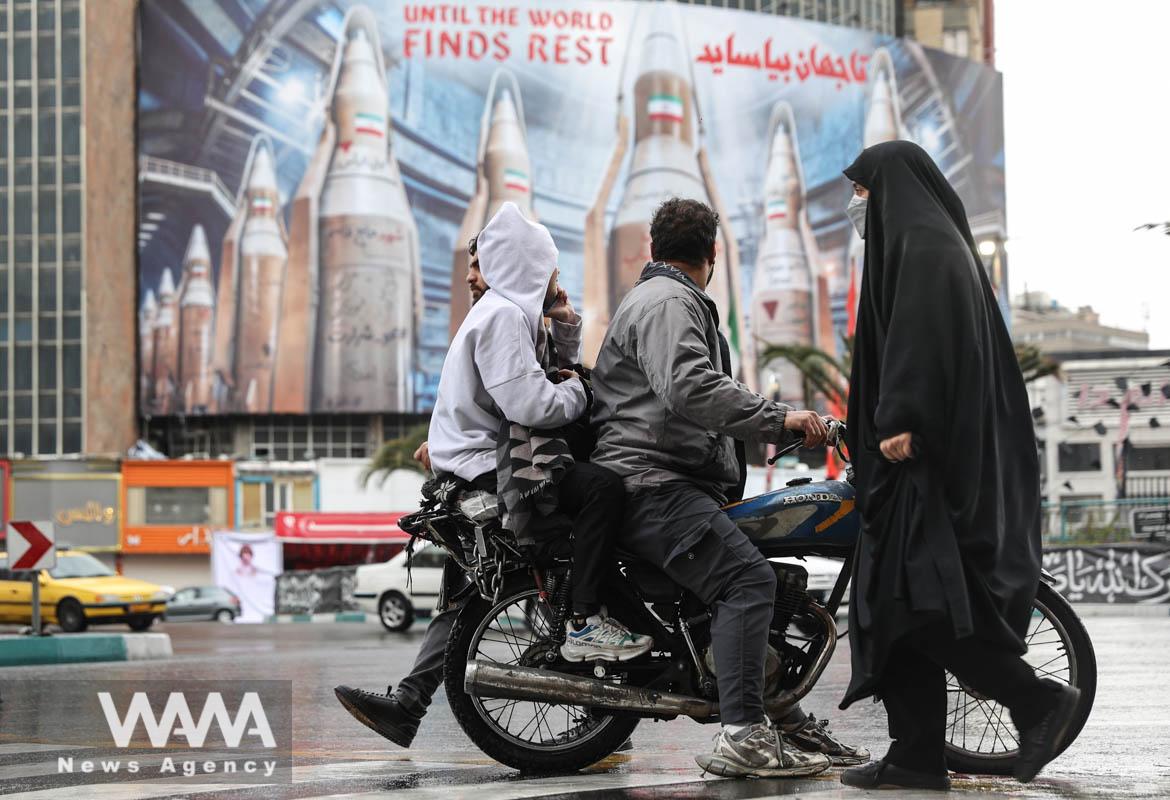
WANA (Nov 02) – Ayatollah Seyyed Mojtaba Khamenei, Iran’s Leader, has issued an explicit directive to senior military commanders, stressing that any level or form of threat must be met with an “immediate, effective and geographically unrestricted” response. He has also called for an update to the military target database to ensure that all tangible and intangible assets of the US-Israeli adversary are within the reach of Iran’s armed forces.
The directive comes amid reports that, during the 40-day US-Israeli war against Iran, American military bases in several countries played a role in supporting operations against the country. Tehran is now signaling that if such a scenario is repeated, the geographical scope of Iran’s response will not be confined to the region. This means that US military bases in Europe and elsewhere around the world could also become part of Iran’s military calculations.
But what exactly does this shift mean, and how does it change Iran’s military strategy?

Iran’s Supreme Leader: Every Threat Must Face an Immediate Response, Without Geographical Limits
WANA (Oct 31) – Ayatollah Seyed Mojtaba Khamenei, Iran’s Supreme Leader, has warned that if enemies launch military or terrorist attacks again, it will be the Armed Forces of the Islamic Republic and the Iranian nation that determine the time and conditions for bringing them to an end. The remarks came during a meeting […]
From Regional Bases to the Global Network of US Military Presence
Until now, most assessments of Iran’s military response capabilities have focused on US bases in West Asia. However, the 40-day war demonstrated that military operations against Iran could be supported by a much broader network of American military facilities beyond the region.
The release by Iranian media of a video showing US military bases in nine European countries, including the United Kingdom, Germany, Italy and Greece, can be viewed in this context. These facilities are part of the United States’ global military deployment and logistical support network. If they are used to support operations against Iran, they could become relevant to Tehran’s defense calculations.
The issue also carries implications for European countries. Hosting American forces and providing them with operational facilities could expose these countries to the security consequences of Washington’s decisions. Iran’s new position, therefore, is not directed solely at the United States. It also sends a message to governments that participate in military operations against Iran or make their facilities available to forces carrying out such operations.

Update on Iran’s New Oil Targets in the Region
WANA (Oct 23) – The renewed rise in oil prices has once again drawn attention to the infrastructure that supplies the energy needed by the global economy. Facilities in Saudi Arabia, the United Arab Emirates, Qatar, Kuwait and Bahrain could have consequences extending far beyond the region if disrupted. When International Energy Agency Executive […]
How Is Iran’s Target Database Changing?
One of the key elements of the Leader’s directive is the updating of the military target database. Ali Abdollahi, Chief of Staff of Iran’s Armed Forces, has announced preparations for a new database covering enemy targets and assets. Hossein Mohebi, a spokesperson for the Islamic Revolutionary Guard Corps (IRGC), has also said that the identification of new targets and the planning of operations in new geographical areas have begun.
These statements indicate that Iran’s armed forces are reviewing both their list of potential targets and the geographical scope of possible operations.
Under this review, communications infrastructure, command centers, data transmission networks and military support facilities are also gaining importance. These assets form part of the operational capabilities of the United States and its allies, and identifying them could play a role in military planning.
Danny Citrinowicz, a researcher at Israel’s Institute for National Security Studies (INSS), has also pointed in his assessment to the possibility of Iran expanding its target database to include communications infrastructure and strategic assets in Gulf countries.

Iran’s Fast-Attack Craft: From Speedboats to Missile Platforms
WANA (Nov 01) – Over the past four decades, Iran’s fast-attack craft have evolved from light boats equipped with machine guns and rocket launchers into mobile platforms carrying anti-ship missiles, torpedoes, air-defense systems, and unmanned technologies. Featuring advanced hull designs, powerful propulsion systems, and anti-ship cruise missiles, these vessels have expanded Iran’s naval capabilities […]
Missile Capabilities: The Operational Foundation of This Shift
Images of Iran launching its Sejjil missile in the final days of the 12-day war drew international media attention to the country’s missile industry. The Sejjil, whose development dates back several years, is the product of a defense industry that began taking shape in the 1980s through the efforts of a group of IRGC artillery personnel led by Hassan Tehrani Moghaddam, widely known as the father of Iran’s missile program. The industry has continued to develop over several decades.
Today, Iran’s ballistic missiles and combat drones are among its principal tools for conducting operations over longer distances. Regarding the Khorramshahr missile, the possibility of extending its range by reducing the weight of its warhead has also been discussed. Such a development could have implications for planning operational options against more distant targets.
As the geographical scope of potential operations expands, accurately identifying targets, assessing their locations and monitoring the military movements of opposing forces become increasingly important. This is why the Leader’s emphasis on strengthening military intelligence architecture has accompanied the directive to update the target database.

Trace of an Irainan missile is seen in the sky in Tehran, Iran, June 18, 2025. Majid Asgaripour/WANA (West Asia News Agency)
A Shift in the Calculations of Those Who Initiate War
Another part of the Leader’s directive concerns the timing and conditions for ending a war. Under his instructions, if attacks resume, it will be Iran’s armed forces and people who determine when and under what conditions the conflict ends.
This position challenges a model in which the United States can launch a limited attack, escalate military pressure and then seek to impose its own conditions for ending the war, compelling the opposing side to accept them.
Manouchehr Mottaki, an Iranian parliamentarian and former foreign minister, has pointed to the experience of the 40-day war, describing the new approach as a departure from the previous concept of mosaic defense and a step forward in military doctrine and tactics. Mosaic defense emphasized the ability of different units to defend their respective areas independently. According to Mottaki, the further development of indigenous defense capabilities represents another level of defensive organization and execution.
Speaking last night, Mottaki explicitly addressed the issue of geographical limits, stating: “The absence of geographical restrictions means that our missiles will reach Europe.”
Defense Minister Mehrdad Akhlaghi has also emphasized the strengthening of the armed forces’ combat capabilities, saying: “Iran will not be caught off guard by threats, nor will it be brought to a halt by pressure.”

Bunting of Iranian flags next to a missile on display during the 47th anniversary of the Islamic Revolution in Tehran, Iran February 11, 2026. Majid Asgaripour/WANA (West Asia News Agency)
Tehran’s Message to Washington and Its Allies
Taken together, these positions indicate that Iran is defining a broader scope for any potential military response, one that includes bases outside the region, support networks and strategic assets.
For the United States, this approach means that the consequences of military operations against Iran may have to be assessed beyond the geographical boundaries of the Middle East. For countries hosting American military bases, it raises the question of how far their participation in, or provision of facilities for, such operations could affect their own security.
The directive for a “response without geographical limits” highlights three changes in Iran’s declared military strategy: expanding the geographical scope of potential targets, reviewing the types of assets that could be targeted, and strengthening the intelligence and operational capabilities required to carry out a response.
Tehran wants to convey that no party can participate in military operations against Iran while relying on geographical distance to shield itself from the consequences or assuming from the outset that it lies beyond the reach of a potential response.







