

Why Did the US Attack Qeshm Amid Behind-the-Scenes Efforts to Negotiate with Iran?

WANA (Nov 03) – Several explosions rocked Iran’s Qeshm Island late Monday night, while reports also emerged of explosions heard in the nearby port city of Bandar Lengeh. Hours later, US media reported that American forces had carried out military strikes against targets on Qeshm Island. According to US officials, Iranian forces had earlier fired missiles at an American aircraft, prompting US fighter jets to strike an Iranian surface-to-air missile launcher in response.
Washington described the operation as limited and defensive, saying it was intended to protect American forces. However, the Qeshm attack was not the first operation of its kind in recent weeks. A Wall Street Journal report indicates that the United States has also carried out limited, unannounced strikes against targets inside Iran in recent weeks. According to US officials, those operations were intended to reduce Iran’s ability to threaten commercial shipping in the Strait of Hormuz.
An Associated Press report, based on satellite imagery and interviews with regional officials, indicates that more than 115 Iranian missile and drone attacks, or attacks by groups aligned with Iran, have damaged or destroyed facilities and military equipment at 26 US bases and military sites across the region. According to the report, US radar and early-warning systems were among the first targets, followed by aircraft hangars, communications equipment and military warehouses. Two regional officials also said the United States had withdrawn some of its equipment from the Persian Gulf.
These figures offer a different picture of the regional military balance. The United States retains air superiority and long-range strike capabilities, but its bases, radar systems and logistical infrastructure in the region have not been immune to Iranian attacks. This is why targeting Iran’s missile capabilities around the Strait of Hormuz is not merely a matter of protecting commercial shipping for Washington; it is also about safeguarding its own military infrastructure in the region.

US Confirms Strike on Iran’s Qeshm Island
WANA (Nov 03) – US officials have confirmed that the American military carried out a strike on Iran’s Qeshm Island, claiming that radar installations and missile launch sites were targeted in the operation. The officials told The Wall Street Journal early Tuesday that the US military had conducted an attack on the island. […]
On the same day, the IRGC announced that it had taken control of two American MQM-170 reconnaissance drones south of Qeshm Island using electronic warfare capabilities and shot down an MQ-9 drone east of the Strait of Hormuz. Taken together, these developments indicate that the military competition around Qeshm is not limited to airstrikes. Surveillance, control of the operational environment and preventing the other side’s equipment from maneuvering are also integral to the confrontation.
But why Qeshm? The island lies close to one of the most strategically sensitive points in the Strait of Hormuz. Controlling military movements in this area is important to both sides. The United States wants to ensure the security of vessels and freedom of operation for its forces, while Iran does not want the American military presence to translate into unrestricted and cost-free access to a waterway whose security is directly linked to Iran’s geographic position.
The attack on Qeshm should be examined as more than a response to a missile launch. By targeting missile systems and other military positions around the Strait of Hormuz, the United States is seeking to weaken Iran’s ability to restrict American military and maritime movements. Put simply, Washington wants to operate in the area while facing the lowest possible risk from Iran’s defensive capabilities.
This interpretation is consistent with assessments by some analysts of the US operations. Jason Brodsky, policy director of United Against Nuclear Iran, told Radio Free Europe that the objective of the American strikes was to weaken Iran’s ability to threaten the Strait of Hormuz. Gregory Brew, a senior analyst at the Eurasia Group, also believes that by targeting Iran’s coastal positions, Washington is effectively competing for control of the waterway rather than simply seeking to intercept potential threats.

Vessels in the Strait of Hormuz are visible near the beach of Bandar Abbas, Iran, August 26, 2026. Majid Asgaripour/WANA (West Asia News Agency)
The distinction is important. Intercepting a missile or drone is a response to a specific threat. Striking military positions inside Iranian territory, however, is part of a broader effort to change the operational conditions in the region. If such attacks continue without an effective Iranian response, the United States could gradually establish a wider degree of military freedom of action in the area. Under such circumstances, even without occupying the island or deploying ground forces, Washington could put increasing pressure on Iran’s ability to influence US military movements around the Strait of Hormuz.
However, this policy is not without risks for Washington. The United States can strike a missile launcher or military position from a distance, but it cannot guarantee that Iran will refrain from responding. Tehran’s response could also go beyond a limited, isolated retaliation and target American equipment, vessels or operational routes in the region.
Meanwhile, the continuation of negotiations takes on a different significance. On the same day as the Qeshm attack, US President Donald Trump spoke of the possibility of reaching an agreement with Iran, while Vice President JD Vance also expressed optimism about progress in the talks. But negotiations taking place alongside continued limited US strikes raise a fundamental question for Tehran: Is Washington seeking an agreement on future security arrangements in the Strait of Hormuz, or does it intend to use military operations first to impose some elements of those arrangements unilaterally?

A member of IRGC at a military training center for ordinary citizens at Tajrish Square in Tehran, Iran, November 2, 2026. Majid Asgaripour/WANA (West Asia News Agency)
This question reflects the central disagreement between the two sides over the Strait of Hormuz. Iran says the reopening of the waterway must be accompanied by an end to the naval blockade, the lifting of economic restrictions and a halt to hostilities on all fronts. The United States, meanwhile, wants Iran’s military and nuclear capabilities to be restricted and the security of maritime traffic guaranteed. The issue, therefore, is not simply reopening the shipping route. It is about who will determine the security arrangements governing the waterway after an agreement is reached and what restrictions will apply to the military operations of both sides.
The Qeshm attack also made another point clear: Washington wants to maintain a distinction between limited military operations and a return to full-scale war. Keeping previous strikes undisclosed and describing the latest operation as defensive allows the Trump administration to maintain military pressure without having to formally announce the start of a new round of war. This approach may carry lower political costs in the short term, but it complicates negotiations, as every new attack makes it more difficult for Tehran to trust that Washington will honor any potential agreement.
The central question now is whether the United States can operate with greater freedom around the Strait of Hormuz following these strikes, and whether Iran will accept such an arrangement. If the two sides continue to hold different positions on this issue, even an agreement on sanctions or Iran’s nuclear program may not resolve their underlying dispute over security in the Strait of Hormuz.
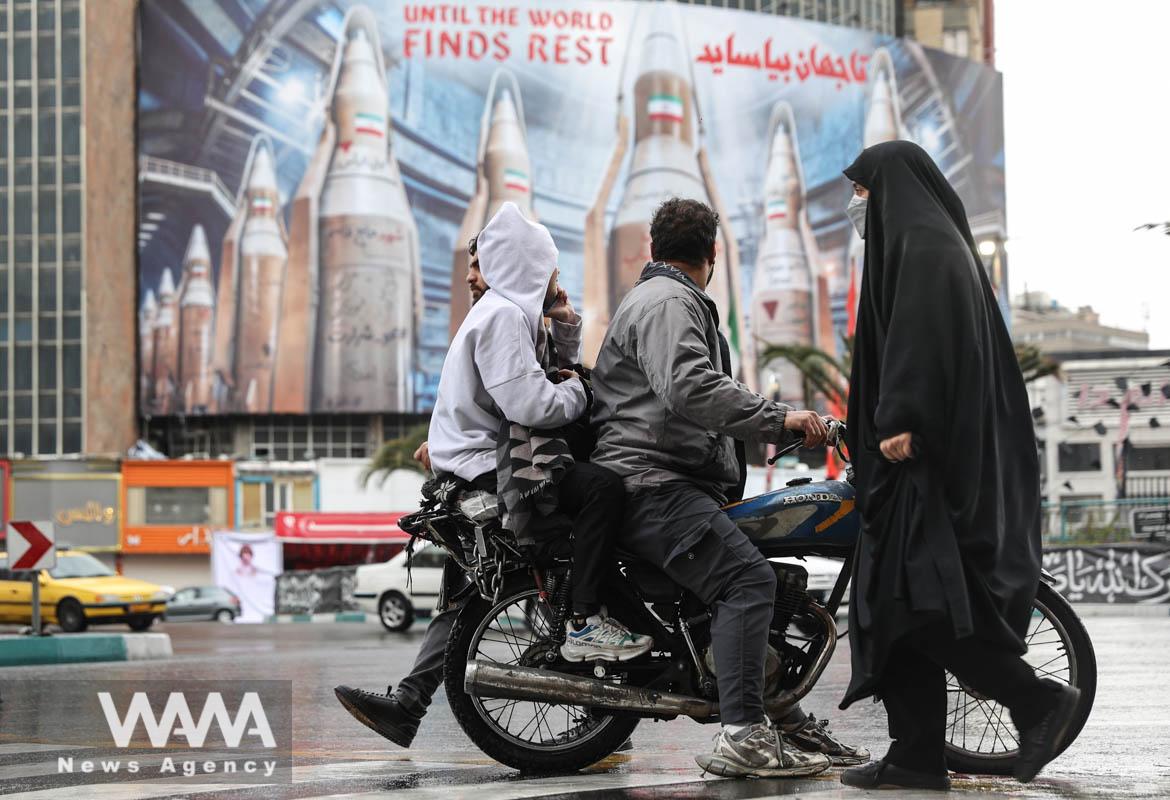
What Does “Iran’s Response Will Have No Geographical Limits” Mean?
WANA (Nov 02) – Ayatollah Seyyed Mojtaba Khamenei, Iran’s Leader, has issued an explicit directive to senior military commanders, stressing that any level or form of threat must be met with an “immediate, effective and geographically unrestricted” response. He has also called for an update to the military target database to ensure that all tangible […]







