

Why Is Moscow Standing by Tehran?

WANA (Oct 05) – In recent months, every time U.S. and Western pressure on Iran has intensified, one name has appeared more prominently alongside Tehran: Russia.
From Vladimir Putin’s statements on the war and sanctions to coordination between Moscow and Beijing at the UN Security Council, there are numerous signs of Russia’s support for Tehran. But reducing the relationship to a shared opposition to the United States overlooks an important part of the picture.
The growing ties between Iran and Russia are not the result of a temporary political decision. Geography, security interests, trade, transit routes, shared experience with sanctions, and the two countries’ views of the international order have steadily pushed the relationship toward closer cooperation.
At the same time, this growing proximity does not amount to an unrestricted alliance. Moscow has its own interests and calculations, just as Tehran does. That distinction is important for understanding Russia’s policy toward Iran.

Iran Expresses Gratitude to Russia and China for Blocking U.S. Anti-Iran Resolution
WANA (Sep 18) – Iran’s Permanent Mission to the United Nations announced that it had expressed gratitude to Russia and China for casting vetoes to block a U.S.-proposed Security Council resolution. The mission stated that the draft measure had aimed to extend the mandate of a sanctions monitoring panel overseeing Tehran. The Iranian delegation […]
From Valdai to the Security Council: Moscow’s Support in Practice
Putin’s recent remarks at the Valdai Discussion Club were among the latest indications of Russia’s position toward Iran.
Iran featured prominently in the questions raised at the meeting, where the Russian president outlined Moscow’s positions on the war, the Strait of Hormuz, sanctions and Iran’s nuclear program.
Putin spoke about the resistance of the Iranian people and described the assassination of Ali Larijani, Iran’s late secretary of the Supreme National Security Council, as a major mistake, given his readiness for dialogue.
He also said Moscow wanted the Strait of Hormuz to reopen as soon as possible, opposed military aggression and considered negotiations essential to resolving disputes. Putin also called for the lifting of what he described as unjust sanctions against Iran.
On the nuclear issue, Russia continues to support a proposal for Iran to transfer part of its enriched uranium to Russian territory. The proposal had been raised previously but failed to produce an agreement amid disagreements over changes in the U.S. position and the location where the nuclear material would be transferred.
This support has also been visible internationally. Last month, Russia and China voted against a U.S.-drafted resolution seeking to extend the mandate of the panel of experts of the UN Security Council’s 1737 Committee, using their vetoes to block its adoption.
The move came as part of Moscow’s broader opposition to Western efforts to restore international pressure on Iran, including through the “snapback” mechanism.
Importantly, Moscow itself views such steps as practical support for Tehran. Dmitry Medvedev, deputy chairman of Russia’s Security Council, said in a recent interview that Moscow’s diplomatic efforts to support Iran, including preventing the adoption of certain Security Council resolutions, constituted “direct assistance” to Tehran. At the same time, he stressed that Iran-Russia relations are strategic but do not amount to the creation of a military bloc.
Iranian Foreign Ministry spokesman Esmail Baghaei also said recently that Tehran and Moscow maintain continuous coordination in bilateral relations and within international organizations, including the UN Security Council and the Shanghai Cooperation Organization. He said the two countries share positions on unilateralism and militarism in many cases.
But why is Moscow supporting Tehran at this level?
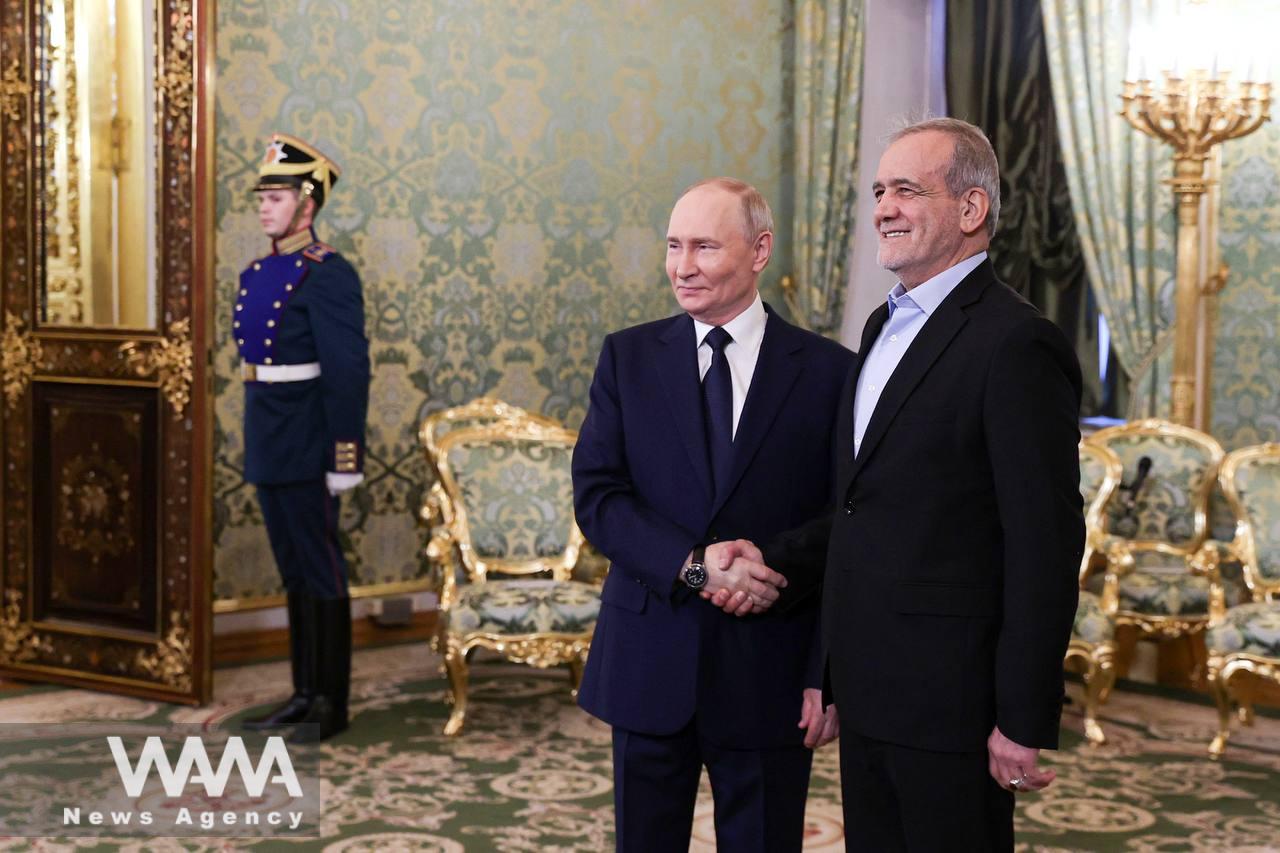
Russian President Vladimir Putin and Iranian President Masoud Pezeshkian meet in Moscow, Russia January 17, 2025. Handout / WANA News Agency
The First Answer Is on the Map
Part of the answer can be found by stepping back from day-to-day politics and looking at the map.
Iran and Russia are neighbors, and the security of both countries is closely linked to developments in the Caucasus, Central Asia, the Caspian Sea and the Middle East.
For Moscow, Iran is more than a country to its south. Iran is one of Russia’s key routes to the Persian Gulf, the Indian Ocean and the markets of South Asia. The International North-South Transport Corridor is a clear example of this importance, connecting Russia to India and other southern markets through Iran.
For Moscow, therefore, its relationship with Tehran is simultaneously a security, economic and transit issue.
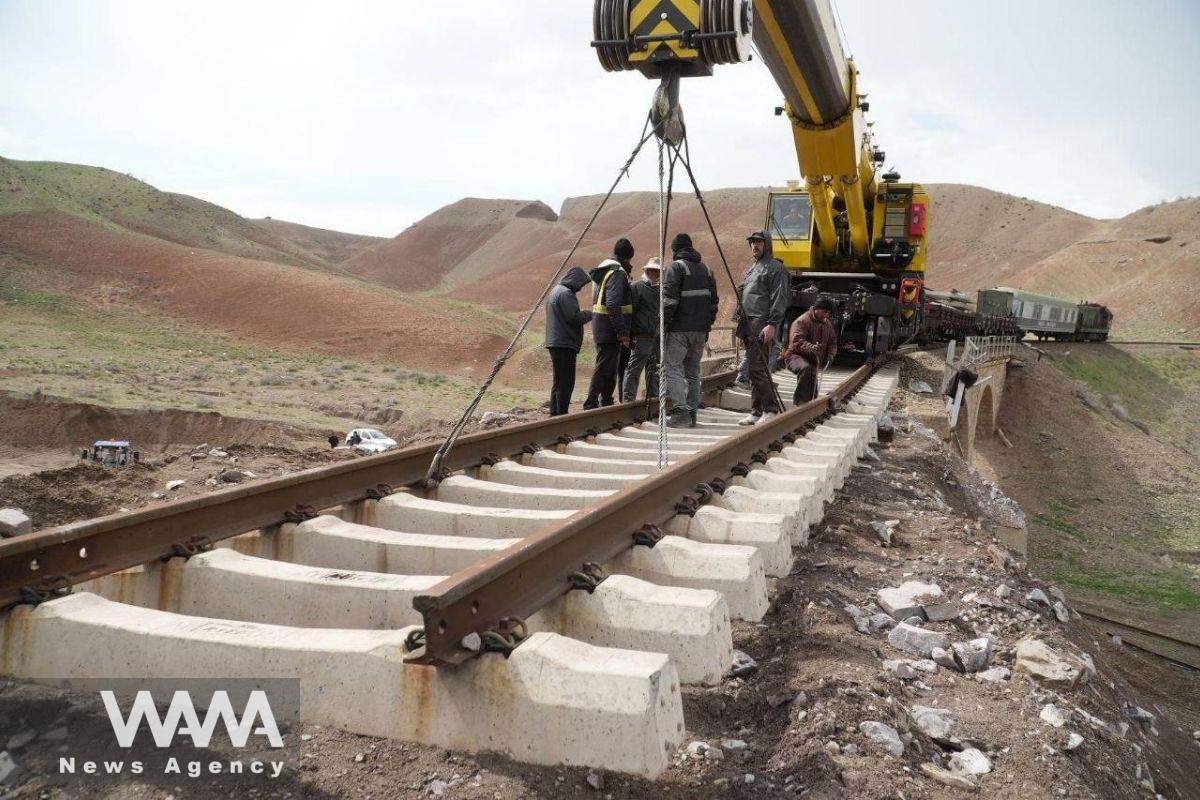
U.S. Strikes Strategic Iran–China–Russia Rail Corridor Bridge
WANA (Jul 09) – The United States launched a cruise missile strike early Thursday targeting the Aq-Tappeh Khan railway bridge in Aqqala County, Golestan Province, a strategic link on the China–Turkmenistan–Iran rail corridor used for trade between China, Russia, and Iran. The bridge is located on the international China–Kazakhstan–Turkmenistan–Incheh Borun railway route, which enters […]
The Treaty That Reshaped the Framework of the Relationship
The relationship entered a more structured framework in January 2025 with the signing of the Comprehensive Strategic Partnership Treaty.
The 47-article treaty covers areas including politics and security, energy, trade, transportation, banking, technology and international cooperation.
One important section addresses unilateral measures imposed by third countries. The two sides committed to working together to reduce the effects of such measures against each other and to refrain from joining unilateral coercive actions.
This provision helps explain at least part of Russia’s current position toward U.S. sanctions on Iran.
However, the Tehran-Moscow treaty is not a conventional mutual-defense pact. Russia is not obligated to deploy military forces in the event of an attack on Iran. Its main commitments are to refrain from assisting an aggressor and to cooperate in reducing the effects of unilateral measures.

Russian President Vladimir Putin and Iranian President Masoud Pezeshkian meet in Moscow, Russia January 17, 2025. / WANA News Agency
Shared Interests Beyond the United States
Another dimension of the growing relationship lies in the two countries’ shared view of the international order.
Iran has been a member of the Shanghai Cooperation Organization since 2023 and joined BRICS in 2024; Russia is also a member of both groupings.
For Tehran and Moscow, cooperation through these organizations is not purely economic. Both countries emphasize a greater role for non-Western powers and less reliance on structures dominated by the West.
Medvedev highlighted the same perspective in his recent remarks, saying that pressure and the use of force have limits and that the world is moving toward a multipolar order. From this perspective, closer ties between Tehran and Moscow are not simply a reaction to U.S. policy; they are also part of a shared view of changing power dynamics in the international system.

Rosatom Reviewing New Sites for Nuclear Power Plants in Iran
WANA (Sep 29) – Rosatom CEO Alexey Likhachev said Tuesday that the Russian state nuclear corporation is reviewing several new sites in Iran for the construction of nuclear power plants with both high and low generation capacities. Construction of Units 2 and 3 of the Bushehr Nuclear Power Plant entered the implementation phase three […]
Sanctions: A Shared Experience
Another factor is their shared experience with sanctions.
Iran has been under U.S. sanctions for years, while Russia has faced a broad range of U.S. and European sanctions since the war in Ukraine.
Both countries have sought alternative channels for trade and financial transactions, from greater use of national currencies to the development of banking and commercial mechanisms outside Western-controlled networks.
As a result, sanctions are not merely a political issue for Tehran and Moscow; they have also become a basis for economic and institutional cooperation.
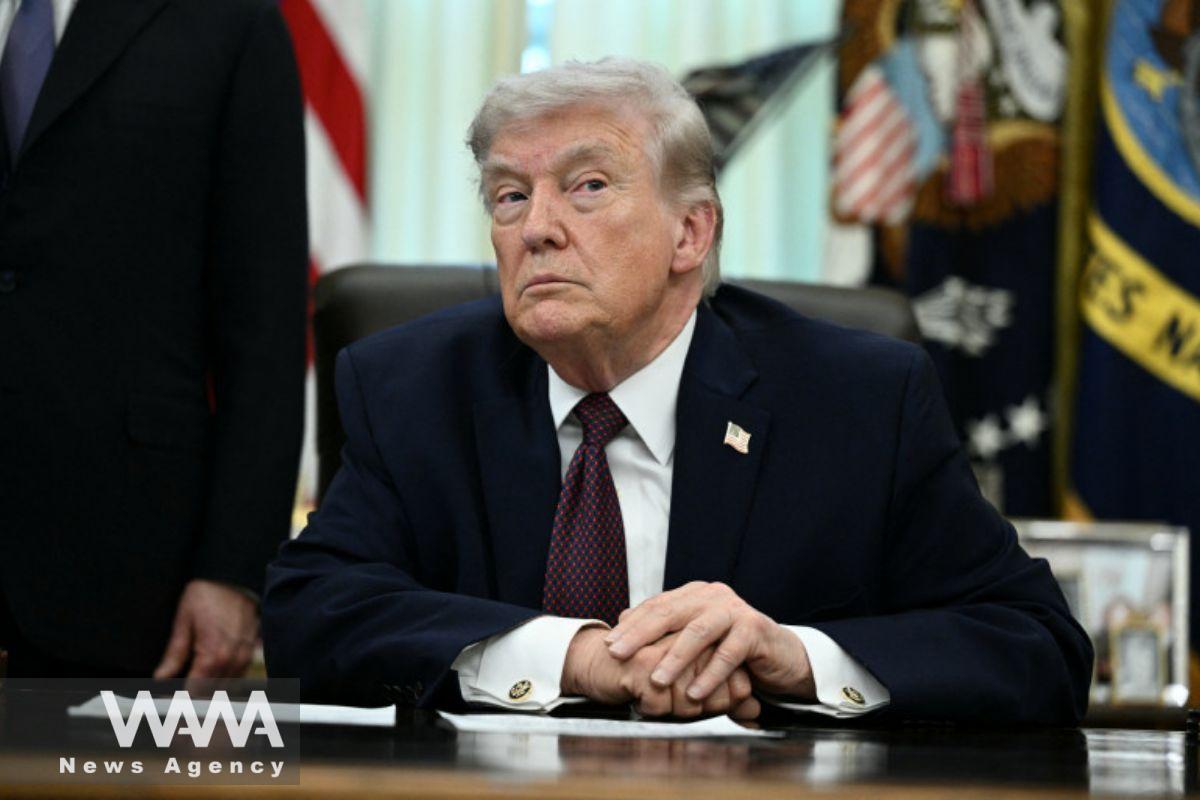
Trump Signs Russia-Iran Sanctions Act Into Law
WANA (Sep 18) – While the U.S. government has repeatedly used sanctions against Iran and Russia over the past several decades without achieving its stated objectives, Washington has once again resorted to the policy. U.S. President Donald Trump has signed the “Lindsey Graham Sanctioning Russia and Iran Act of 2026” into law. The legislation, […]
How Far Will Russia Go With Iran?
This is where an important boundary needs to be recognized.
Closer ties between Tehran and Moscow do not mean that the two countries have identical interests on every issue, or that Russia is prepared to bear any cost for Iran.
Russia is simultaneously dealing with the war in Ukraine, its rivalry with the United States and Europe, and security issues in the Caucasus and Central Asia. Its policy toward Iran is therefore also part of Moscow’s broader strategic calculations.
Former Iranian Foreign Minister Mohammad Javad Zarif has described Tehran-Moscow relations as “asymmetrical,” given the difference in the two countries’ global standing and material capabilities. He has argued that understanding Russia’s behavior requires taking into account its position as a major power and its interests in the Caucasus and Central Asia. The experience of Chapter VII resolutions against Iran has also shown that Moscow and Beijing ultimately do not disregard their own interests and obligations.
At the same time, Medvedev’s recent remarks suggest that Moscow is currently trying to make the limits of its commitment clear to Tehran and other actors. He explicitly said Russia would not sacrifice its strategic relationship with Iran for any other country and described the two countries as “strategic partners.” He also proposed that Russia mediate an end to the war between Iran and the United States.

Why Is China Not Joining Washington’s Economic Blockade Against Iran?
WANA (Sep 27) – Despite roughly $600 billion in trade with the United States, China has refused to join Washington’s pressure campaign against Iran. This is because Iran’s importance to Beijing goes far beyond the volume of bilateral trade. Iran holds a strategic position in China’s security and geopolitical calculations, particularly when it comes to […]
Convergence, Not Alliance
Relations between Tehran and Moscow have become more multidimensional than ever.
Geography, security, transit, sanctions and shared views of the international order have created a set of common interests that makes cooperation meaningful for both sides.
Medvedev’s recent remarks add another layer to this picture: on the one hand, Moscow views its relationship with Tehran as strategic and lasting and describes its diplomatic support for Iran as “direct assistance”; on the other, it stresses that the relationship does not amount to a military bloc.
For that reason, the relationship between Iran and Russia may be described most accurately with one word: convergence.
The two countries have found common ground on some of the most important issues facing them today, and those shared interests have brought them closer. But each continues to act according to its own calculations and independent interests.







