UN Human Rights Council Holds Special Session on Recent Unrest in Iran

WANA (Jan 23) – A special session of the United Nations Human Rights Council on the situation in Iran was held on Friday in Geneva. The meeting was marked by sharply differing—and at times conflicting—positions among various countries, once again highlighting the deep divide in approaches to human rights issues and how to address Iran.
At the opening of the session, Volker Türk, the UN High Commissioner for Human Rights, rejected Iran’s claims that some protesters were terrorists. He called for the release of detainees, a halt to the implementation of death sentences, and the adoption of what he described as “serious steps” by the international community in response to alleged human rights violations in Iran. The head of the UN fact-finding mission also claimed—without presenting specific evidence—that the number of victims of the unrest in Iran exceeded the officially reported figures.
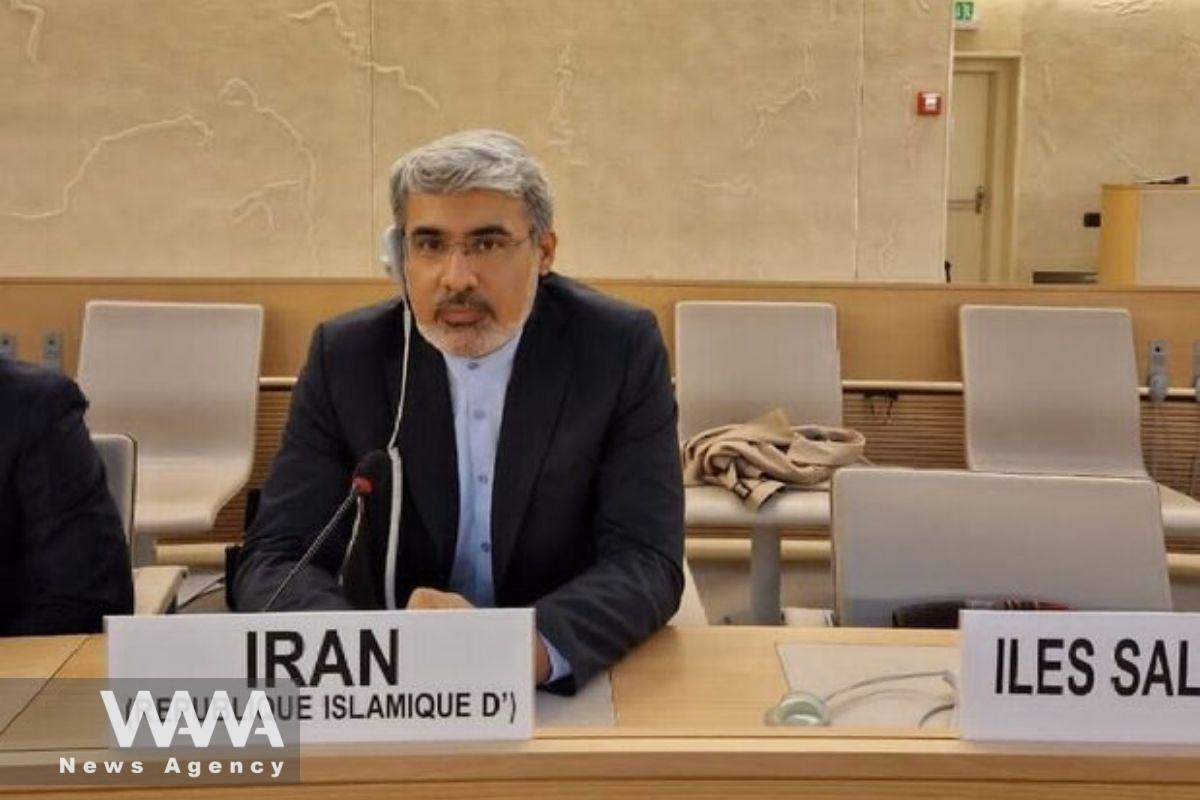
In response, Iran’s representative described the session as a politically motivated move aimed at exerting pressure on the Iranian people and questioned its legitimacy. According to him, the instrumentalization of human rights mechanisms not only fails to improve the human rights situation but also undermines trust in international institutions.
Among Western and European countries, representatives of Iceland, Estonia, the European Union, Spain, North Macedonia, France, and the United Kingdom condemned what they described as human rights violations in Iran. They called for an end to violence, a halt to executions, the release of detainees, and the establishment of a fact-finding committee. Speaking on behalf of several
European countries, Iceland’s representative stressed that when governments are perceived as perpetrators of violence, the Human Rights Council has a duty to act. Estonia’s representative also raised the issue of internet shutdowns, describing them as a “cover for suppressing protests.”
Iran at UN: We Will Not Yield to External Pressure
WANA (Jan 23) – Ali Bahraini, Ambassador and Permanent Representative of the Islamic Republic of Iran to the United Nations Office and other international organizations in Geneva, told a session of the UN Human Rights Council that Iran will not submit to external pressure and will not tolerate what he described as “covert aggression disguised […]
On the other side, several countries opposed holding the session and warned against the politicization of human rights. China’s ambassador and permanent representative to the UN in Geneva emphasized that Iran’s internal situation falls within its national sovereignty and stated that Beijing does not support convening a special Human Rights Council session on Iran. He underlined
China’s opposition to interference in countries’ internal affairs under the pretext of human rights, double standards, and the imposition of specific mechanisms without the consent of the countries concerned, stressing that disputes can only be resolved through dialogue.
Pakistan’s representative, while expressing his country’s longstanding friendship with Iran, warned that selective behavior and confrontational approaches could call into question the universal mission of the Human Rights Council. Referring to human casualties, destruction, and the negative impact of unilateral sanctions, he stressed that security and stability are prerequisites for the enjoyment of human rights, and that sanctions and external interventions only exacerbate the suffering of people.
Iraq’s representative also emphasized the need for the Human Rights Council to adhere to the objectives of the UN Charter, called for avoiding the politicization of human rights, and underscored the importance of resolving disputes through diplomacy and dialogue.
Overall, the special session of the Human Rights Council on Iran did not lead to an international consensus. Instead, it reflected a confrontation between two main approaches: on one side, Western countries emphasizing pressure, resolutions, and oversight mechanisms; and on the other, countries warning against double standards and insisting on national sovereignty, dialogue, and non-interference in internal affairs.